
Sobriety & Wellness
Why Does Seeing a Drink Suddenly Make You Want One?
A craving can feel completely random. Often, the cue arrived first. Neal looks at why people, places, routines and emotions can suddenly wake up an old drinking pattern.

Four years into not drinking, alcohol isn't something I spend much time thinking about anymore.
That's one of the things that has surprised me most.
There was a time when drinking was built into so many ordinary parts of my life that I probably didn't even notice how often I expected it.
- Dinner out.
- Friday night.
- Cooking.
- A wedding.
- Vacation.
- Sitting outside when the weather was finally nice.
Now most of those things happen without alcohol and I don't give it much thought.
But every once in a while, something catches me off guard.
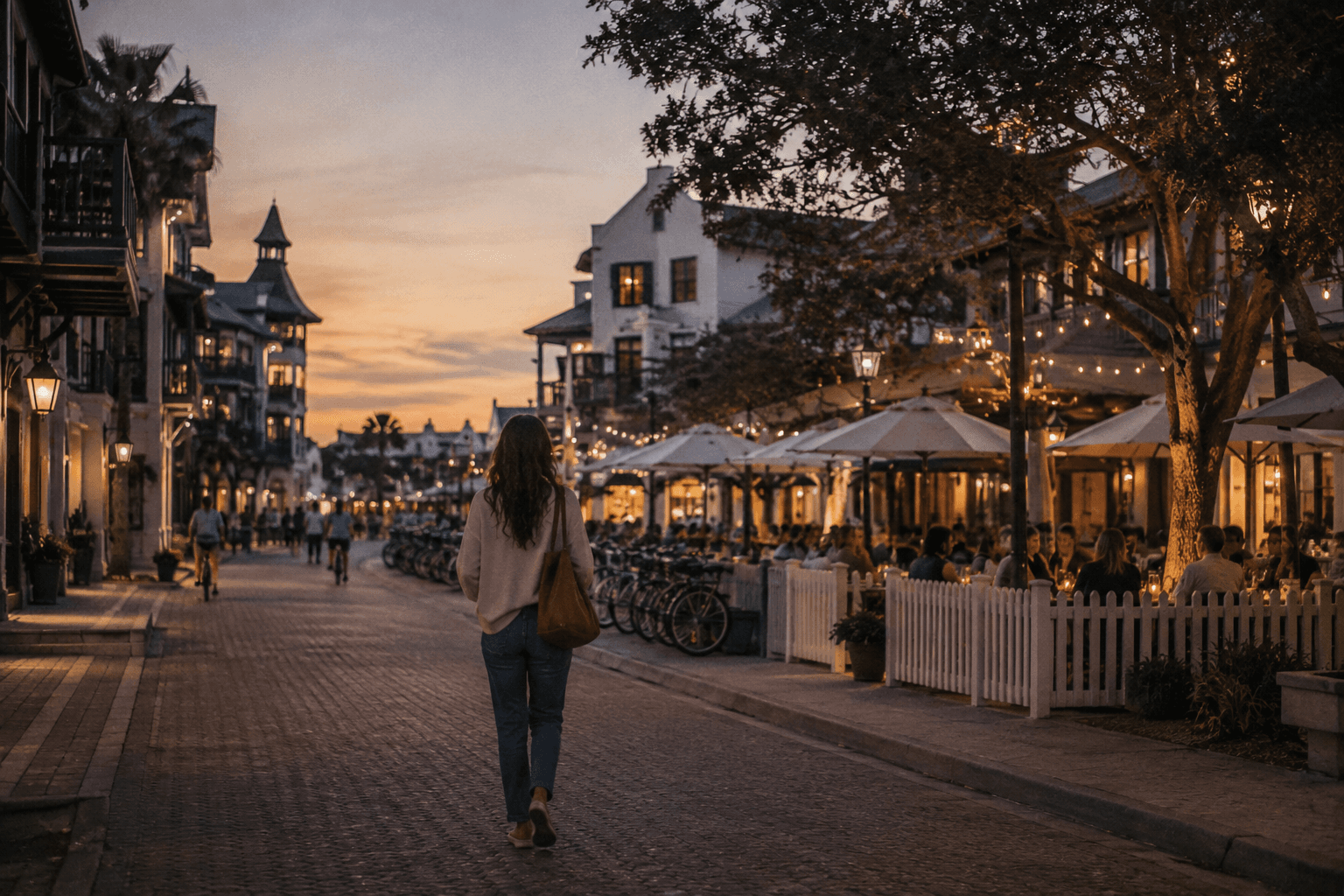
It might be walking into a certain kind of restaurant. Seeing someone pour a glass of wine. A beautiful patio on a warm night. Even something as simple as noticing a bottle sitting in an ice bucket.
And for a second, my brain remembers.
Not necessarily: I need a drink.
More like: Oh yeah. This is where we used to drink.
I've always found that strange.
How can something you haven't thought about all day suddenly feel familiar in about half a second?
It turns out the brain is remarkably good at remembering the circumstances around drinking.
And new research suggests the drink itself may be only part of what it remembers.
Sometimes the craving isn't coming out of nowhere. The cue arrived before you noticed it.
Your Brain Learns More Than the Drink
When we repeat something enough times, the brain doesn't only learn the behavior.
It learns what tends to come before it.
- The place.
- The people.
- The time.
- The glass.
- The music.
- The feeling.
- The routine.
NIAAA describes alcohol triggers as both external and internal. External triggers can include people, places, things and times of day associated with drinking. Internal triggers can include thoughts, physical sensations and emotions, including both frustration and excitement.
That's why a craving can sometimes feel so strangely specific.
You can walk through a grocery store without thinking about alcohol. Then you reach the wine aisle and something changes.
Or you're perfectly fine all afternoon. Then 5 p.m. arrives and something changes.
The brain has spent years learning what usually happens next.
A New Study Took This Out of the Laboratory
A lot of alcohol cue research happens under controlled conditions.
Researchers show someone an alcohol image or expose them to a cue and measure what happens.
Useful, but life doesn't happen in a laboratory.
A new study published online September 4 in Drug and Alcohol Dependence Reports tried to capture these moments while people were actually living them.
Thirty-three adults with alcohol use disorder completed brief assessments as many as four times per day for 28 days.
Researchers asked whether participants were around alcohol itself, with people they usually drank with, in places where they usually drank, and experiencing different positive or negative emotional states.
They also measured craving.
The study was small, and everyone in it had alcohol use disorder, so we should not assume every finding applies identically to every person who drinks or has stopped drinking.
But what happened is fascinating.
Seeing Alcohol Mattered
Direct real-world exposure to alcohol was independently associated with greater craving.
That makes intuitive sense.
You see the thing your brain associates with reward and the learned response wakes up.
But another cue mattered independently too: the people participants usually drank with.
That might explain something people in recovery sometimes discover the hard way.
The trigger isn't always sitting inside the bottle.
Sometimes it's sitting across the table.
Not because that friend is doing anything wrong. Not because you can't be friends anymore.
The brain may simply have years of memories connecting this person, this situation and alcohol.
Sometimes your drinking history remembers the company you kept.

The Place Was More Complicated
This was one of the most interesting findings to me.
Simply being in a usual drinking place was not, by itself, significantly associated with higher craving in this study.
That's important because it would be easy to write: your old bar automatically makes you crave alcohol.
The research didn't show that.
Instead, place interacted with emotion.
When participants were experiencing higher-than-usual negative emotion, being in a familiar drinking place was more strongly associated with craving.
That paints a much more realistic picture.
Maybe the restaurant isn't the trigger every time.
Maybe the restaurant after a terrible day is different.
Maybe your kitchen isn't particularly difficult anymore, until you're stressed, tired and standing there at exactly the time you used to pour something.
The cue and the feeling can work together.

Apparently, Feeling Good Can Be a Trigger Too
This may be the part people overlook most.
We understand: I had a terrible day. I want a drink.
We talk much less about: I had an amazing day. I want a drink.
But alcohol gets paired with positive emotions constantly.
- Celebration.
- Vacation.
- A promotion.
- Finishing something difficult.
- A beautiful dinner.
- The first warm evening of spring.
- The first football game of fall.
- Friday afternoon.
In the new study, higher-than-usual positive emotion strengthened the association between direct alcohol exposure and craving.
That's a subtle finding from a small study, so I wouldn't turn it into a universal rule.
But it makes sense to me.
Sometimes alcohol wasn't how we escaped life.
Sometimes it was how we celebrated it.
Your brain can associate drinking with feeling good just as easily as it associates drinking with feeling bad.
My Kitchen at 5 P.M. Can Remember Something I Don't Want Anymore
This is where triggers become almost mundane.
For years, maybe you came home and poured wine while cooking.
Nothing dramatic happened. No crisis. No rock bottom.
It was just what 5 p.m. meant.
Then you stop drinking.
At 4:30, you're fine. At 4:50, you're fine. At 5:07, you're chopping an onion and suddenly wine crosses your mind.
That can feel ridiculous.
Why now?
Because the onion may not be the cue.
The whole scene might be.
Time of day. Kitchen. Dinner preparation. End of work. Music. Lighting. The physical motion of reaching toward the cabinet where the glasses used to be.
Your brain learned the sequence.
This is why I think some cravings feel like they appear before the conscious thought does.
The pattern is older than the decision you're making now.
People Can Be Triggers Without Being Bad for You
I think this deserves some care.
If you always drank with a particular friend, being around that person may bring alcohol associations with them.
The new study found that being around usual drinking partners independently predicted greater momentary craving.
That does not mean the person is toxic.
It doesn't automatically mean you need to remove them from your life.
It means context matters.
Maybe you used to meet every Thursday and have drinks.
Early on, you might change what Thursday looks like.
Breakfast instead of happy hour. A walk instead of the bar. A restaurant where the activity isn't centered around drinking.
You're not necessarily replacing the friend.
You're giving the friendship another pattern.
Why Doesn't This Happen Every Time?
Because we're not machines.
The same cue doesn't produce the same response every time.
Mood matters. Stress matters. Sleep matters. How long you've been changing the behavior matters. What happened five minutes earlier matters. Individual differences matter too.
Another real-world study of 50 adults with current alcohol use disorder found that greater daily cue exposure was associated with higher same-day drinking. Negative mood was associated with greater craving, and mood changed the relationship between cues and subsequent drinking.
That study did not produce exactly the same pattern as the new 2026 study.
That's useful.
It tells us the real world is complicated.
The science isn't saying cue X causes craving Y every time.
It's showing that drinking behavior can become connected to networks of circumstances.
So Is This Just Pavlov With a Wine Glass?
Sort of.
But human learning is considerably more complicated than a bell and a dog.
Repeated alcohol use can strengthen the motivational significance of alcohol-related cues. NIAAA describes how repeated activation of reward and habit systems can change how someone responds to people, places, glassware, images and other stimuli associated with drinking.
Eventually, the cue itself can become meaningful.
That's one reason someone can consciously know: I don't want to drink, while simultaneously experiencing: I want that.
Those thoughts are not necessarily evidence that you've secretly changed your mind.
One can be a decision. The other can be a learned response.
A craving can be real without being a vote.
Do Triggers Ever Go Away?
They can get quieter.
NIAAA's practical guidance says urges tend to lose strength over time as people practice new responses and gain experience dealing with them.
I think that's a more useful goal than expecting to erase every association you've ever built.
You may always recognize the smell of a restaurant.
You may always remember what Friday night used to feel like.
You may always know exactly what your old drink tasted like.
Recognition isn't failure.
Memory isn't relapse.
And noticing a drink isn't the same thing as needing one.
The interesting part is what happens next.
Maybe the Brain Can Learn a New Ending
This is the part I like.
If the brain learned: 5 p.m. + kitchen + cooking = wine, then repeated new experiences can build another association.
5 p.m. + kitchen + cooking = music + dinner + whatever I drink now.
The old memory doesn't necessarily vanish.
You build competition for it.
Same kitchen. Different ending.
Same Friday. Different routine.
Same restaurant. Different order.
Same friend. Different Thursday.
I think that's why some situations that feel incredibly loud early on eventually become boring.
You've lived through them enough times without completing the old pattern.

Should You Deliberately Expose Yourself to Triggers?
This is where I don't want to turn my experience into medical advice.
Not everybody should intentionally sit in a bar to prove they can handle it.
The new study involved people with alcohol use disorder, and significant AUD can involve relapse risk, withdrawal risk and other clinical concerns.
There is a difference between naturally encountering an old cue and deliberately testing yourself against one.
If a situation feels genuinely unsafe, avoiding it can be smart.
If urges remain intense or aren't improving, NIAAA recommends talking with a healthcare professional. Medications and behavioral treatments can also help reduce craving.
You don't earn extra points for making recovery harder than it needs to be.
You don't have to prove you're stronger than a trigger by standing next to it.
What Do You Actually Do When a Craving Hits?
For me, the first useful thing is simply recognizing what it is.
Not: Oh no. Why do I want a drink?
More like: Interesting. Something just reminded my brain of drinking.
That creates a little distance.
Then look around.
- What happened?
- Where are you?
- Who are you with?
- What time is it?
- Are you hungry?
- Stressed?
- Excited?
- Celebrating?
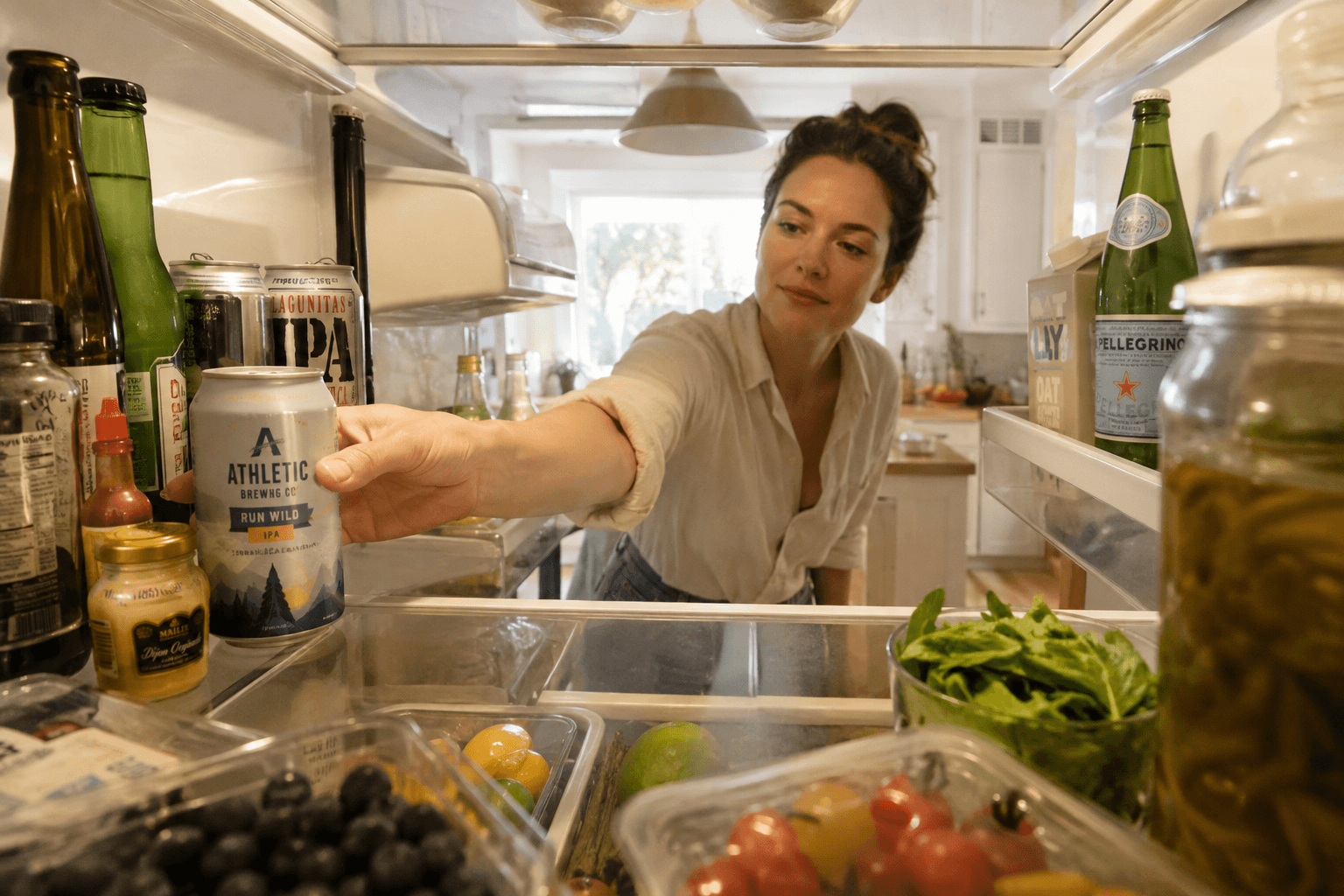
- Did someone just open a bottle?
- Did you walk into the restaurant where you always ordered the same thing?
You don't have to conduct a psychological investigation every time.
But identifying the cue can make the craving feel less mysterious.
NIAAA suggests recognizing triggers, reminding yourself of your reasons for changing, talking with someone you trust, distracting yourself with a healthy activity, challenging the thought that you need the drink and riding the urge out rather than immediately reacting to it.
Most urges pass.
You don't have to solve the rest of your life during one.
The First Ten Minutes Matter More Than Forever
This is something I wish people talked about more.
When a craving hits, the brain likes to make the question enormous.
Am I really never going to drink again?
That's a terrible question to answer while staring at somebody else's Cabernet.
You don't need to solve forever.
Solve now.
- Walk outside.
- Order something else.
- Text somebody.
- Finish making dinner.
- Take the dog around the block.
- Change rooms.
- Give the moment somewhere to go.
Ten minutes later, the question may already feel different.
Patterns Can Make Triggers Less Mysterious
This is one reason I'm so interested in patterns.
A craving can feel random when you experience it one moment at a time.
But zoom out and maybe it isn't random.
- Friday evenings.
- After stressful meetings.
- Cooking dinner.
- Watching football.
- Certain friends.
- Vacations.
- Celebrations.
The pattern can tell you something the individual craving couldn't.
That's useful whether you're sober, cutting back or simply trying to understand why some nights are harder than others.
You can't change a pattern you can't see.
Continue reading
If routines feel strange without alcohol, I also wrote about why sobriety can feel boring at first and how ordinary life slowly starts feeling natural again.
I Don't Think the Goal Is to Never Notice Alcohol Again
I used to think getting better at this probably meant eventually becoming completely indifferent.
Maybe for some people it does.
But I don't think that's the standard anymore.
The restaurant can still be the restaurant.
Friday can still feel like Friday.
Someone can pour a glass of wine next to me.
My brain is allowed to recognize an old pattern.
What matters is that recognition doesn't have to decide what happens next.
A trigger is not an instruction.
Maybe that's the part worth remembering.
Your brain can remember an old road without requiring you to drive down it.
And every time the cue arrives and the old ending doesn't, you're giving yourself another experience to remember too.
Frequently Asked Questions
Why do alcohol cravings sometimes appear suddenly?
Alcohol cravings can be triggered by cues your brain learned to associate with drinking, including people, places, objects, times of day, routines, physical sensations and emotions. You may notice the urge only after the cue has already activated an old pattern.
Can seeing someone else's drink trigger a craving?
Yes. Real-world research has found that direct exposure to alcohol can be associated with stronger momentary craving among people with alcohol use disorder. That does not mean seeing alcohol will trigger every person or trigger the same response every time.
Can feeling happy or excited trigger an alcohol craving?
It can. Alcohol is often paired with celebrations, vacations, weekends and other positive experiences. In a small 2026 real-world study, higher-than-usual positive emotion strengthened the association between direct alcohol exposure and craving.
Can certain people trigger alcohol cravings?
Yes. In the 2026 study, being around usual drinking partners was independently associated with greater craving. That does not mean the person is harmful or needs to be removed from your life. The brain may simply have learned to associate that relationship or situation with drinking.
Do alcohol triggers get weaker over time?
They can. NIAAA notes that urges often become less intense as people gain experience responding to them differently. Old memories may remain, but repeated alcohol-free experiences can make familiar situations feel more ordinary over time.
What should I do when an alcohol craving hits?
Start by recognizing the urge and noticing what may have triggered it. NIAAA suggests reminding yourself why you are changing, talking with someone you trust, distracting yourself with a healthy activity, challenging the thought that you need to drink and allowing the urge time to pass. If cravings remain intense or feel unsafe, talk with a healthcare professional.