News & Research
Do Alcohol-Free Drinks Actually Help You Drink Less? Here's What the Research Says
Replacing your usual drink with something alcohol-free sounds almost too simple to make a difference. New research suggests it can work, but why it works may depend on what you were actually looking for in the drink.

You decide you're going to drink less.
Then 5 o'clock arrives.
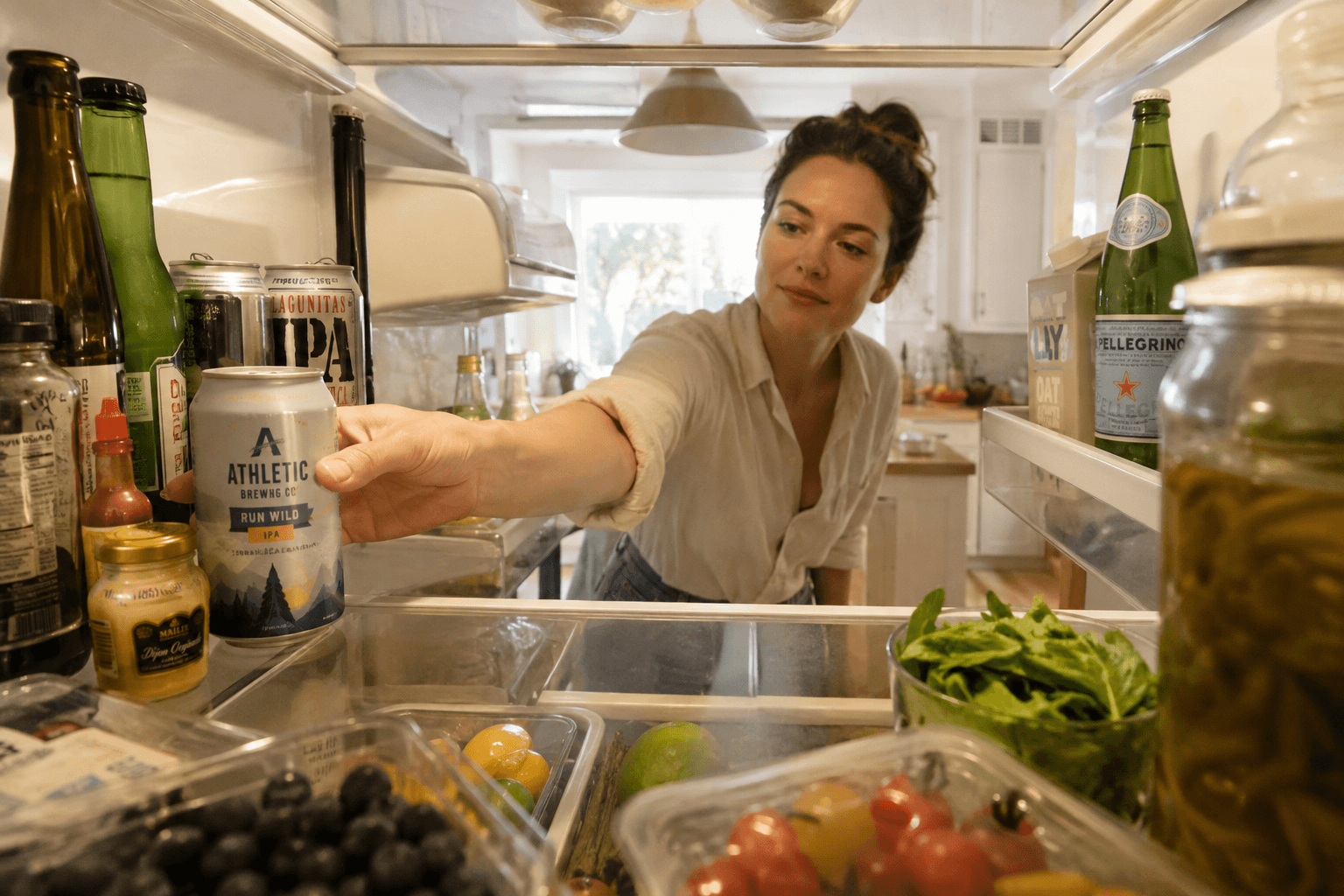
The refrigerator still opens.
The glass still comes out.
Dinner still needs to be made.
The couch is still waiting.
Your friends are still meeting at the same place Friday night.
So you pour something else.
Alcohol-free beer.
Dealcoholized wine.
Sparkling water.
A zero-proof cocktail.
Whatever works.
It feels like such a small substitution that it's reasonable to wonder:
Does changing what's in the glass actually change how much alcohol you drink?
Scientists have started asking the same question.
And increasingly, the answer appears to be:
For some people, yes.
But the interesting part isn't simply that alcohol-free drinks contain less alcohol.
It's why replacing the drink can work at all.
Researchers Gave People Alcohol-Free Drinks. They Drank Less.
Let's start with one of the stronger pieces of evidence.
A randomized controlled trial published in Scientific Reports in June studied 278 employees in Japan who were drinking at excessive levels.
Researchers divided them into two groups.
One group received nonalcoholic beverages for 12 weeks.
The other did not.
Participants recorded their alcohol consumption daily using an app.
By the end of the study, the group given nonalcoholic beverages had reduced its total alcohol consumption significantly more than the control group.
And the way that reduction happened is particularly interesting.
They weren't necessarily drinking dramatically less every time they drank alcohol.
They were drinking alcohol on fewer days.
In other words, the alternative beverage appears to have replaced some drinking occasions altogether.
That's a surprisingly practical result.
Nobody had to eliminate the moment when a drink normally happened.
Sometimes they just changed the drink.
This Isn't the First Trial to Find It
An earlier randomized controlled study produced a similar result.
Researchers recruited 123 adults who drank excessively but had not been diagnosed with alcoholism.
Participants assigned to the intervention received free nonalcoholic beverages every four weeks for 12 weeks.
Alcohol consumption fell significantly more in that group than among controls.
Even more interesting, the reduction remained measurable eight weeks after researchers stopped providing the beverages.
The more nonalcoholic beverages participants consumed, the more their alcohol consumption tended to decrease.
That suggests something incredibly simple may have been happening.
Replacement.
One drink was taking the place of another.
Not every time.
Not for everybody.
But often enough to show up in the data.
Maybe Drinking Isn't Only About Alcohol
This is where the research gets much more interesting.
Because if drinking were solely about consuming ethanol, an alcohol-free version shouldn't be particularly satisfying.
It has removed the ingredient supposedly doing all the work.
Yet people still buy alcohol-free beer.
They pour dealcoholized wine into wine glasses.
They make elaborate zero-proof cocktails.
They crack open something cold when work ends.
Why?
A new study published August 28 in BMC Public Health tried to understand exactly that.
Researchers conducted four online focus groups with adults in England and Scotland who had recently tried to reduce high-risk alcohol consumption.
Rather than asking only whether alcohol-free and low-alcohol drinks helped, researchers wanted to understand how people actually used them in everyday life.
What they found was not one universal experience.
They found three very different ones.
For Some People, the Ritual Still Works
One group normally drank ordinary soft drinks at home.
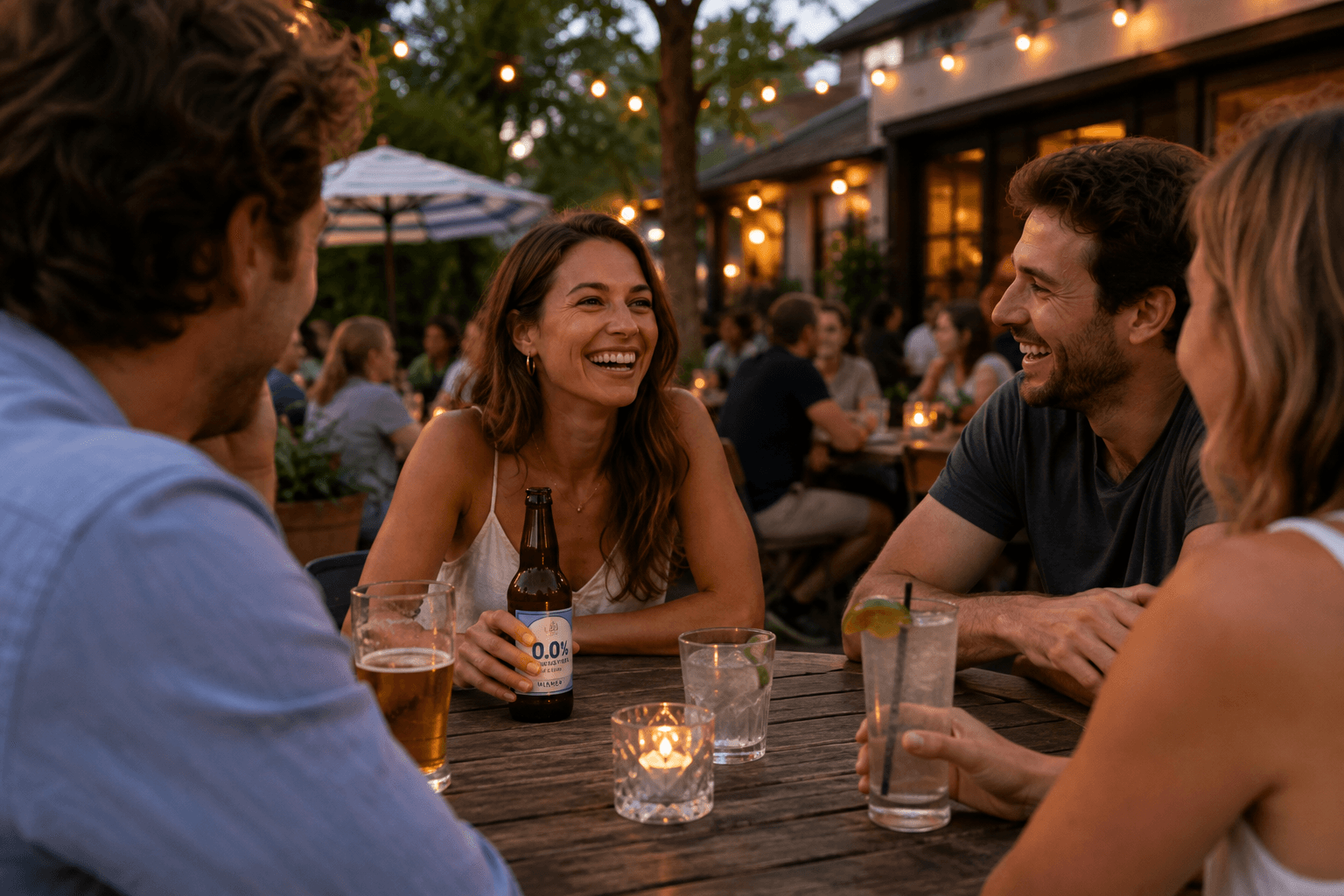
But when they went out socially, alcohol-free versions of familiar alcoholic drinks became useful.
Why?
Because they looked and behaved enough like the original.
An alcohol-free beer can still come in a bottle.
A zero-proof drink can still arrive in a cocktail glass.
You can still hold something.
Order something.
Raise a glass.
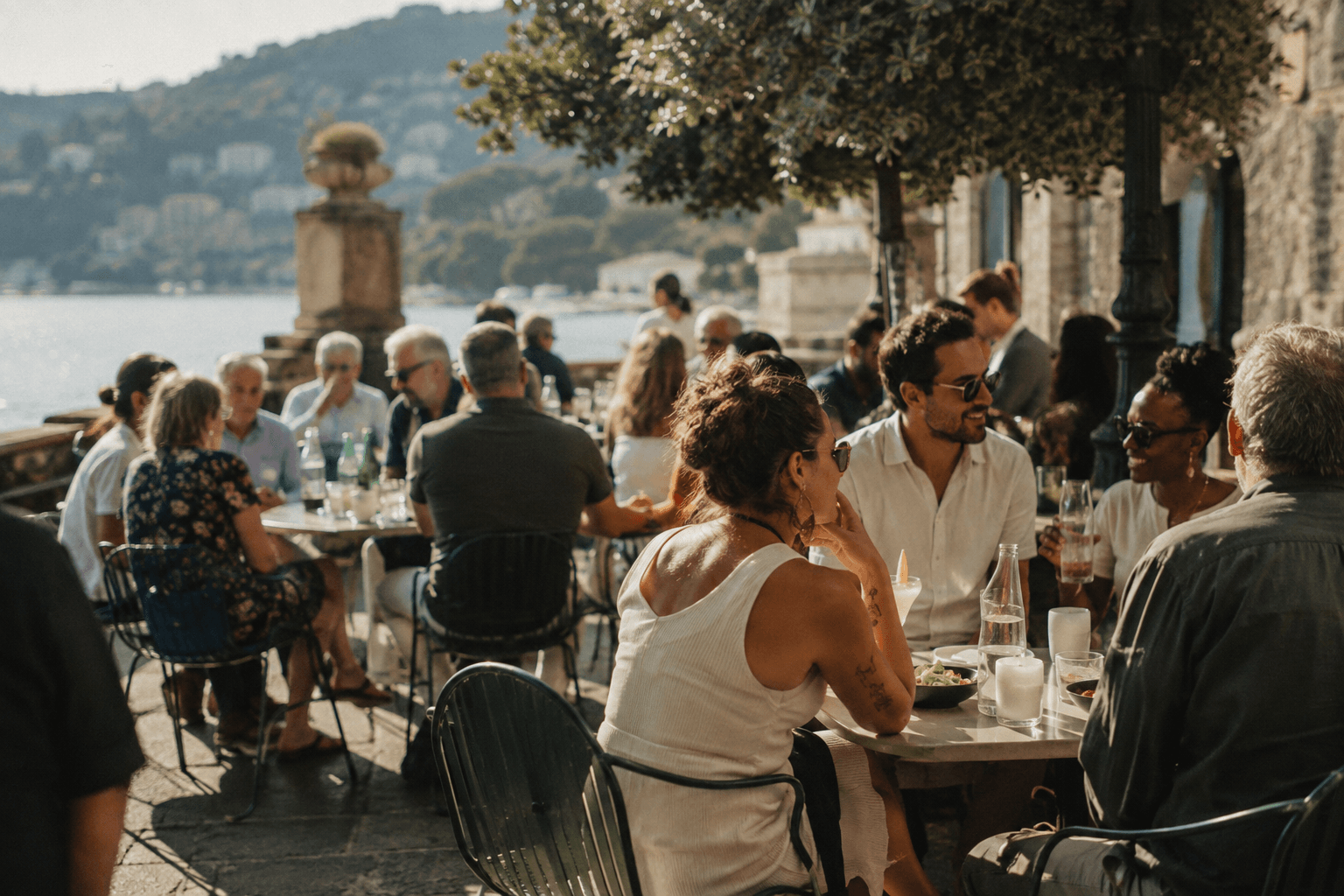
Stand around talking with everybody else.
The researchers found that these similarities helped some participants preserve meanings they associated with drinking: friendship, belonging, celebration and fun.
That's important.
Because sometimes changing your drinking isn't difficult because you're desperate for ethanol.
Sometimes it's difficult because alcohol has been woven into what the moment looks like.
The beer during the game.
The wine while cooking.
The cocktail at dinner.
The drink in your hand at the party.
Remove alcohol and suddenly the entire scene can feel slightly unfamiliar.
An alcohol-free alternative can keep part of the scene intact.
You changed the ingredient without necessarily changing the moment.
That's Exactly What Danielle Discovered
Yesterday, Danielle wrote about something remarkably similar here at Nova.
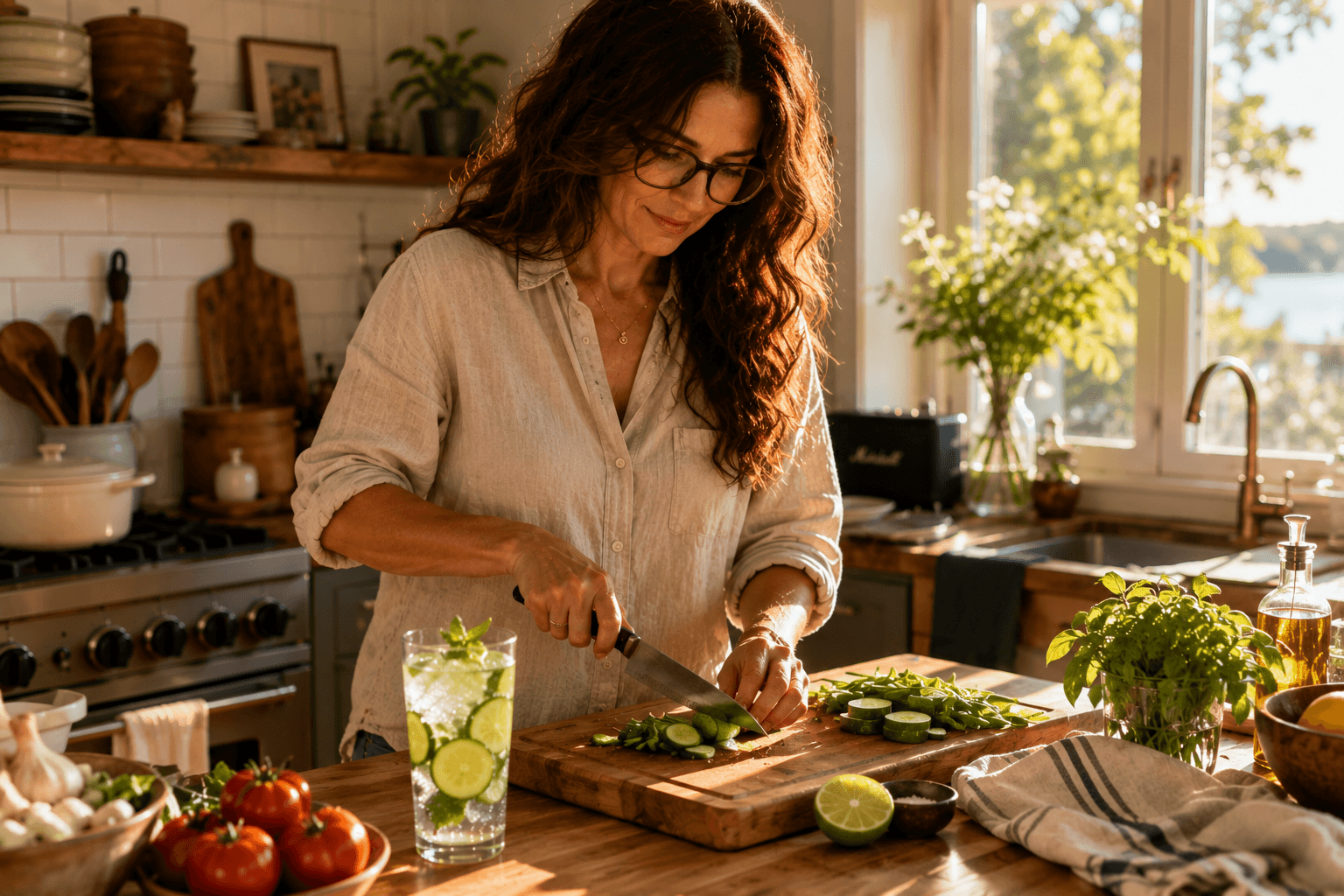
Her familiar 5 o'clock ritual was opening Chardonnay while making dinner.
When she decided to change her drinking, she didn't stop cooking.
She didn't stop putting on music.
She didn't stop wanting something good in a glass beside her.
She changed what she poured.
Sometimes dealcoholized wine.
Sometimes club soda.
Sometimes one of the alcohol-free drinks she's been making.
Her experience obviously isn't a scientific experiment.
But it illustrates something the new research describes surprisingly well.
A drinking habit can contain more than the alcohol itself.
There can be a time.
A glass.
A place.
A routine.
A social meaning.
And sometimes preserving those pieces makes changing the alcohol easier.
Continue reading
Danielle recently wrote about changing her own familiar 5 o'clock ritual without giving up the ritual itself.
For Another Group, Alcohol-Free Drinks Worked at Home but Not Outside It
The second pattern researchers identified was almost the reverse.
Some participants incorporated alcohol-free or low-alcohol drinks fairly easily into ordinary routines at home.
Watching television.
Reading.
Relaxing in the evening.
Those situations could accommodate a replacement.
Social situations were harder.
Certain gatherings carried stronger expectations around drinking.
Other situations were specifically oriented toward intoxication.
And in those environments, an alcohol-free substitute didn't necessarily perform the same job.
That distinction matters.
An alcohol-free beer may work beautifully when what you want is something cold while watching the game.
It may feel much less useful if what you actually want is to get drunk with your friends.
Same product.
Completely different job.
And Some People Thought the Whole Thing Was Pointless
Then there was the third group.
Alcohol-free and low-alcohol drinks simply didn't fit.
Some participants disliked the taste.
Some thought they were too expensive.
Others saw poor value in paying almost as much for something that didn't contain the alcohol they actually wanted.
For them, removing alcohol removed the point.
And that's worth saying plainly.
Alcohol-free drinks are not a magic sobriety hack.
Some people love them.
Some people find them enormously useful.
Some people couldn't care less.
And for certain people, drinks designed to imitate alcohol may even keep attention focused on something they're trying to move away from.
The right replacement might instead be iced tea.
Coffee.
Mineral water.
Soda.
Something completely unrelated to alcohol.
Or nothing at all.
The Best Replacement Might Be the One You Actually Like
There's a mistake people sometimes make when changing their drinking.
They search for the alcohol-free product that most accurately imitates whatever they're giving up.
The beer that tastes most like beer.
The wine that tastes most like Chardonnay.
The spirit that burns enough to resemble liquor.
Maybe that's exactly what you want.
But it doesn't have to be.
If you're going to replace something you genuinely enjoyed, the alternative needs to be something you're willing to choose again tomorrow.
That may matter more than whether it passes some imaginary authenticity test.
The replacement doesn't have to fool you. It has to satisfy you.
Availability May Matter More Than Willpower
There's another clue in this research that I think deserves more attention.
In these randomized trials, researchers didn't simply tell people: You should drink less.
They gave them alternatives.
That's a meaningful difference.
An older online experiment with 808 weekly drinkers found that when participants were shown a larger proportion of nonalcoholic choices, 49% selected a nonalcoholic drink.
When the available selection leaned heavily toward alcoholic drinks, only 26% did.
That doesn't prove your refrigerator determines what you'll drink tonight.
But it illustrates a useful principle.
Choices are easier to make when the choice actually exists.
If the refrigerator contains twelve beers and nothing else you particularly enjoy, deciding not to have a beer requires one kind of effort.
If it contains beer plus three alcohol-free options you genuinely like, the decision looks different.
Sometimes changing an environment is easier than repeatedly arguing with yourself inside the same environment.
More Americans Are Already Trying This
This isn't happening only in research labs.
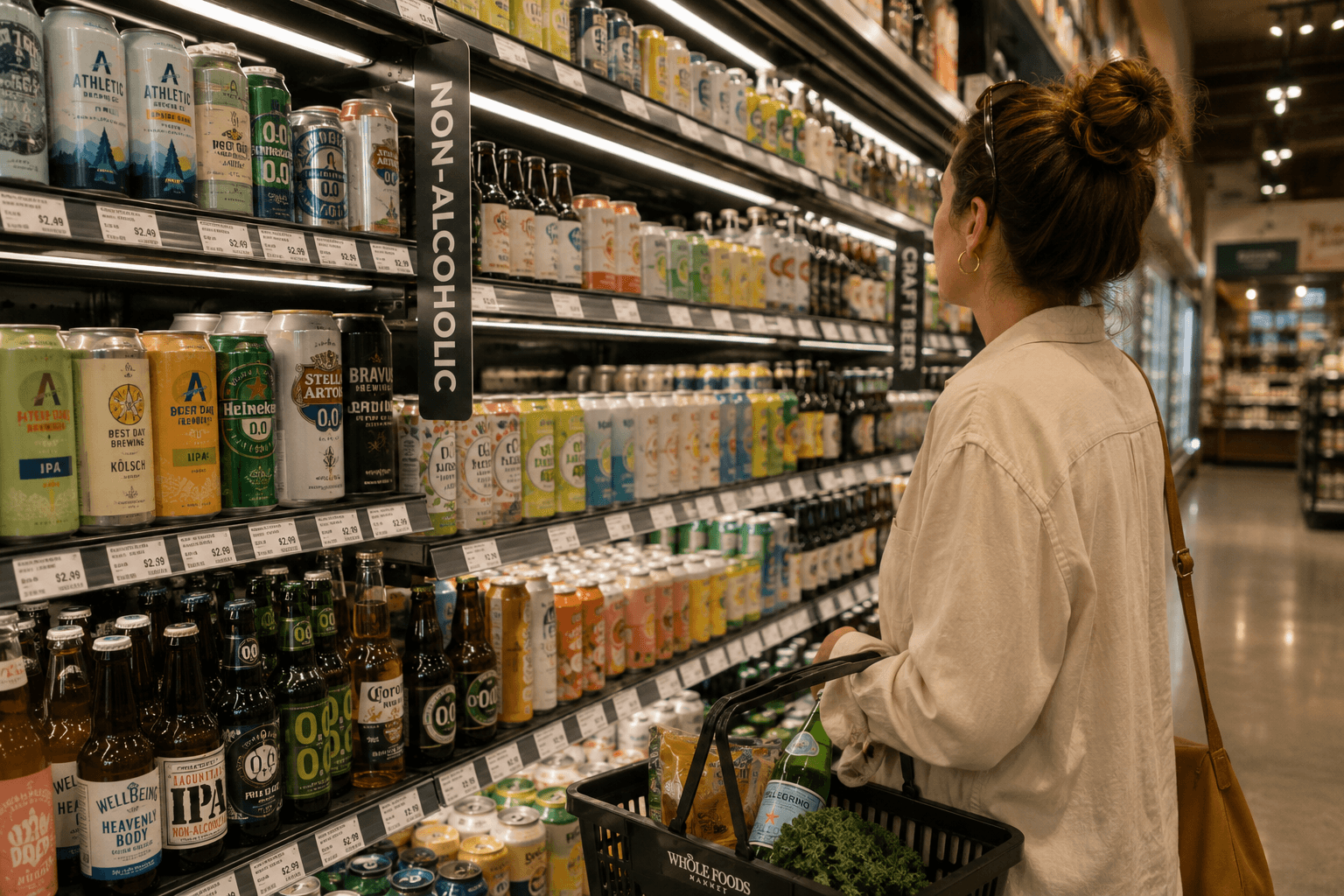
Gallup asked Americans about alcohol-free alternatives for the first time this year.
Seventeen percent of U.S. adults said they had consumed nonalcoholic beer, wine or spirits instead of an alcoholic drink sometime during the previous year.
Among current drinkers, that rose to 20%.
And among drinkers who use nonalcoholic alternatives, 38% said they're drinking more of them than they used to.
Only 17% said they're drinking fewer.
Meanwhile, just 54% of American adults now say they drink alcohol at all, tied with last year's record low in Gallup's trend dating back to 1939.
Something is clearly changing around what Americans expect to find in their glass.
Does This Mean Alcohol-Free Drinks Will Make You Drink Less?
Not necessarily.
That's where we need to keep the science honest.
The newest BMC Public Health study was qualitative and small. The final thematic analysis drew on 23 participants. Its purpose was to understand people's experiences, not measure how many drinks an alcohol-free beer removes from someone's week.
The randomized trials provide stronger evidence that providing nonalcoholic beverages can reduce alcohol consumption in the populations studied.
But they also have limits.
The 2026 workplace trial was conducted among employees in Japan drinking at excessive levels. It was funded by Asahi Breweries, although the authors report that the company had no role in the study design, data collection, analysis, interpretation, manuscript preparation or publication decision.
That funding relationship doesn't invalidate the result.
It does belong in the article.
And none of these studies tells us that every person trying to cut back should stock their refrigerator with alcohol-free beer.
What they tell us is narrower and more useful:
For some people, having appealing nonalcoholic alternatives available can help reduce alcohol consumption.
There's Another Question Worth Asking
Instead of asking:
What's the best alcohol-free replacement for my drink?
Try asking:
What part of the drink am I actually trying to replace?
The taste?
The cold bottle?
The glass in your hand?
The signal that work is finished?
Something to sip while cooking?
A way to participate socially?
A reward?
The buzz?
The escape?
Those aren't the same problem.
And they probably won't have the same solution.
If what you miss is having something cold and interesting at 5 o'clock, a good alcohol-free drink may solve much more of the problem than you expected.
If what you miss is intoxication, sparkling water probably isn't going to fool your brain into thinking otherwise.
Understanding the difference can tell you a lot about the habit you're actually changing.
Maybe the Simplest Strategy Is Also the Most Practical
We tend to make behavior change sound enormous.
New identity.
New routines.
New social life.
New everything.
Sometimes those changes really are necessary.
But sometimes the first experiment can be much smaller.
Buy something else.
Put it in the refrigerator.
Make sure it's cold.
At the hour when you'd normally reach for alcohol, try reaching for that instead.
See what happens.
Maybe you hate it.
Try something different.
Maybe alcohol-free beer works.
Maybe dealcoholized wine does.
Maybe it's sparkling water with lime.
Maybe it's iced tea.
Maybe it's a ridiculous cucumber drink you spend ten minutes making because you genuinely enjoy it.
The point isn't to find the officially approved sobriety beverage.
The point is to give yourself another choice.
And increasingly, research suggests that sometimes another choice is enough to change what happens next.
Frequently Asked Questions
Do alcohol-free drinks actually help people drink less?
Randomized trials have found that providing nonalcoholic beverages to people who drink excessively can reduce overall alcohol consumption. A 2026 workplace trial involving 278 employees found that the reduction occurred primarily because participants drank alcohol on fewer days, rather than consuming less on days when they did drink.
Why might alcohol-free drinks help with cutting back?
For some people, alcohol is part of a larger ritual or social practice. New qualitative research suggests alcohol-free alternatives can preserve familiar elements such as the bottle, glass, taste, ordering ritual or feeling of participating socially while removing or reducing the alcohol.
Do I need to drink alcohol-free beer or wine?
No. The research does not suggest that alcohol-like substitutes are necessary. Some people in the newest study disliked them because of taste, cost or because removing alcohol removed what they valued about the drink. A useful replacement can be any beverage that helps you make the change you want.
Can alcohol-free drinks make cravings worse?
People respond differently. For some, familiar alcohol-like drinks make social situations or rituals easier. For others, reproducing the appearance or taste of an alcoholic drink may feel uncomfortable or keep alcohol too mentally present. If a particular substitute makes changing your drinking harder rather than easier, it may not be the right choice for you.
How common are nonalcoholic alternatives?
Gallup reported in August 2026 that 17% of U.S. adults had substituted nonalcoholic beer, wine or spirits for an alcoholic beverage during the previous year. Among drinkers who use these alternatives, 38% said they were consuming more of them than they used to.