
Sobriety & Life
Why Does Sobriety Feel So Boring at First?
Sobriety can feel strangely boring at first. Here's why the empty space happens, why ordinary life can feel flat, and how it slowly starts to feel like yours again.

You stopped drinking because you wanted something better.
Maybe you wanted clearer mornings. Better sleep. More control. Less anxiety about what you said the night before. Maybe you were simply tired of alcohol taking up more space in your life than you wanted it to.
Then you stop.
And after the initial determination wears off, you find yourself sitting on the couch on a Saturday night thinking:
Is this it?
Nobody talks enough about how boring sobriety can feel at first.
Not peaceful. Not freeing. Just... boring.
I remember that feeling. And looking back, I don't think it meant there was something missing from sobriety.
I think it meant alcohol had been filling more of my life than I realized.
When Drinking Was Also the Activity
Alcohol has a way of attaching itself to things.
- You drink while watching the game.
- You drink while cooking dinner.
- You drink around the fire.
- You drink at the restaurant.
- You drink on vacation.
- You drink at the concert.
- You drink because it's Friday.
- You drink because you had a terrible day.
- You drink because you had a great one.
Eventually, the activity and the drinking can become so intertwined that it's difficult to imagine one without the other.
Research helps explain part of this. The National Institute on Alcohol Abuse and Alcoholism describes how repeated alcohol use can reinforce habits and strengthen responses to people, places, routines, and other cues associated with drinking.
So when alcohol disappears, those situations don't disappear with it.
Friday still arrives. The game still comes on. Dinner still needs to be made. Summer evenings are still beautiful.
But something that used to occupy part of those moments isn't there anymore.
That can leave a surprising amount of empty space.
The Empty Space Can Feel Uncomfortable
I think we sometimes expect sobriety to immediately replace everything alcohol gave us.
Remove drinking on Monday. Discover an incredible new life by Tuesday.
It usually doesn't work like that.
At first, you may simply notice what's missing.
There are hours you need to fill now. There are social situations you experience differently. There may be friendships that suddenly feel different. Restaurants you don't enjoy as much as you thought you did. Weekends that seem strangely long.
And there are moments when you realize you weren't drinking because something exciting was happening.
Drinking was what made the moment feel like something was happening.
That's an uncomfortable realization.
It's also an important one.
Because boredom isn't necessarily telling you that sober life is boring.
It may simply be showing you where alcohol used to live.
There May Be a Reason Everything Feels Flat
There's another piece worth understanding, especially if you're early in sobriety and wondering why ordinary things don't feel as rewarding as you expected.
Alcohol interacts with the brain systems involved in reward, stress, and motivation. With repeated heavy use, those systems can adapt. NIAAA describes addiction as involving reduced reward function alongside greater activation of brain stress systems, while also emphasizing that the brain has the capacity to change during recovery.
That doesn't mean everyone who feels bored has alcohol use disorder, and it doesn't mean boredom has one biological explanation.
But it may help explain why, for some people, an ordinary evening can temporarily feel flatter than expected after alcohol is removed.
Your life hasn't necessarily become less interesting.
Your mind and your routines may simply need time to adjust to experiencing reward differently.
You Don't Need to Reinvent Yourself
One of the strangest expectations around sobriety is that you're suddenly supposed to become the most productive person alive.
- Wake up at 5 a.m.
- Run ten miles.
- Meditate.
- Learn another language.
- Meal prep for the entire week.
- Start woodworking.
- Apparently become someone who really enjoys kale.
You don't have to do any of that.
If you want to, great.
But getting sober doesn't require replacing every hour you used to drink with self-improvement.
Sometimes you need to rediscover things you already loved.
I started playing video games again.
Not because gaming was part of some carefully designed recovery strategy. I just enjoyed it. Eventually I made friends online. People I looked forward to talking with. Something that seemed like a simple way to pass an evening became a source of genuine connection and fun.
My wife might watch a show or read a book.
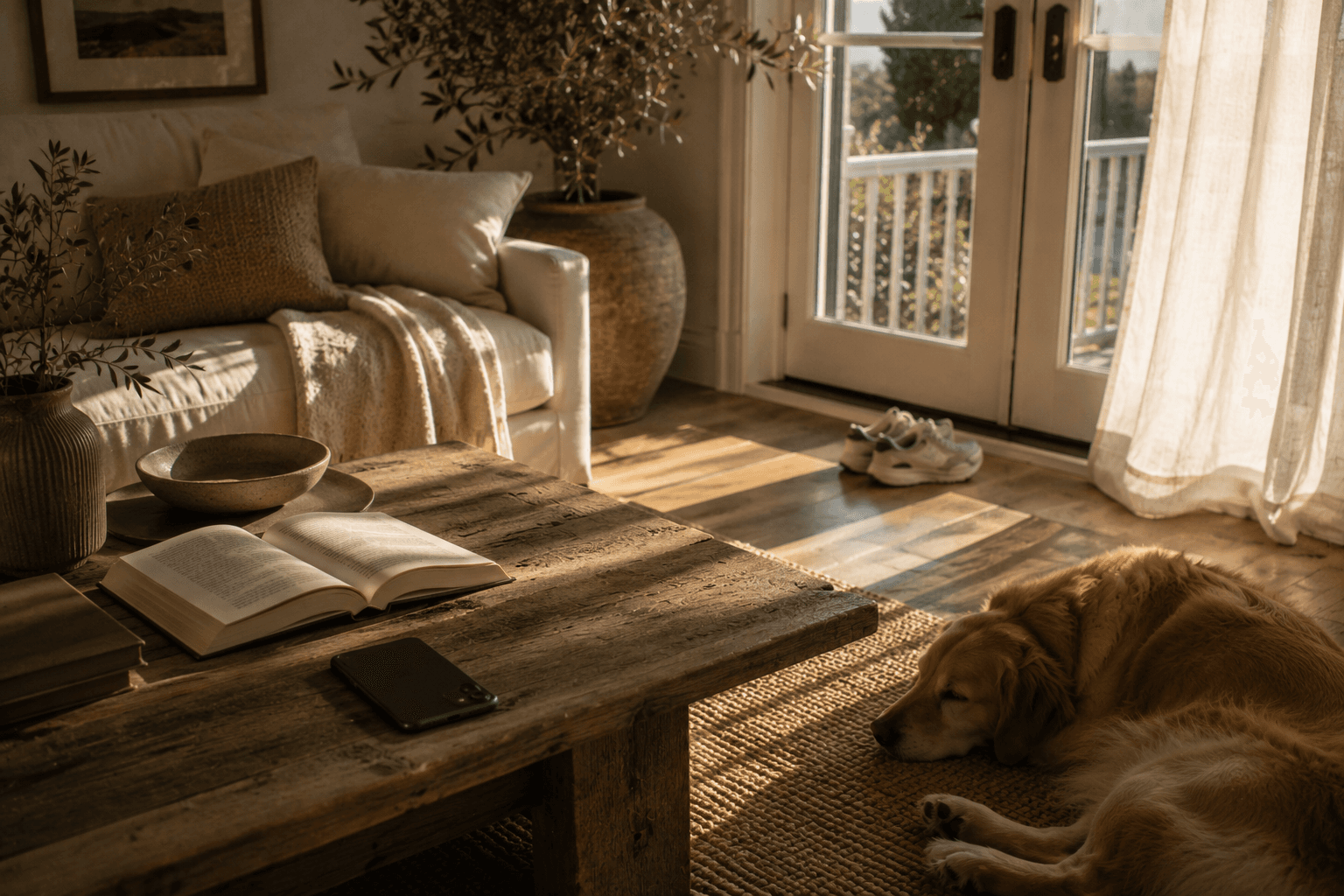
Some evenings we sit outside with our dog and talk to people walking by the house.
Nothing about those moments would make an impressive sobriety montage.
That's exactly the point.
They are just life.
And somewhere along the way, ordinary life started feeling like enough.
Start With What You Actually Like
When people search for things to do instead of drinking, they're often given enormous lists.
Take a pottery class. Go rock climbing. Learn guitar. Join a running club.
Those are perfectly good ideas.
But before trying to construct an entirely new personality, ask yourself a simpler question:
What did I enjoy before drinking became part of so many things?
Maybe you played games. Maybe you drew. Maybe you worked on cars. Maybe you read constantly. Maybe you loved being outside.
Maybe you cooked because you enjoyed cooking, not because opening a bottle of wine had become part of the ritual.
Maybe there is something you haven't done in ten years that you didn't consciously decide to stop doing.
Life just moved on.
Go find it again.
You might be surprised by what's still waiting for you.

Some Nights Really Will Be Boring
This matters too.
Not every sober evening needs to become meaningful.
Sometimes nothing is happening.
You order pizza. You scroll your phone longer than you should. You watch three episodes of something mediocre. You go to bed early.
That's okay.
One thing I've learned is that boredom doesn't need to be treated like an emergency.
For a long time, alcohol can become an almost automatic answer to nothing is happening.
Eventually you get to discover that nothing happening isn't always a problem.
Sometimes it's peace.
There's a difference.
It can take a while to recognize it.
Your Routines Need Time to Catch Up
Alcohol-related environments and cues can produce urges to drink, and research has found that cue reactivity and craving can be relevant to future drinking behavior.
That doesn't mean every boring Saturday night is dangerous.
It means routines matter.
If Saturday at 6 p.m. used to mean opening a drink, Saturday at 6 p.m. may feel strange for a while without one.
So give that time of day something else to become associated with.
- Walk the dog.
- Order your favorite food.
- Play a game.
- Go somewhere.
- Call somebody.
- Work on something you've been putting off.
- Sit outside.
- Watch the sunset.
- Or don't do much of anything.
You're not desperately trying to keep yourself occupied forever.
You're creating new evidence for yourself:
Saturday night can happen without alcohol.
Then another Saturday happens. And another.
Eventually the new routine stops feeling new.
It just becomes your life.
Connection Can Show Up in Unexpected Places
One thing alcohol promises very effectively is connection.
Bars are full of people. Parties revolve around drinks. Someone pours a glass of wine and suddenly sitting around a kitchen island feels like an event.
When you remove alcohol, you may wonder where that connection is supposed to come from now.
Sometimes you have to look for it.
Sometimes it finds you somewhere you weren't expecting.
- Online.
- In your neighborhood.
- At the gym.
- Walking your dog.
- Through an old hobby.
- Sitting in the front yard talking to someone longer than you planned.
The connection isn't necessarily louder.
It may actually be quieter.
But I've found that quieter doesn't mean less meaningful.
Sometimes it's the opposite.
Continue reading
Wondering where your social life goes when drinking is no longer the default?
Eventually, You Stop Trying to Fill the Space
This may be my favorite part.
At some point, you stop thinking about every evening as something you need to survive without drinking.
You stop constantly searching for things to do sober because you're no longer categorizing everything that way.
It's just Tuesday.
You're playing a game. Reading. Watching television. Talking with someone. Walking around the neighborhood. Working on something you care about. Sitting outside. Going to bed.
Alcohol isn't missing from the evening because the evening no longer feels like it was supposed to contain alcohol in the first place.
That transition doesn't happen all at once.
You build it quietly.
One ordinary night at a time.

If Sobriety Feels Boring Right Now
Don't panic.
And don't assume this is what the rest of your life is going to feel like.
You removed something that may have occupied hundreds or thousands of hours of your life. Something that became connected to your routines, relationships, weekends, celebrations and ways of relaxing.
Of course there's an empty space afterward.
You don't have to fill all of it tonight.
Try something. Rediscover something. Call somebody. Go somewhere. Stay home. Be bored sometimes.
Give yourself enough time to find out what you actually enjoy when alcohol isn't choosing the activity for you.
Because eventually something strange can happen.
The life that once seemed too quiet starts to feel peaceful.
The ordinary things become interesting again.
And one evening you'll realize you haven't been trying to figure out what to do instead of drinking.
You've just been living.
Frequently Asked Questions
Why does sobriety feel boring at first?
Alcohol may have become connected to your routines, social life, relaxation, weekends, and sense of reward. When you remove it, those situations remain but the familiar drinking ritual does not. For some people, that creates an uncomfortable period where ordinary life temporarily feels quieter or less rewarding.
Is boredom normal after quitting drinking?
It can be. Not everyone experiences sobriety the same way, but many people notice extra time, altered routines, and changes in social habits after they stop drinking. Those empty spaces can initially feel like boredom while new routines develop.
What can I do instead of drinking when I'm bored?
Start with things you genuinely enjoy rather than trying to reinvent yourself. Old hobbies, games, exercise, cooking, reading, time outside, seeing friends, walking the dog, or simply having a quiet night can all become part of a new routine.
How long does boredom in sobriety last?
There isn't a universal timeline. Habits, drinking history, social routines, and individual recovery experiences differ. For many people, repeated alcohol-free experiences gradually make ordinary evenings feel normal again rather than like something is missing.
Do I need to stay busy all the time to avoid drinking?
No. Building helpful routines can make certain times or situations easier, but sobriety does not require constant distraction. Part of the adjustment can be learning that a quiet or uneventful evening does not have to be fixed.