News & Research
Alcohol Is Entering Its Wellness Era. But Can a Drink Actually Be “Healthy”?
Low sugar. Low carb. Gluten-free. Electrolytes. Alcohol is borrowing the language of wellness, but a healthier feature and a healthy drink are not necessarily the same thing.

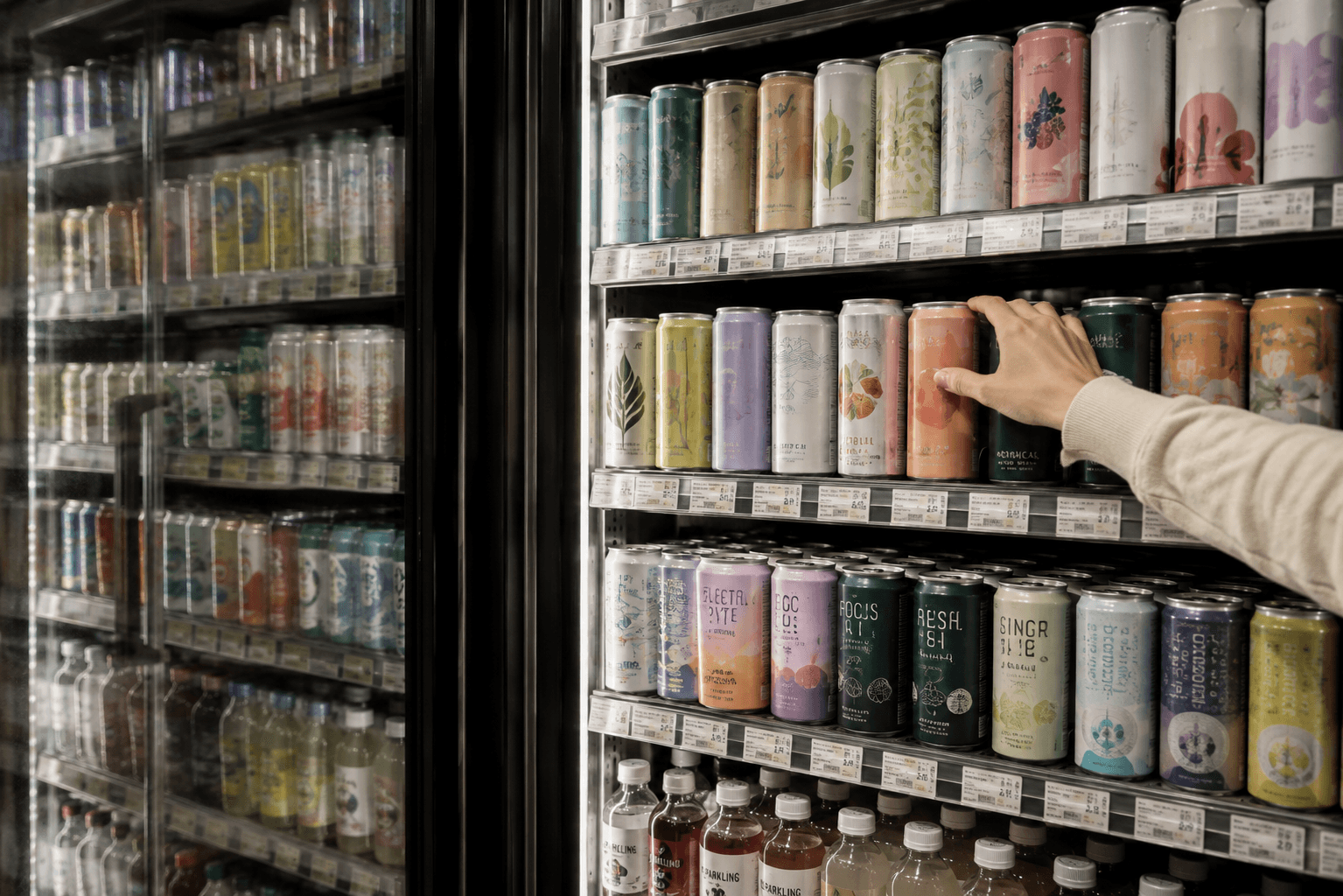
Walk through almost any grocery store today and the wellness aisle seems to have escaped its aisle.
Electrolytes are everywhere.
Protein is everywhere.
Collagen is everywhere.
Drinks promise hydration, energy, focus, gut health, recovery and better sleep.
Even soda has gotten functional.
So perhaps it was inevitable that alcohol would eventually join in.
Recent reporting has highlighted alcoholic beverages carrying claims such as low sugar, low carb, gluten-free and natural, with some products incorporating ingredients such as collagen or electrolytes.
From a marketing perspective, it makes perfect sense.
Consumers haven't stopped wanting to socialize. But many are thinking more about what they eat, how they sleep, how they exercise and how they feel the next morning.
Alcohol companies have to sell to that person too.
And increasingly, the can in their hand is starting to look like it belongs next to their electrolyte powder.
When does a healthier feature make something healthier, and when does it simply make it sound that way?
We've Seen This Playbook Before
If you were around in the summer of 2019, you probably remember what happened with hard seltzer.
White Claw seemed to appear everywhere at once.
- Parties.
- Beaches.
- Boats.
- Backyards.
- Social media.
By 2019, White Claw accounted for more than half of U.S. hard-seltzer sales, while the broader hard-seltzer category was exploding.
Contemporary coverage also emphasized the brand's low-calorie, low-carb and gluten-free positioning.
That positioning mattered.
Hard seltzer didn't look like traditional beer.
It didn't feel like a sugary cocktail.
It came in a slim can with sparkling-water cues and a relatively simple proposition.
You could still drink alcohol while choosing something that appeared more compatible with the health-conscious lifestyle surrounding it.
White Claw wasn't selling sobriety.
It was selling compatibility.
Drinking could still fit.
And consumers responded.
The Wellness Consumer Has Changed Since White Claw
Seven years later, wellness culture has moved considerably further.
People aren't only counting calories anymore.
- Sleep.
- Protein.
- Hydration.
- Gut health.
- Recovery.
- Steps.
- Heart rate.
- Stress.
Electrolyte powders, functional beverages, supplements and other products built around specific wellness goals have become part of everyday consumer culture.
That creates an obvious opportunity for alcohol companies.
If consumers want functional beverages, why wouldn't alcohol companies try to make alcohol feel functional too?
Welcome to Functional Alcohol
This is where things get interesting.
Imagine seeing these words on a can:
Low sugar.
That tells you something.
Low carb.
That tells you something too.
Gluten-free.
Potentially very useful information for someone who needs to avoid gluten.
Then the language starts moving closer to the wellness aisle.
- Natural.
- Clean.
- Electrolytes.
- Collagen.
- Botanicals.
Suddenly the product doesn't merely sound lighter.
It starts sounding like wellness.
And those are not necessarily the same thing.
A drink can genuinely contain less sugar than another drink.
It can genuinely contain fewer carbohydrates.
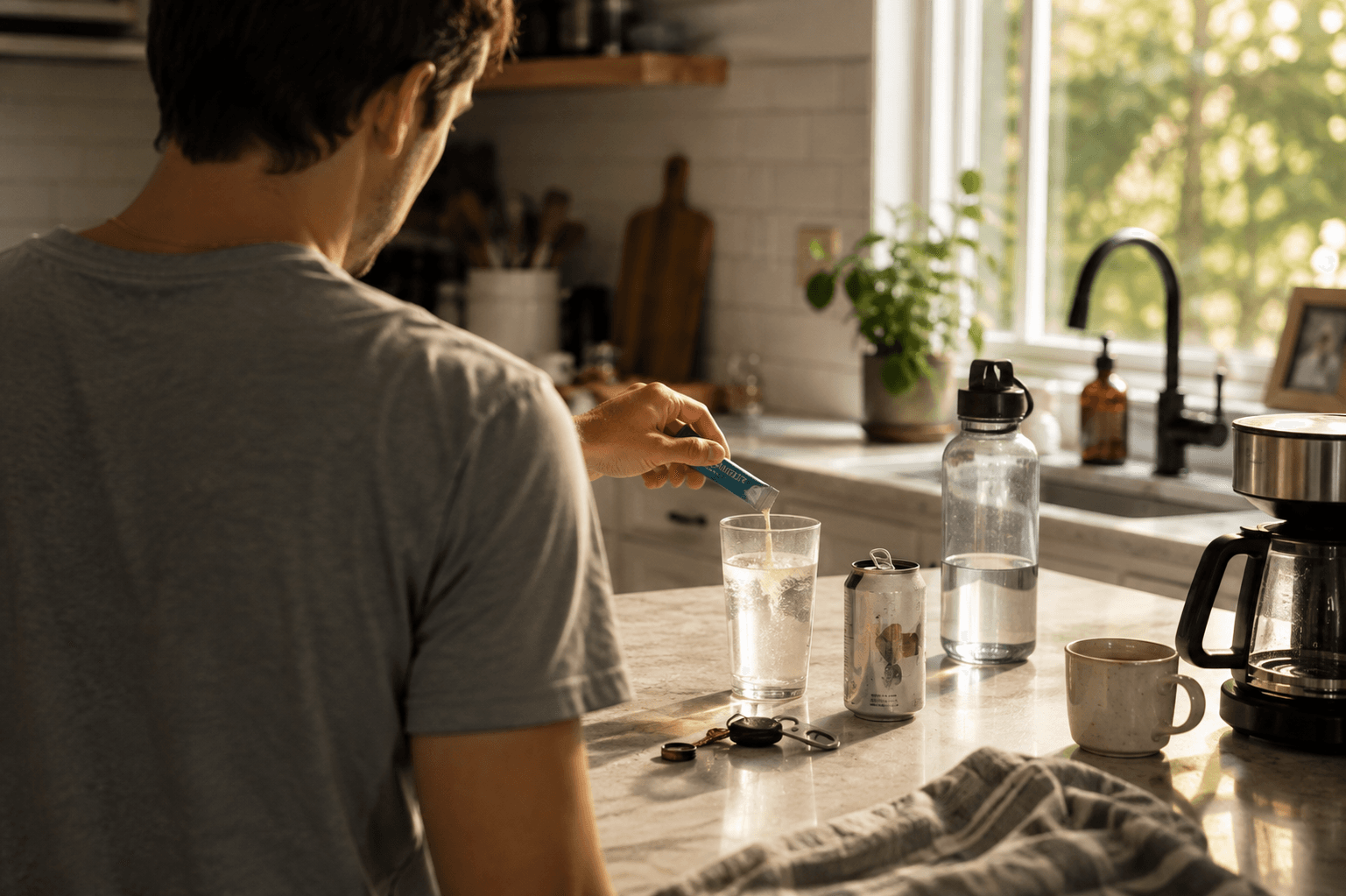
It can genuinely contain electrolytes.
None of those facts make the alcohol inside disappear.
Wait. Wouldn't Electrolytes Help the Hangover?
It's an understandable question.
Alcohol can increase urination.
You lose fluid.
Electrolytes are closely associated with hydration.
So the intuitive calculation is pretty simple:
Alcohol + electrolytes = less hangover?
The evidence does not support making that leap.
The National Institute on Alcohol Abuse and Alcoholism notes that research has not found a relationship between the extent of electrolyte disruption and hangover severity, nor evidence that adding electrolytes meaningfully reduces hangover severity.
A 2024 scientific review examining water consumption, thirst and hangovers reached a similarly important conclusion about hydration more broadly.
Dehydration and hangover can occur together, but the available evidence suggests they are largely separate consequences of drinking.
Drinking water during or immediately after alcohol showed only a modest relationship with preventing next-day hangover, while drinking water during a hangover did not meaningfully relieve the symptoms.
That doesn't mean hydration is pointless.
It means hydration-related ingredients don't neutralize what alcohol is doing.
A Healthier Choice Is Not Necessarily a Healthy Product
This might be the most useful way to think about the entire trend.
Suppose you're choosing between two alcoholic drinks.
One contains considerably more sugar than the other.
If reducing sugar matters to you, the lower-sugar option may genuinely be the better choice for that particular goal.
That doesn't require pretending the label is meaningless.
Likewise, gluten-free matters if you need something gluten-free.
Lower calories matter if you're comparing calories.
Lower alcohol by volume matters if you're comparing how much alcohol is in two servings.
The problem begins when one favorable attribute becomes a shortcut for judging the entire product.
Researchers and marketers sometimes describe versions of this as a health-halo effect, where a positive characteristic can influence how healthy people perceive a product overall.
Recent criticism of wellness-oriented alcohol marketing raises a similar concern: appealing health-related attributes can pull attention toward what has been added or reduced and away from the alcohol itself.
The Can Doesn't Need to Say “Healthy”
This is where marketing gets clever.
A company doesn't necessarily need to print THIS ALCOHOL IS GOOD FOR YOU across the front of a can.
The message can be communicated much more subtly.
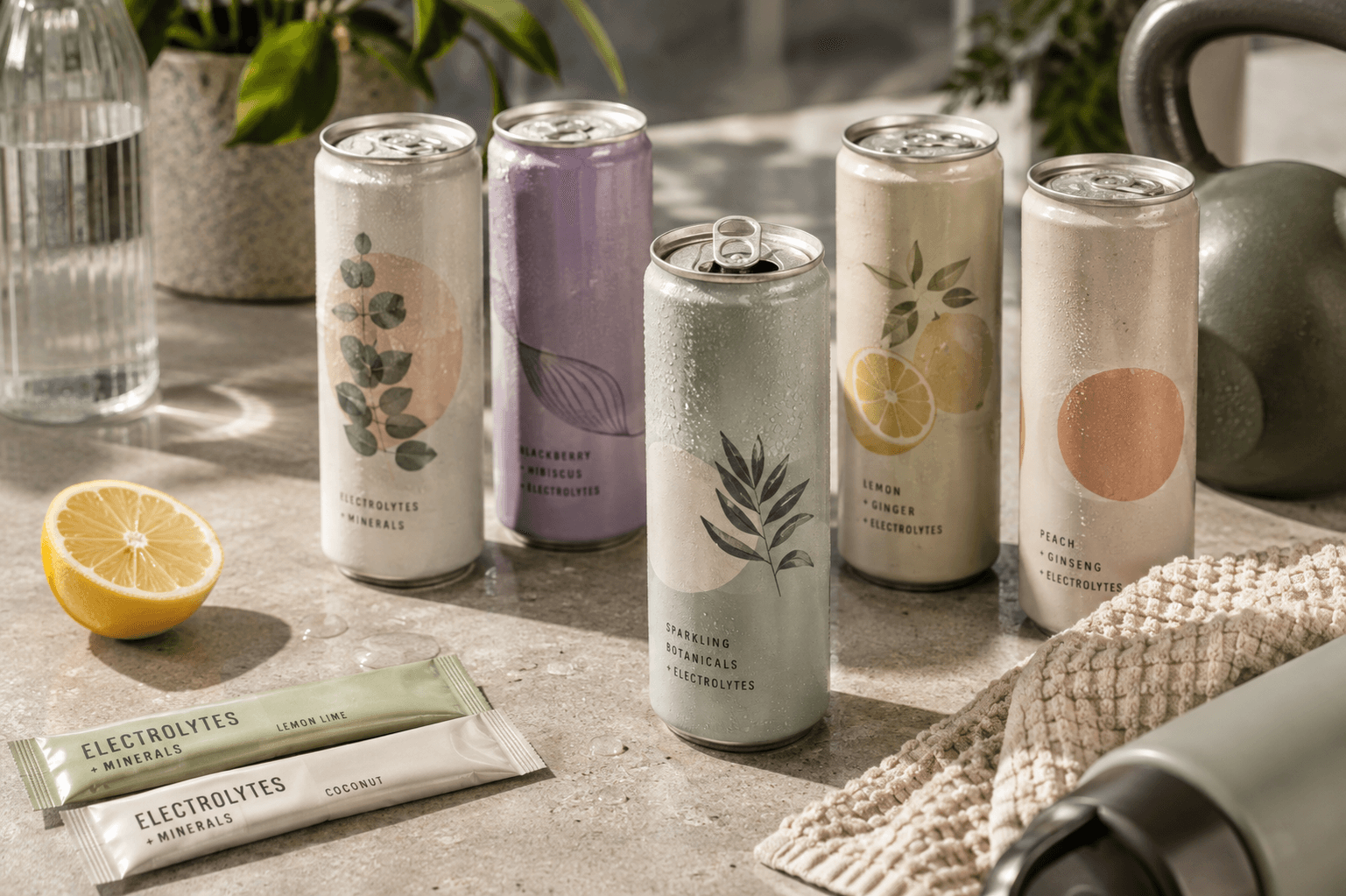
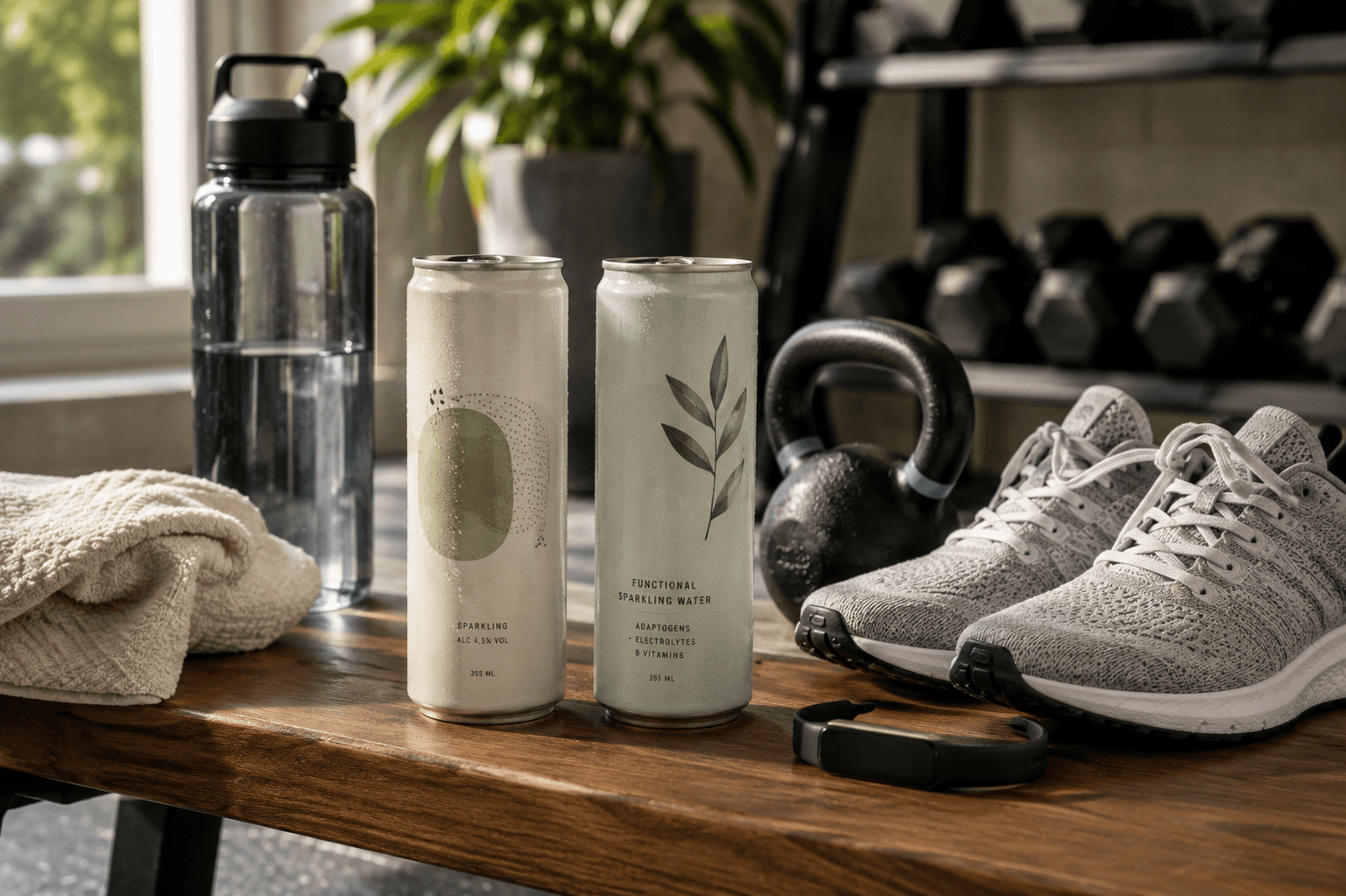
- Minimal packaging.
- Muted colors.
- Botanical illustrations.
- Words associated with fitness and wellness.
- A calorie number on the front.
- Maybe electrolytes.
- Maybe collagen.
- Maybe the word clean.
Put enough of those signals together and the consumer can finish the sentence.
This feels healthier.
That's why understanding individual claims matters more than simply deciding whether the marketing is good or bad.
The company is trying to sell a product.
The consumer's job is understanding what they're actually buying.
Continue reading
The beverage industry is already adapting to another major change: fewer people are treating alcohol as an automatic part of everyday life.
The Alcohol-Free Industry Is Doing It Too
Here's where the other side of the drinks aisle deserves the same scrutiny.
The alcohol-free beverage industry is moving toward functional wellness too.
Recent reporting has described nonalcoholic beers incorporating ingredients such as electrolytes, adaptogens, nootropics, vitamins, ginseng, ashwagandha and lion's mane.
Some products are positioned around ideas including hydration, recovery, mental clarity and mood.
That's fascinating.
But the same rule applies.
Removing alcohol tells us something important about the drink.
It does not automatically prove every other wellness claim printed on the package.
If a nonalcoholic beverage contains electrolytes, that's one claim.
If it claims an ingredient improves focus, recovery, mood or sleep, that's a different claim requiring its own evidence.
The same skepticism should apply whether a drink contains alcohol or not.
A claim should earn trust because the evidence supports it, not because the product happens to sit on the side of the drinks aisle we prefer.
Alcohol and Alcohol-Free Drinks Are Chasing the Same Customer
This may be the most interesting part of the whole story.
Picture the customer both industries want.
- They exercise.
- They care about sleep.
- They think about nutrition.
- They may use a fitness tracker.
- They buy electrolyte packets.
- They've probably tried a functional beverage.
- They may drink less than they used to.
- They still want something interesting in their hand at dinner, a concert or a party.
The alcohol industry has one proposition:
You don't have to give up drinking to participate in wellness culture.
The alcohol-free industry has another:
You don't have to give up the drinking experience to participate in wellness culture.
Those messages are surprisingly similar.
The meaningful difference begins with what is actually inside the can.
Maybe “Better for You” Is the More Honest Conversation
I don't think every product needs to pass some philosophical test of whether it is officially healthy.
People buy things for lots of reasons.
- Taste.
- Convenience.
- Fun.
- Socializing.
- Tradition.
- Sometimes because the can looks cool.
The more useful question might be:
Better compared with what?
Lower sugar than the alternative?
That's useful information.
Lower alcohol?
Also useful.
Gluten-free?
Important for some people.
Electrolytes?
Okay. What benefit is actually being claimed?
No alcohol?
That's a meaningful difference if avoiding alcohol is your goal.
Once you start asking better compared with what, vague wellness language becomes much easier to evaluate.
The Next White Claw May Already Be Coming
White Claw demonstrated something important years ago.
You don't necessarily have to convince people to change what they want.
Sometimes you change how the product fits into the life they already want.
Hard seltzer made alcohol feel compatible with a lighter, more health-conscious identity and became a cultural phenomenon.
Today's wellness consumer is asking for more.
So the next generation of alcoholic beverages may offer more too.
- Electrolytes.
- Functional ingredients.
- Lower sugar.
- Lower calories.
- Lower alcohol.
- Different formulations.
- Combinations we haven't seen yet.
From a business perspective, that's innovation.
From a consumer perspective, it means becoming better at separating what a product contains from what a product implies.
Those are not always the same thing.
So, Can Alcohol Actually Be Healthy?
This is where the clever headline gets a less clever answer.
Adding a beneficial ingredient doesn't cancel the presence or effects of alcohol.
And describing an alcoholic beverage as low sugar, low carb or gluten-free tells us about those particular characteristics.
It does not tell us that consuming alcohol itself carries no health risk.
That doesn't mean every wellness-oriented alcoholic drink is deceptive.
It doesn't mean choosing a lower-sugar option is pointless.
And it certainly doesn't mean adults can't decide they want a drink.
It means something simpler.
Read the claim literally.
Low sugar means low sugar.
Gluten-free means gluten-free.
Contains electrolytes means it contains electrolytes.
None of those statements means:
Alcohol without the consequences of alcohol.
And maybe that's the best way to navigate whatever comes next in the drinks aisle.
You don't need to fear the marketing.
You don't need to believe all of it either.
Just understand what it's actually saying.
Frequently Asked Questions
Can alcohol with electrolytes prevent a hangover?
Current evidence does not show that added electrolytes prevent or substantially reduce alcohol hangovers. The National Institute on Alcohol Abuse and Alcoholism notes that research has not found a meaningful relationship between electrolyte disturbances and hangover severity or evidence that added electrolytes reduce hangover severity.
Does drinking water prevent a hangover?
Hydration may help with thirst and fluid loss, but dehydration does not appear to be the sole cause of a hangover. A 2024 review found that drinking water during or shortly after alcohol had only a modest relationship with preventing next-day hangover and did not meaningfully relieve an established hangover.
Is low-sugar alcohol healthier?
A lower-sugar alcoholic beverage contains less sugar than a higher-sugar alternative, which may matter to someone monitoring sugar intake. That does not remove the alcohol or mean the beverage is free from the health risks associated with alcohol consumption.
What is functional alcohol?
There is no single universally standardized definition. Functional alcohol generally refers to alcoholic beverages that incorporate or emphasize ingredients and attributes associated with wellness or functional beverages, such as electrolytes, botanicals, vitamins, lower sugar, or other added ingredients.
Does adding electrolytes make alcohol healthier?
Adding electrolytes means the beverage contains electrolytes. It does not remove alcohol or establish that the drink prevents hangovers or offsets alcohol's effects. Individual wellness claims should be evaluated based on evidence for that specific benefit.
Are functional nonalcoholic drinks automatically healthy?
No. Removing alcohol is meaningful if avoiding alcohol is your goal, but additional claims about ingredients, hydration, focus, mood, recovery, or sleep should still be evaluated based on the evidence supporting those specific claims.
Why was White Claw so successful?
White Claw arrived during rapid growth in hard seltzer and combined convenient packaging, social-media appeal, a lighter visual identity, and prominent low-calorie, low-carb, and gluten-free positioning. By 2019, it represented more than half of U.S. hard-seltzer sales.