News & Culture
Sober Nightlife Is Starting at 7 A.M.
Coffee raves are bringing DJs, dancing, and community into the morning. The bigger story may be what happens when people keep the party and make alcohol optional.

For a long time, going out followed a pretty predictable formula.
Meet friends at night. Go somewhere loud. Order a drink. Maybe order another. Stay out later than you planned. Wake up the next morning and accept that part of your weekend has been traded for the night before.
But somewhere along the way, people started asking a surprisingly simple question:
What if we kept the music and skipped the rest?
Across cities in the United States and around the world, DJs are setting up inside coffee shops and other daytime spaces. People are showing up in the morning, sometimes remarkably early, ordering coffee or matcha and dancing.
They're being called coffee raves, morning raves, coffee parties and, as part of a broader cultural movement, soft clubbing.
And while some of these events are explicitly alcohol-free and others simply make alcohol less central, the interesting part isn't really what's in everyone's cup.
Alcohol no longer has to be the reason everyone showed up.
What Is a Coffee Rave?
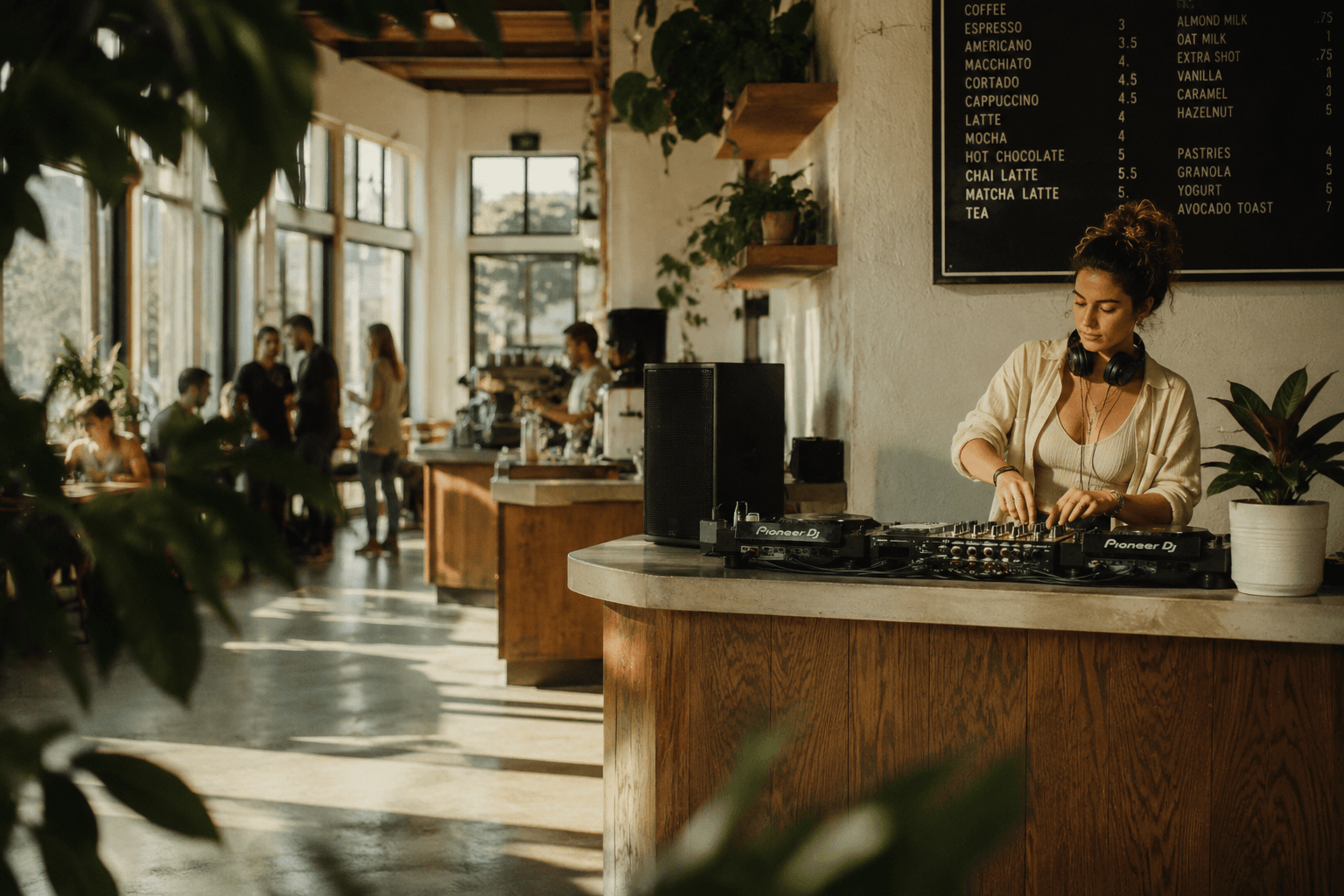
Imagine walking into a coffee shop on a Saturday morning.
There's an espresso machine running behind the counter. Someone is carrying an iced coffee through the crowd. Morning light is coming through the windows.
Except instead of quiet background music and people staring into laptops, there's a DJ playing house music and a room full of people dancing.
That's essentially a coffee rave.
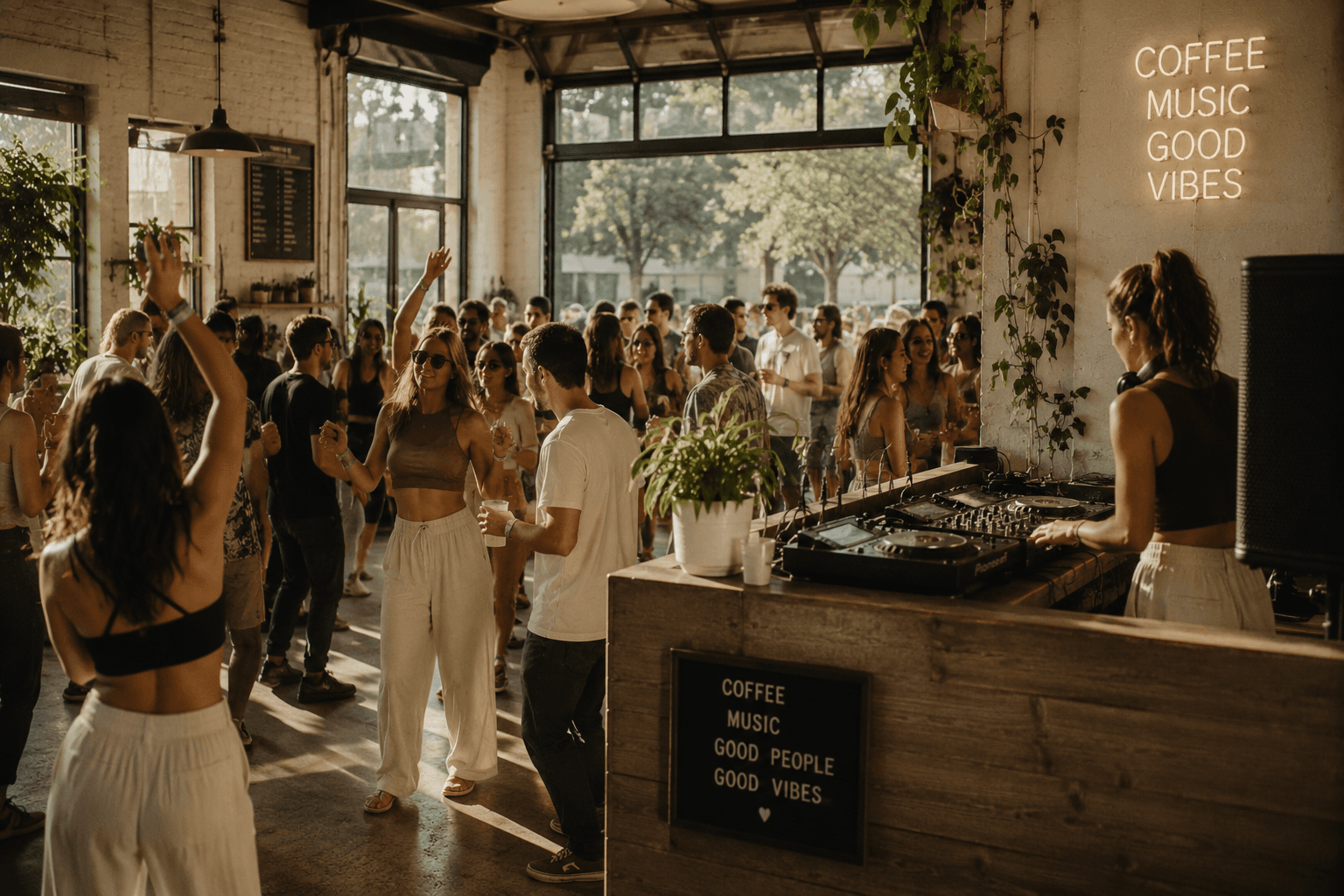
Coffee raves take some of the things people love about nightlife, including music, dancing, energy, meeting people, and feeling part of something, and move them into the daytime.
They can happen in coffee shops, bakeries, rooftops, wellness spaces, and other venues that were never traditionally considered places to go dancing.
And the idea is growing quickly enough that it is becoming difficult to dismiss as a novelty.
Coffee Raves Are Becoming a Real Social Trend
Eventbrite has grouped coffee raves into a broader movement it calls soft clubbing, a shift toward earlier, more intentional social experiences built around things like coffee, music, wellness, movement, and connection.
Its data showed coffee-clubbing events increasing 478%, with attendance increasing 150%. Eventbrite also reported a 92% increase in sober-curious gatherings.
Among Gen Z respondents in Eventbrite's research, 61% said they wanted to drink less in order to prioritize things including better sleep, mental health, and physical fitness.
The events themselves are showing up in very different places.
In St. Louis, Sunday House Club has brought hundreds of people into local coffee shops on Sunday mornings for house music, coffee, and an intentionally alcohol-free, all-ages environment.
In Kansas City, AM Club has hosted morning pop-ups at coffee shops and other businesses for people who want the social experience of going out without alcohol or late nights.
And Daybreaker, one of the best-known names in sober daytime dancing, describes itself as a global sober dance movement with communities across more than 66 cities.
The idea isn't confined to the United States either. Alcohol-free and sober dance events are appearing internationally, from established morning dance communities to newer sober rave scenes such as those reported in Karachi.
Apparently the party isn't disappearing.
Someone just moved it to breakfast.
Why Are Coffee Raves Becoming So Popular?
There probably isn't one explanation.
Some people are sober. Some are sober-curious. Some want to drink less. Others simply like coffee, house music, meeting people, and being home before the traditional nightclub has even opened its doors.
But there is a common thread running through many of these events.
People still want to go out.
They still want to dance.
They still want music.
They still want to meet someone new.
They still want an excuse to leave the house and do something with other people.
They just might not want everything that traditionally came attached to it.
That's what makes coffee raves more interesting than simply replacing a cocktail with a cappuccino.
They're questioning why alcohol had to be part of the definition of going out in the first place.
Maybe We Didn't Need the Alcohol as Much as We Needed Somewhere to Go
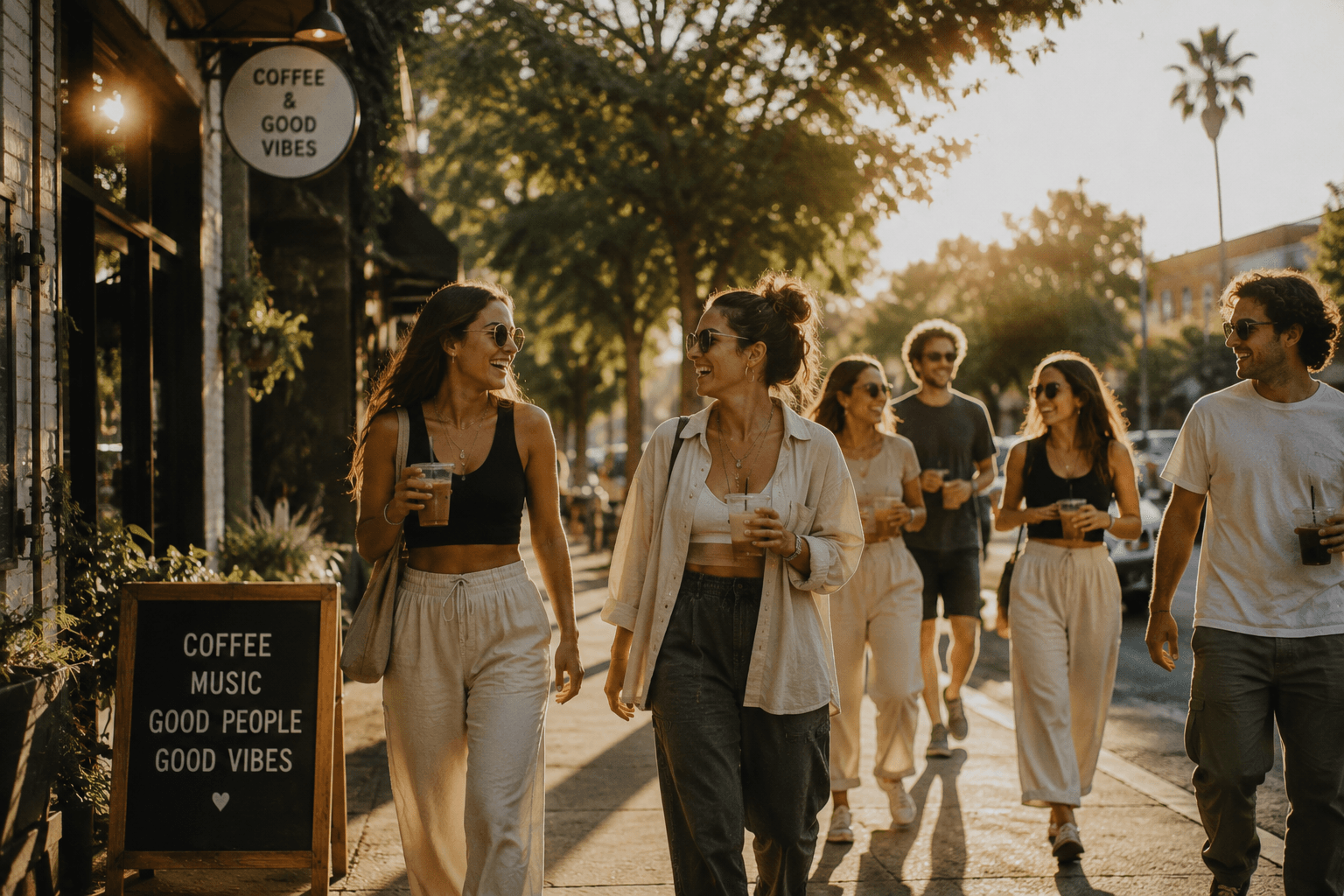
For someone quitting or cutting back on alcohol, one of the strangest realizations can be how many social experiences seem to revolve around drinking.
- Happy hour.
- Dinner.
- Concerts.
- Weddings.
- Sporting events.
- Dates.
- Friday nights.
Even casual invitations somehow become, "Want to grab a drink?"
Remove alcohol and one of the first questions can become:
Okay. What do I do now?
That's one reason these morning events feel more meaningful than another passing social-media trend.
They aren't simply replacing one beverage with another.
They're creating another place to go.
And that matters, because the future of drinking less doesn't have to be about convincing everyone to stay home.
It can also be about creating more places where nobody has to explain why they're not drinking in the first place.
Continue reading
One of the strangest parts of early sobriety is realizing how much of your old social life revolved around drinking.
This Isn't Necessarily a Sobriety Movement
There's an important distinction here.
Not everyone attending a coffee rave is sober.
Some people still drink occasionally. Some are sober-curious. Some may simply like electronic music and coffee. And depending on the organizer and venue, not every event described as a coffee party or daytime rave is necessarily alcohol-free.
If avoiding alcohol is important to you, check the individual event before attending rather than assuming every coffee rave is sober.
But the fact that these events aren't exclusively for sober people may actually be part of what makes the trend interesting.
Alcohol doesn't have to disappear from society for it to stop being the default centerpiece of adult socializing.
You don't have to identify as sober to enjoy dancing at 9 in the morning.
You don't need to explain why you're holding an iced coffee instead of a beer.
Nobody needs your drinking history.
You're just there.
The Morning-After Calculation Changes Too
Traditional nightlife has a cost that isn't printed on the receipt.
Tomorrow.
A late night can borrow from the following morning. Alcohol can borrow even more.
Morning events reverse the transaction.
Imagine dancing with friends at 9 a.m., grabbing breakfast afterward, and realizing that when the party ends, your entire Saturday is still sitting in front of you.
- No waiting for the headache to disappear.
- No trying to remember exactly what you said.
- No checking your phone with one eye closed.
- No writing off the afternoon because last night became bigger than expected.
You went out.
You had fun.
And then you kept your day.
That's a pretty compelling trade.
How to Find a Coffee Rave Near You
Coffee raves are still new enough that there isn't one universal directory for finding them.
Try searching event platforms, social media, and local venue calendars using a few different terms:
- "coffee rave" + your city
- "coffee party" + your city
- "morning rave" + your city
- "morning dance party" + your city
- "sober dance party" + your city
- "alcohol-free events" + your city
- "soft clubbing" + your city
It's also worth following independent coffee shops, local DJs, wellness communities, and alcohol-free social groups. Events like these often begin as small pop-ups before becoming regular gatherings.
And remember to check the event details if you specifically need an alcohol-free environment. Coffee rave doesn't automatically mean sober rave.
You Don't Need a Coffee Rave in Your City
Here's perhaps the best part.
You don't actually need somebody else to organize this for you.
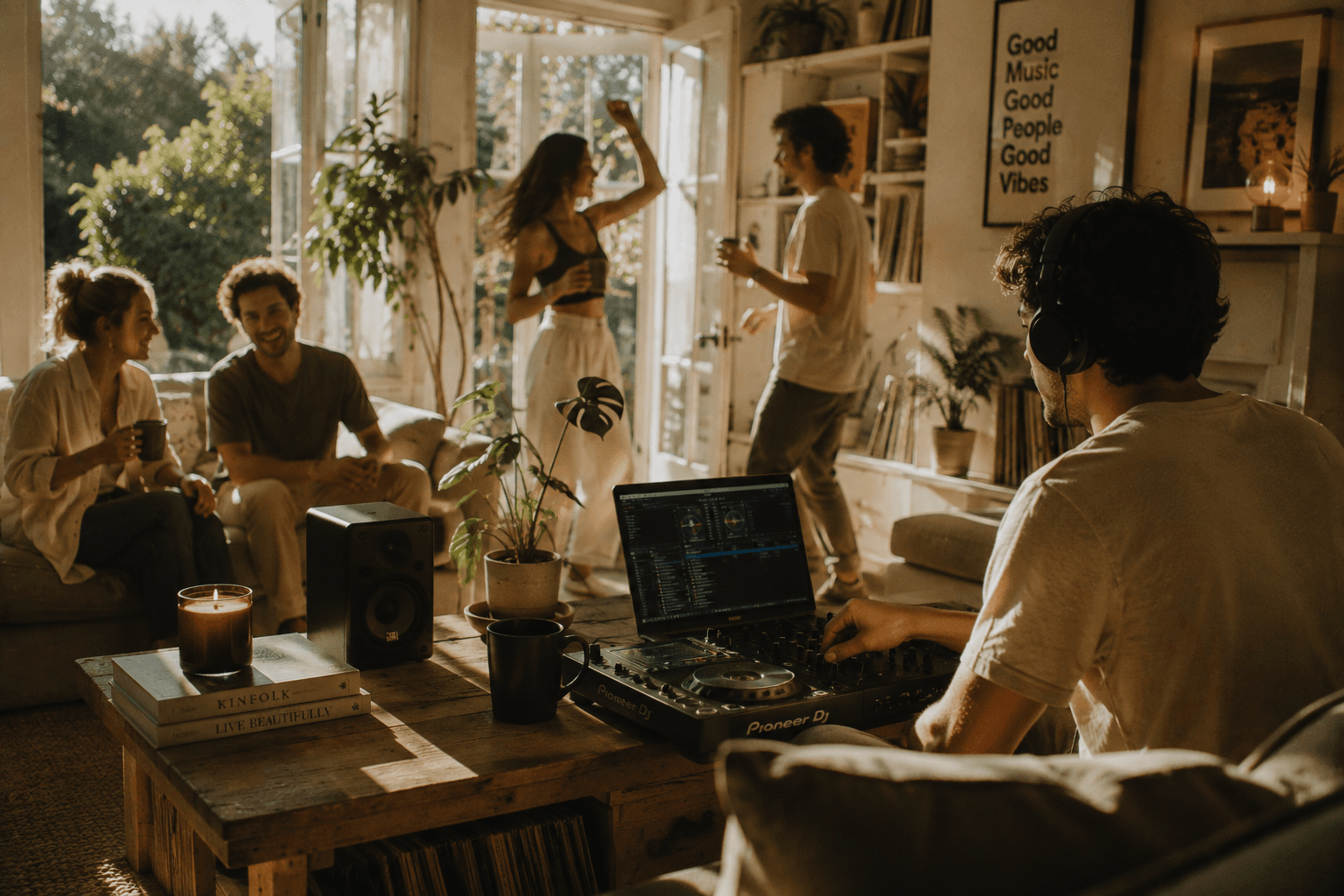
If there isn't a coffee rave where you live, create your own version.
It doesn't need tickets, a professional DJ, or hundreds of strangers dancing in a coffee shop.
- Make good coffee on Saturday morning.
- Put a DJ set on YouTube or make a morning playlist.
- Turn the speakers up a little.
- Open the windows.
- Make breakfast.
- Invite a couple of friends over.
- Take the music outside if the weather is nice.
- Meet at a local cafe and go for a walk afterward.
It doesn't even have to be a party.
It can simply become a Saturday ritual you actually look forward to.
The music still sounds good at 9 a.m.
Or Start One in Your Community
If you love the idea but want something bigger than your living room, somebody has to be the first person to suggest it.
Ask a favorite independent coffee shop whether they've ever considered bringing in a local DJ for a Saturday or Sunday morning.
Find a DJ who likes the idea. Invite friends. Keep the first one small.
The coffee shop gets people through the door. The DJ gets a new audience. People in your community get somewhere different to meet.
Maybe it works. Maybe six people show up and everybody laughs about it.
Either way, you've done something more interesting than waiting around for somebody else to create the social life you wanted.
Don't Wait for Sober Culture to Come to You
There's a larger lesson here for anyone learning how to live differently around alcohol.
Sometimes the world around you won't change immediately just because you did.
The same bars will be there.
The same invitations will arrive.
The same traditions will continue.
But you're allowed to create new ones.
Invite people for coffee instead of drinks.
Plan something early enough that alcohol doesn't naturally become part of it.
Find the restaurant with great alcohol-free options.
Go dancing in the morning.
Start the Saturday tradition nobody in your friend group knew they wanted.
Changing your relationship with alcohol doesn't have to mean shrinking your life until it feels safe enough.
Sometimes it means making your life bigger in a different direction.
What If Mornings Become the Fun Part?
Maybe coffee raves disappear in a few years.
Trends do that.
Or maybe the name disappears while the idea behind them sticks around.
Because underneath the DJs, matcha, cold plunges, and whatever trend comes next is something much simpler.
People want to be around other people.
They want music.
They want connection.
They want experiences.
And increasingly, some of them seem interested in having those things without sacrificing tomorrow to get them.
So maybe the future of nightlife isn't entirely about nighttime.
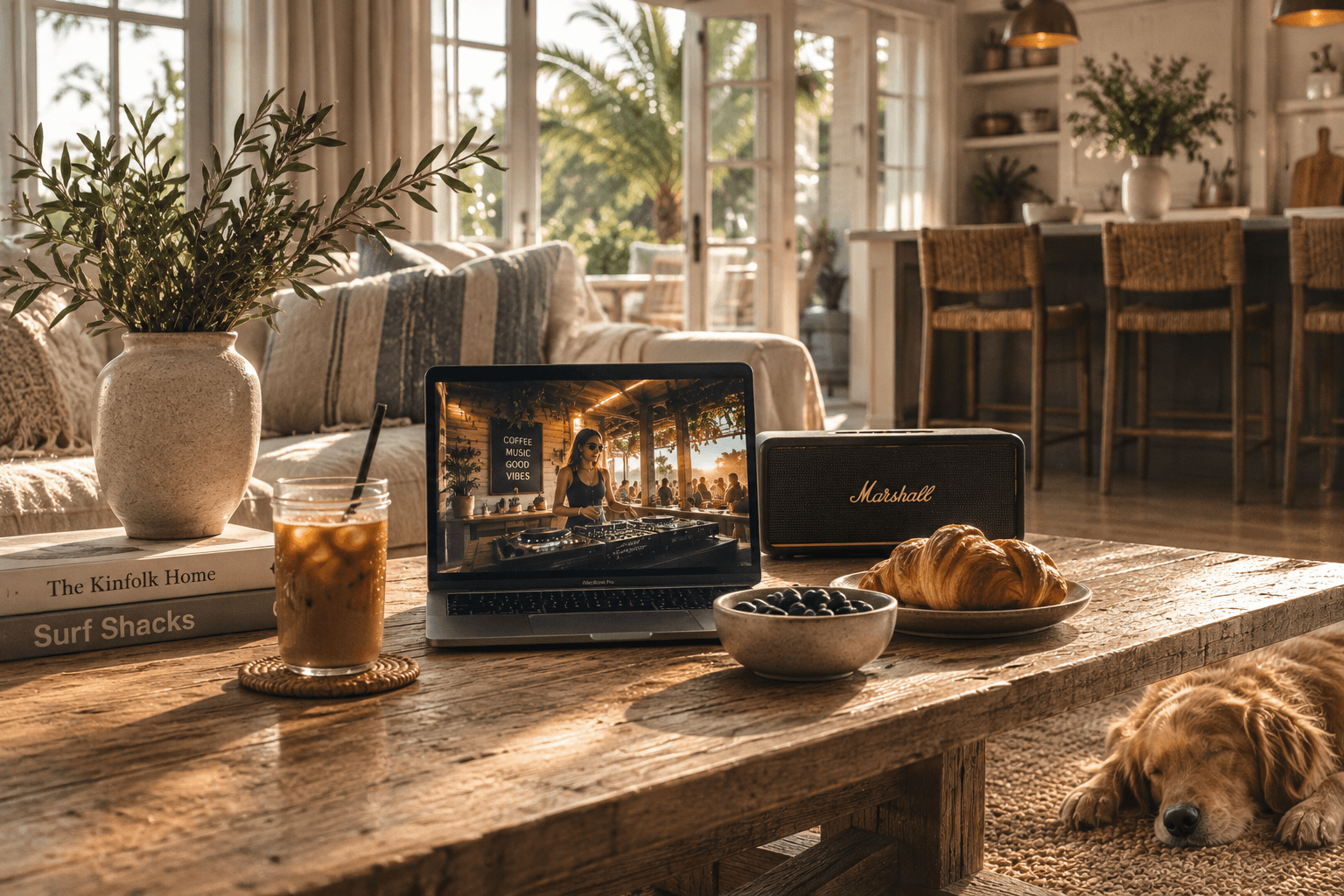
Maybe it's sunlight coming through a coffee-shop window while a DJ plays.
Maybe it's meeting friends before noon.
Maybe it's dancing with a coffee in your hand and realizing nobody cares what's missing from it.
And maybe the best part comes afterward.
You walk outside.
It's still morning.
And the whole day is yours.
Try It and Show Us
If you find a coffee rave happening near you, we'd genuinely love to see it.
And if there isn't one?
Maybe start your own version.
Put on the music. Make the coffee. Invite somebody over.
If you do, tag @nova.recovery on Instagram so we can see where this idea goes.
Maybe your city is next.
Frequently Asked Questions
What is a coffee rave?
A coffee rave is a morning or daytime social event that combines DJ music, dancing, and coffee or other nonalcoholic drinks. They are commonly held in cafes and other casual spaces and bring parts of traditional nightlife into an earlier, often more alcohol-free setting.
Are coffee raves alcohol-free?
Some are explicitly alcohol-free, while others simply make alcohol less central or may still offer it. If avoiding alcohol is important to you, check the organizer's event information before attending rather than assuming every coffee rave is a sober event.
Why are coffee raves becoming popular?
Coffee raves fit a broader shift toward earlier, experience-focused socializing. Eventbrite has reported strong growth in coffee-clubbing and sober-curious events, while its research also found substantial interest among Gen Z in drinking less to prioritize sleep, mental health, and physical fitness.
How can I find a coffee rave near me?
Search event platforms, social media, and local venue calendars for terms such as coffee rave, coffee party, morning rave, morning dance party, sober dance party, or soft clubbing followed by your city. Following independent cafes, DJs, wellness groups, and alcohol-free communities can also help you discover local pop-ups.
Can I host a coffee rave at home?
Absolutely. Make coffee, play a DJ set or playlist, make breakfast, and invite a few friends over. It doesn't need to resemble a nightclub. The basic idea is simply to combine music, connection, and a morning you actually look forward to.
Do I have to be sober to attend a coffee rave?
No. Coffee raves attract people for many reasons, including sobriety, drinking less, wellness, music, coffee, and simply wanting a different way to socialize. Individual events set their own alcohol policies, so check the event details if you specifically need an alcohol-free environment.