News & Research
Your Glass of Wine Might Be More Than One Drink
A five-ounce pour only equals one standard drink at a particular strength. Here is how to make sense of the glass, the label and the number you record.

Two glasses of wine with dinner can sound like two drinks. But if you’re keeping track, there’s a difference between counting glasses and counting the alcohol in them.
For example, 5 fluid ounces of wine at 12% alcohol is about one U.S. standard drink. An 8-ounce pour at 15% is about two. Two of those larger, stronger pours would total about four standard drinks.
You don’t need to turn dinner into a math exercise to get a clearer picture. Start with the glass you already own, a kitchen measuring cup and some water.
What counts as one standard drink?
The National Institute on Alcohol Abuse and Alcoholism, or NIAAA, defines a U.S. standard drink as about 14 grams of pure alcohol, equivalent to about 0.6 fluid ounces. That amount is found in 5 fluid ounces of 12% wine, 12 fluid ounces of 5% beer, or 1.5 fluid ounces of 40% spirits.
Those percentages matter just as much as the serving sizes. A five-ounce glass of stronger wine contains more alcohol. Throughout this article, ounces mean U.S. fluid ounces, a measure of liquid volume.
Think of a standard drink as a measuring unit. It does not establish a recommended serving, a personal safe limit or permission to drive.
Why the percentage on the bottle matters
Look for ABV on the bottle: it means alcohol by volume. As the National Institute of Standards and Technology explains, that number tells you what percentage of the liquid is alcohol. At 15% ABV, alcohol makes up 15% of the volume.
Keep the pour at five ounces and change the wine from 12% to 15% ABV: the alcohol amount increases by a quarter. The stronger glass contains about 1.25 standard drinks. If the pour gets larger too, both changes count.
Here are a few hypothetical pours, calculated from the U.S. definition:
- 5 fluid ounces of wine at 12% ABV: about 1 standard drink.
- 5 fluid ounces of wine at 15% ABV: about 1.25 standard drinks.
- 6 fluid ounces of wine at 14% ABV: about 1.4 standard drinks.
- 8 fluid ounces of wine at 15% ABV: about 2 standard drinks.
The same arithmetic works for beer. A 16-ounce beer at 7% ABV contains about 1.9 standard drinks.
The Wineglass Isn't a Measuring Cup
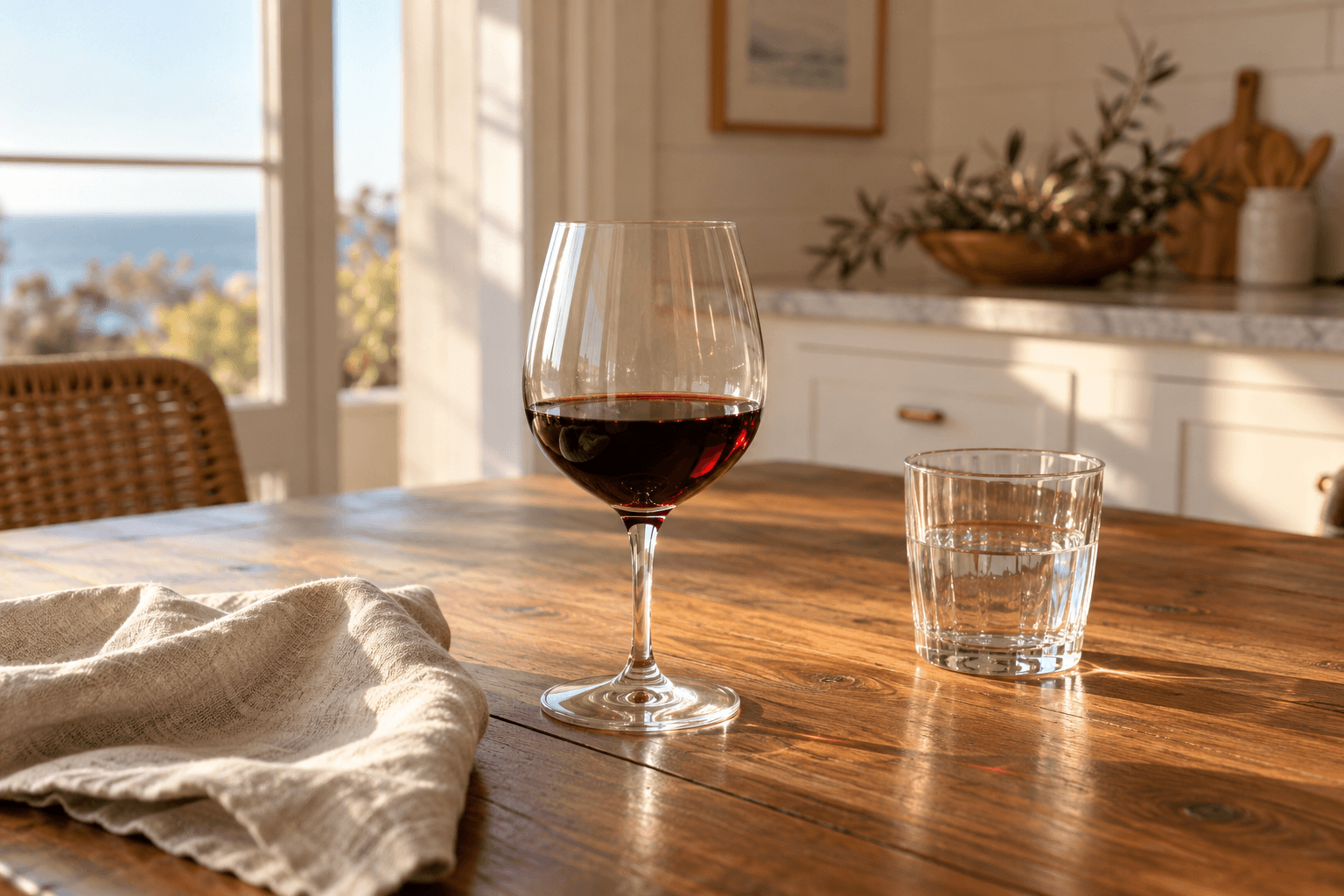
A wide bowl and a narrow glass can hold the same amount of wine at different heights. The fill level alone won’t tell you how many ounces you’ve poured.
The CDC makes a similar point in its guide to standard drink sizes: even two cans of beer can contain different amounts of alcohol. The container gives you only part of the picture; you still need the volume and strength.
Check the volume with water
NIAAA’s Rethinking Drinking guidance recommends measuring drinks at home when you want to keep track. To get to know your glass, water works well. There’s no need to open or buy alcohol.
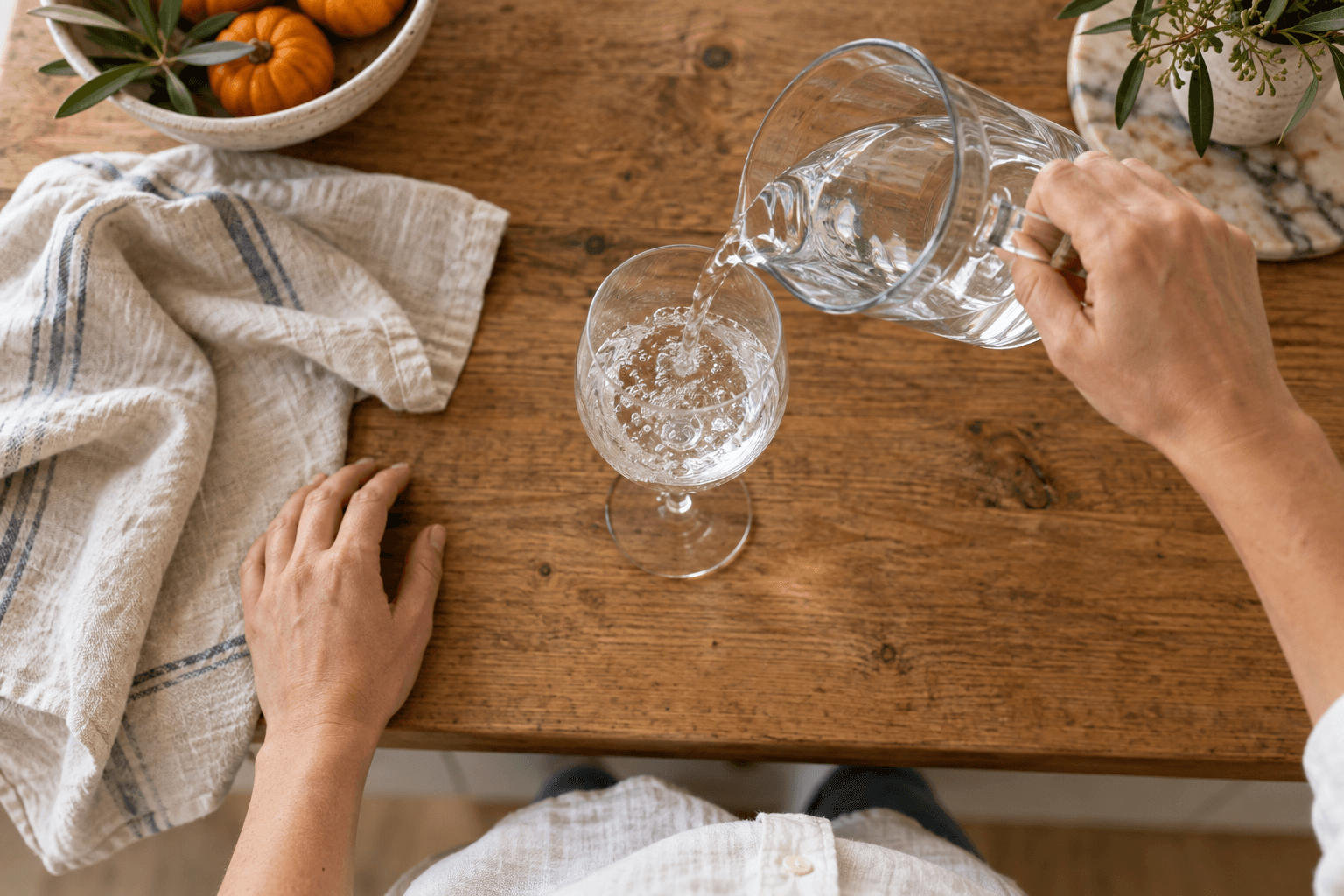
Set your usual glass on a level counter. Using a liquid measuring cup marked in fluid ounces, measure five ounces of water, reading the marking at eye level, and transfer it into the glass. Notice where the water reaches. You can repeat with another measured amount to compare the levels.
Now you have a reference for that particular glass. It does not reveal the strength of a drink or make every later pour exact. If you use a different glass, check that one separately.
For an actual wine estimate, check the bottle’s ABV as well. NIAAA’s Alcohol Drink Size Calculator takes the strength and volume as inputs. You can also multiply the fluid ounces by the ABV number, then divide by 60. Enter 14 for a label saying 14%, not 0.14, when using this shortcut.
For a six-ounce pour at 14%, that calculation is 6 × 14 ÷ 60 = 1.4. Two such glasses would add up to about 2.8 standard drinks. Treat the result as an estimate: it is only as accurate as the pour size and strength you put in.
What to ask when someone else is pouring
At a restaurant, try asking, “How many ounces is the wine pour?” and “What’s the ABV?” A menu may give the first answer, while the bottle or producer’s information can help with the second.
If you can’t get both numbers, it’s fine to leave the count approximate.
A guessed pour won’t become more certain because you give it a decimal place.
NIAAA also suggests asking a host or server to skip top-offs when you are tracking wine. Once fresh wine is added to a partly filled glass, counting how many glasses you have finished becomes less useful.

Cocktails need more information. NIAAA’s Mixed Drink and Cocktail Content Calculator accounts for the amounts and strengths of the alcoholic ingredients, since recipes vary. A calculation that includes the spirit but overlooks a liqueur can miss some of the alcohol.
Adding plain sparkling water or melting ice dilutes a drink, but does not remove the alcohol already in it. The finished glass can be larger while containing the same amount of alcohol.
Make the number useful
If you keep a record, try an entry such as “6 ounces of wine, 14% ABV, about 1.4 standard drinks.” When you look back, you’ll know what went into that number. “One glass” leaves more to the imagination.
The count can help you understand how much alcohol you drank. It cannot tell you how that alcohol is affecting you. NIAAA cautions that its drink-size calculator cannot predict blood alcohol level. These numbers cannot tell you whether you are impaired or safe to drive.
If you have been drinking heavily for a prolonged period, seek medical help before abruptly stopping; NIAAA warns that withdrawal can be life-threatening.
You may prefer to leave alcohol out of the evening altogether. If you do want to understand your usual wine pour, knowing its size and the bottle’s percentage gives you a useful starting point.
Understanding how much you’re drinking means counting the alcohol, not simply the glasses.
Continue reading
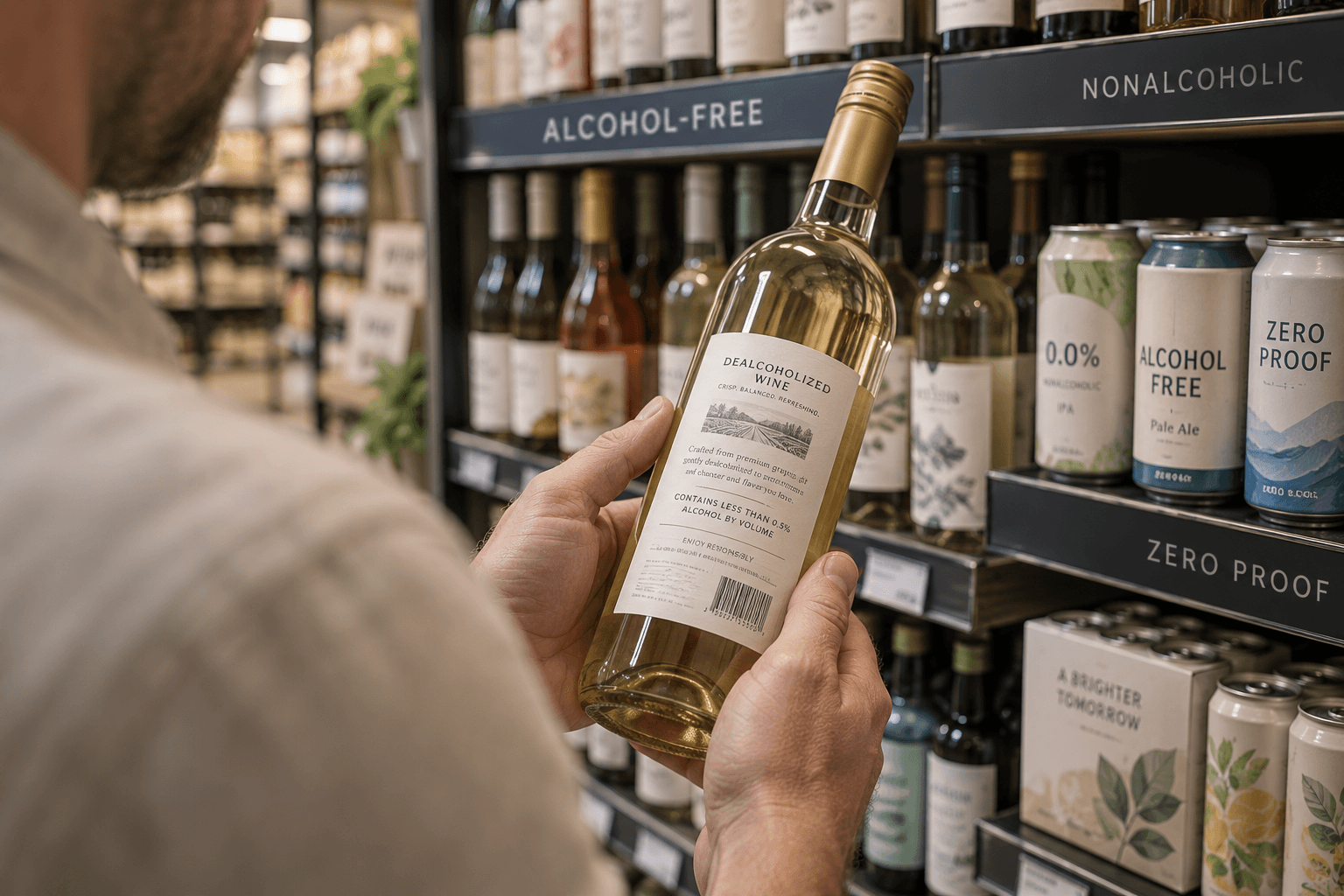
Choosing an alternative to wine? Our guide explains what alcohol-free, nonalcoholic and 0.0% labels tell you.
Frequently Asked Questions
How many standard drinks are in a glass of wine?
It depends on the pour and its alcohol by volume, or ABV. Five U.S. fluid ounces of wine at 12% ABV contains about one U.S. standard drink. An eight-ounce pour at 15% contains about two.
How do I calculate standard drinks from ounces and ABV?
Multiply the U.S. fluid ounces by the ABV number, then divide by 60. Use 14 for 14% ABV. For example, 6 × 14 ÷ 60 = 1.4 standard drinks. The result is an estimate based on the volume and strength you enter.
What does checking my glass with water tell me?
Pouring a measured amount of water into your glass shows where that volume reaches in that particular glass. It does not tell you a wine’s ABV or guarantee that a later pour will be the same size.
Does adding water or ice reduce the number of standard drinks?
No. Plain water or melting ice dilutes a drink but does not remove the alcohol already in it. If you consume the whole drink, the amount of alcohol is unchanged.
Can counting standard drinks tell me whether I am safe to drive?
No. A standard-drink count estimates alcohol quantity. It cannot tell you your blood alcohol level, whether you are impaired or whether you are safe to drive.