News & Research
Does “Alcohol-Free” Actually Mean No Alcohol?
Nonalcoholic beer. Dealcoholized wine. Alcohol-free. 0.0%. They sound like different ways of saying the same thing. They aren't necessarily.

Earlier this week, Neal tasted wine for the first time in four years.
Sort of.
Danielle had brought home a bottle of dealcoholized wine from a grocery store in New York.
Neal took a small taste.
And immediately freaked out.
It tasted like wine.
Really like wine.
For a moment, he genuinely wondered whether he'd accidentally taken a sip of the real thing.
There was no buzz.
Nothing actually happened.
But the scare gave him enough of one.
And afterward he had a question:
How alcohol-free are these drinks, really?
It's a surprisingly reasonable question.
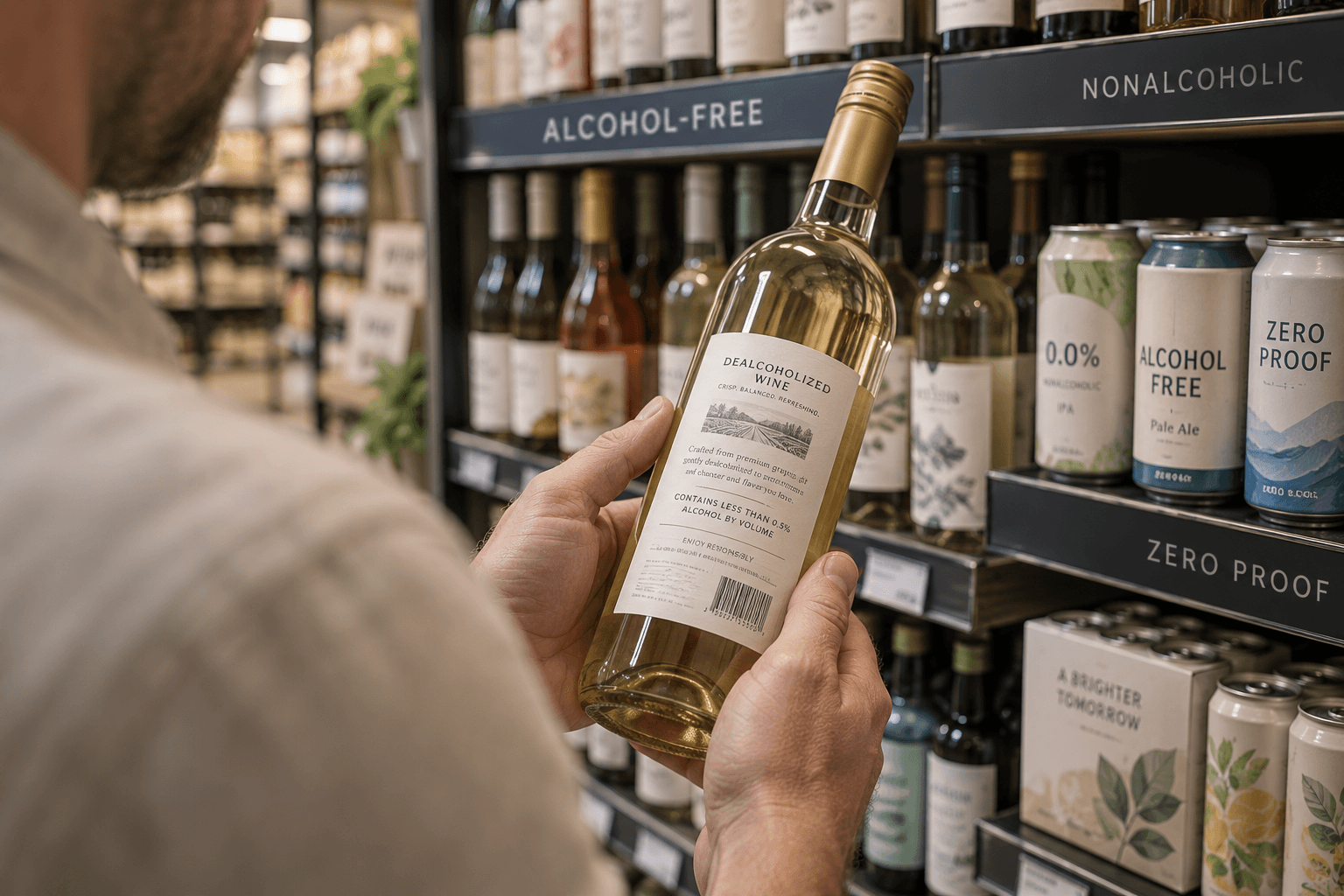
Walk through the growing alcohol-alternative section of a grocery store and you'll see words like nonalcoholic, dealcoholized, alcohol-removed, alcohol-free, 0.0% and zero proof.
To an ordinary shopper, those can sound like six different ways of saying there is no alcohol in this.
Under U.S. labeling rules, that isn't necessarily what they mean.
Dealcoholized Wine Can Still Contain Alcohol
Let's start with the bottle that scared Neal.
Dealcoholized wine begins as wine.
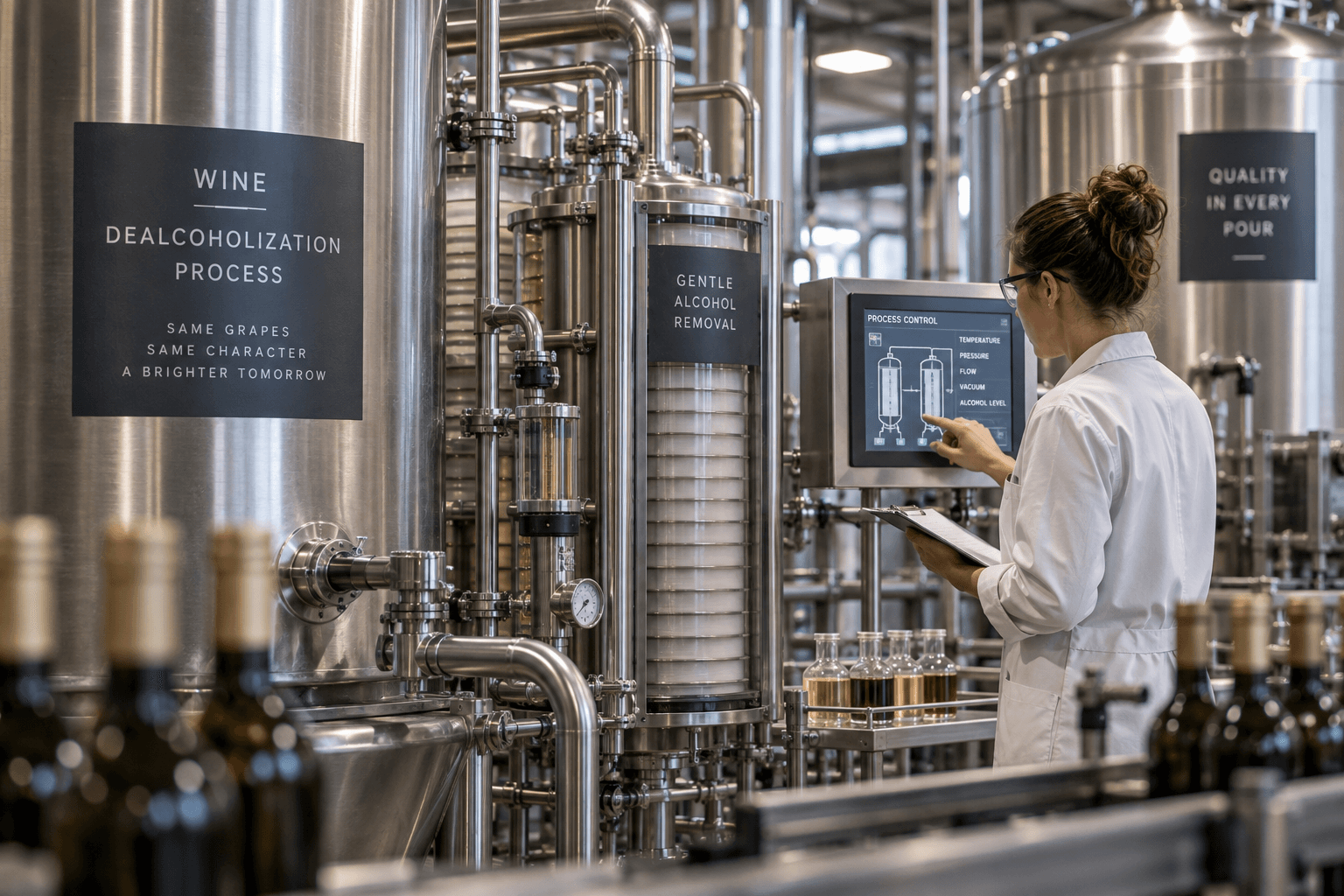
Alcohol is then removed through a production process designed to preserve as much of the wine's flavor and aroma as possible.
But removing alcohol does not necessarily mean removing every detectable trace of it.
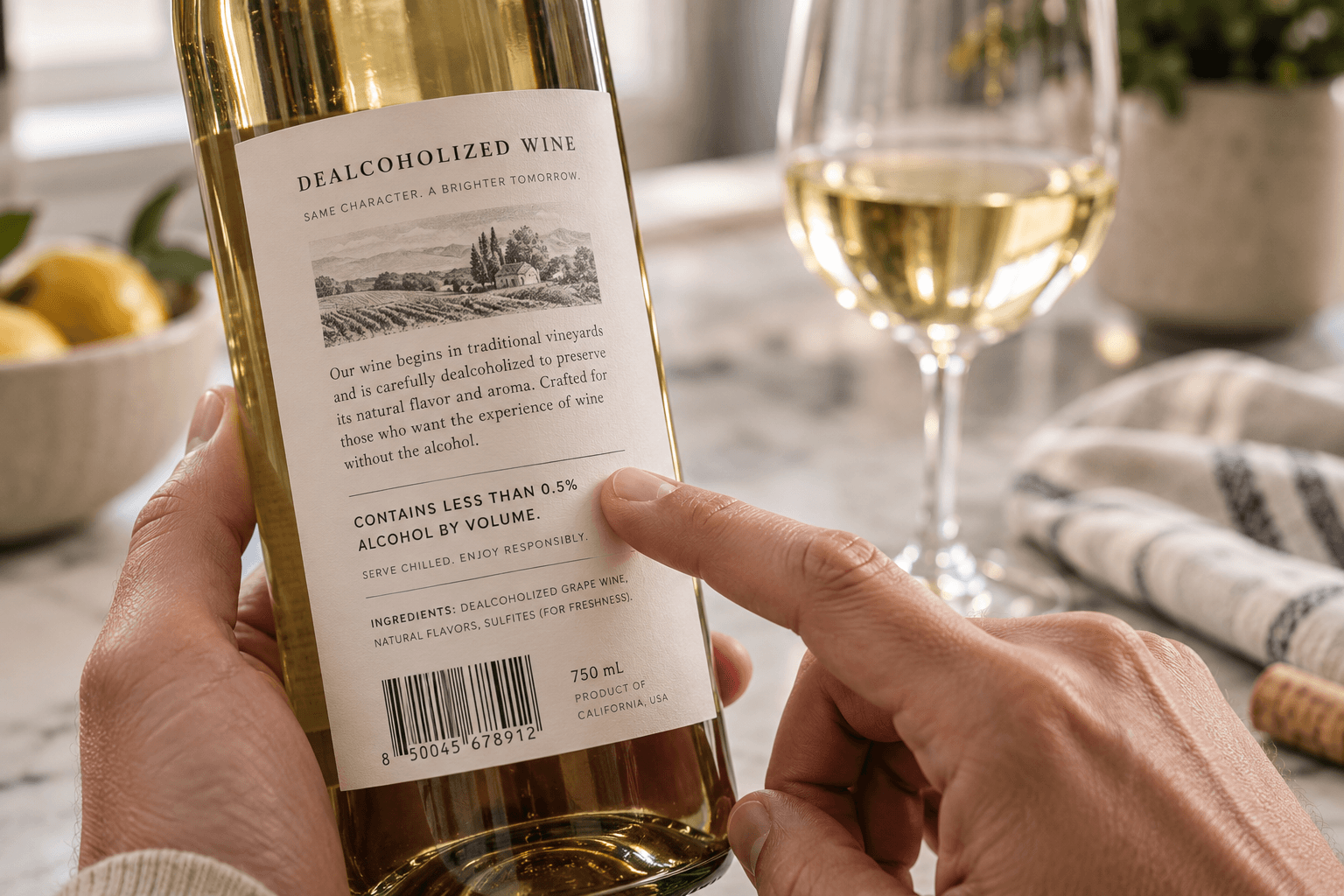
FDA guidance says products described as dealcoholized wine or alcohol-removed wine should contain less than 0.5% alcohol by volume.
The agency also says the product's identity should be followed by a declaration that it contains less than 0.5% alcohol by volume.
Dealcoholized does not necessarily mean zero alcohol.
It means the overwhelming majority of the alcohol has been removed.
And that helps explain something else. Why did Neal's sip taste so convincingly like wine?
Because it was wine.
The alcohol was removed afterward.
The goal of the product is often to retain the sensory experience of wine while dramatically reducing or removing its alcohol content.
In Neal's case, apparently it did that job a little too well.
“Nonalcoholic” Doesn't Necessarily Mean Zero Either
This is probably the most counterintuitive part.
FDA explicitly says it does not consider the terms non-alcoholic and alcohol-free synonymous.
Under its guidance, a dealcoholized wine containing trace alcohol below 0.5% ABV may also be described as non-alcoholic.
But alcohol-free is different.
FDA says that term should only be used when a product contains no detectable alcohol.
Federal malt-beverage rules make a similar distinction. TTB says a malt beverage may use non-alcoholic when it contains less than 0.5% alcohol by volume and the required statement appears next to the term.
The term alcohol free may only be used for a malt beverage containing no alcohol.
“Nonalcoholic” is a category. It isn't always a synonym for zero.
What About 0.0%?
This is where reading the actual label becomes more useful than relying on the general category.
If avoiding alcohol completely matters to you, look for the product's alcohol-content statement and other required labeling rather than assuming that every beverage shelved in the nonalcoholic section is identical.
A product marketed as nonalcoholic and one marketed as alcohol-free can be sitting next to each other while making different claims about what's inside.
And if you're unsure?
Turn the bottle around.
Read the fine print.
Look for the actual alcohol statement.
The front of the bottle is marketing. The alcohol information tells you what claim the manufacturer is actually making.
Does Less Than 0.5% Mean You're Going to Feel It?
This is probably the question Neal was really asking when he put the glass down.
He wasn't doing math.
He was wondering: Am I about to feel this?
A beverage below 0.5% ABV contains far less alcohol than ordinary wine or beer.
But how any individual should think about trace alcohol is a different question from whether the product complies with labeling rules.
For someone whose goal is simply to drink substantially less alcohol, a product below 0.5% may fit perfectly.
For someone who wants strict abstinence, the distinction between nonalcoholic and alcohol-free may matter a great deal.
For someone avoiding alcohol because of medication, pregnancy, a medical condition or another health concern, the safest approach is to discuss what's appropriate with a qualified healthcare professional rather than assuming every alcohol alternative is interchangeable.
And for someone in recovery, there can be another consideration entirely.
The number on the bottle isn't the only thing capable of producing a reaction.
Sometimes the taste can.
The Same Kind of Drink Is Helping Danielle
Danielle's experience with the same kind of drink has been almost the opposite.
She has been using dealcoholized wine while changing her own drinking.
Her familiar 5 o'clock ritual involved wine while making dinner.
When she started changing that pattern, she didn't necessarily want to eliminate everything around it.
She still cooked.
Still put something in a glass.
Still wanted that moment when dinner had officially begun.
Sometimes dealcoholized wine filled that role.
We wrote about that recently, and research on alcohol-free alternatives helps explain why preserving parts of a familiar ritual can be useful for some people.
Neal tasted something from the same broad category and had almost the opposite response.
Too familiar.
That's worth paying attention to.
The number on the label can tell you what's in the bottle. It can't tell you what the bottle will mean to you.
For Danielle, similarity to wine can make changing the routine easier.
For Neal, similarity to wine made the experience uncomfortable.
Neither reaction establishes a rule for everybody else. It tells us something much more useful: people bring their own history to the glass.
Continue reading
We recently looked at whether alcohol-free alternatives can actually help people drink less, including why preserving part of a familiar ritual works for some people and not for others.
So Can You Trust Dealcoholized Drinks?
Generally, the right question isn't whether the entire category is trustworthy. It's whether you understand what the label is actually claiming.
Federal regulators have definitions and labeling requirements around these products. FDA guidance specifically addresses how dealcoholized wine should identify itself and disclose that it contains less than 0.5% ABV.
TTB likewise specifies how alcohol-content terminology can be used for malt beverages.
That doesn't mean every term printed prominently on the front communicates the distinction as clearly as every consumer might expect.
And the regulatory landscape can differ depending on whether the product is wine, a malt beverage or another type of beverage.
So rather than trying to memorize an entire federal labeling manual, there's a simpler habit:
If the amount of alcohol matters to you, check the actual alcohol statement.
Don't assume.
Don't panic either.
Read.
Why Can a Grocery Store Sell It?
Neal's experience had another wrinkle.
Danielle bought the dealcoholized wine at a grocery store.
That reinforced his assumption that there couldn't possibly be alcohol in it.
But federal regulation draws important distinctions around products below 0.5% ABV, and state alcohol laws add another layer.
What a particular grocery store may sell depends on the jurisdiction and the product.
The useful lesson isn't that grocery-store placement proves a beverage contains zero alcohol.
It doesn't.
Where you bought the bottle isn't a substitute for reading the bottle.
Trace Alcohol Isn't Unique to These Drinks
FDA notes that beverages people ordinarily think of as nonalcoholic, including some fruit juices and flavored drinks, can contain trace amounts of alcohol produced through natural fermentation or ingredients such as flavoring extracts.
The agency still considers beverages with those trace amounts, below 0.5% ABV, non-alcoholic in this context.
That doesn't mean everybody should stop caring about the difference.
It means trace alcohol and drinking an ordinary alcoholic beverage are not the same thing.
The question is what level matters for your own reason for avoiding alcohol.
There Isn't One Correct Sobriety Rule Here
This is where discussions about alcohol-free drinks can become unnecessarily rigid.
One person says: I would never drink anything with 0.5% on the label.
Someone else says: It has helped me stay away from ordinary beer for six months.
Someone else doesn't care about the trace alcohol but hates how realistic it tastes.
Another person loves the realism.
Someone trying to cut back may be thrilled to replace a 13% wine with something below 0.5%.
Someone maintaining strict abstinence may specifically seek products labeled alcohol-free.
Someone else may decide sparkling water is easier because they don't want anything resembling alcohol in the house.
Those choices don't need to become arguments.
Our previous research article found something remarkably similar: alcohol-free alternatives appear useful for some people, irrelevant to others, and potentially uncomfortable for people who find alcohol-like products keep too much attention on drinking.
The product isn't the entire strategy.
The person using it matters.
The best alcohol-free drink isn't the one that follows somebody else's sobriety rules. It's the one that helps you make the choice you actually want to make.
Read the Label. Then Pay Attention to Yourself.
So was Neal's dealcoholized wine trustworthy?
Without the actual bottle and label, we can't tell you exactly what was in that particular product.
But tasting like wine did not mean he'd accidentally been handed ordinary wine.
Dealcoholized wine is supposed to resemble the wine it came from.
And under FDA guidance, a product properly labeled as dealcoholized wine should contain less than 0.5% alcohol by volume.
The experience still gave Neal useful information.
He didn't particularly enjoy wondering whether he'd just broken four years of sobriety.
Danielle's experience gave her different information.
A familiar alternative has helped her change a familiar routine.
Same category.
Different people.
Different goals.
Different reactions.
Maybe that's the part worth remembering the next time you're standing in front of a shelf full of bottles promising something close to alcohol without quite being alcohol.
Read what the bottle actually says.
Know what you're trying to accomplish.
Then notice how the drink makes changing easier or harder for you.
The label tells you what's in the glass. You still get to decide whether you want it there.
Frequently Asked Questions
Does nonalcoholic beer contain alcohol?
It can. Under U.S. federal malt-beverage rules, a product labeled non-alcoholic may contain less than 0.5% alcohol by volume. TTB requires an adjacent statement indicating that it contains less than 0.5% ABV.
Does dealcoholized wine contain alcohol?
It can contain trace alcohol. FDA guidance says dealcoholized or alcohol-removed wine should contain less than 0.5% alcohol by volume and should carry a declaration stating that amount.
Is alcohol-free the same as nonalcoholic?
Not under the federal guidance discussed here. FDA says alcohol-free should only be used when a product contains no detectable alcohol, while non-alcoholic may apply to dealcoholized wine below 0.5% ABV. TTB similarly reserves alcohol free for malt beverages containing no alcohol.
Can alcohol-free drinks be triggering for someone in recovery?
They can be for some people, while others find them useful. Taste, smell, packaging and drinking rituals may feel reassuring to one person and uncomfortable to another. If an alcohol-like alternative makes maintaining the change you want harder, another beverage may be a better fit.
Should I drink nonalcoholic products if I need to avoid alcohol completely?
If complete avoidance is important because of pregnancy, medication, a medical condition, recovery or another reason, read the product's alcohol-content information carefully. When the reason is medical, ask an appropriate healthcare professional about what level of alcohol avoidance is necessary for your situation.