
Culture & Trends
What the Hell Is a BORG, and Why Are College Students Drinking Them?
BORGs spread through college culture with an unusual pitch: a giant mixed drink you control yourself might be safer. Research suggests the reality is much more complicated.

If you're over 30, there's a decent chance you have absolutely no idea what a BORG is.
It sounds like something from Star Trek.
It is not.
BORG stands for: blackout rage gallon.
Which, admittedly, should probably tell us where this story is going.
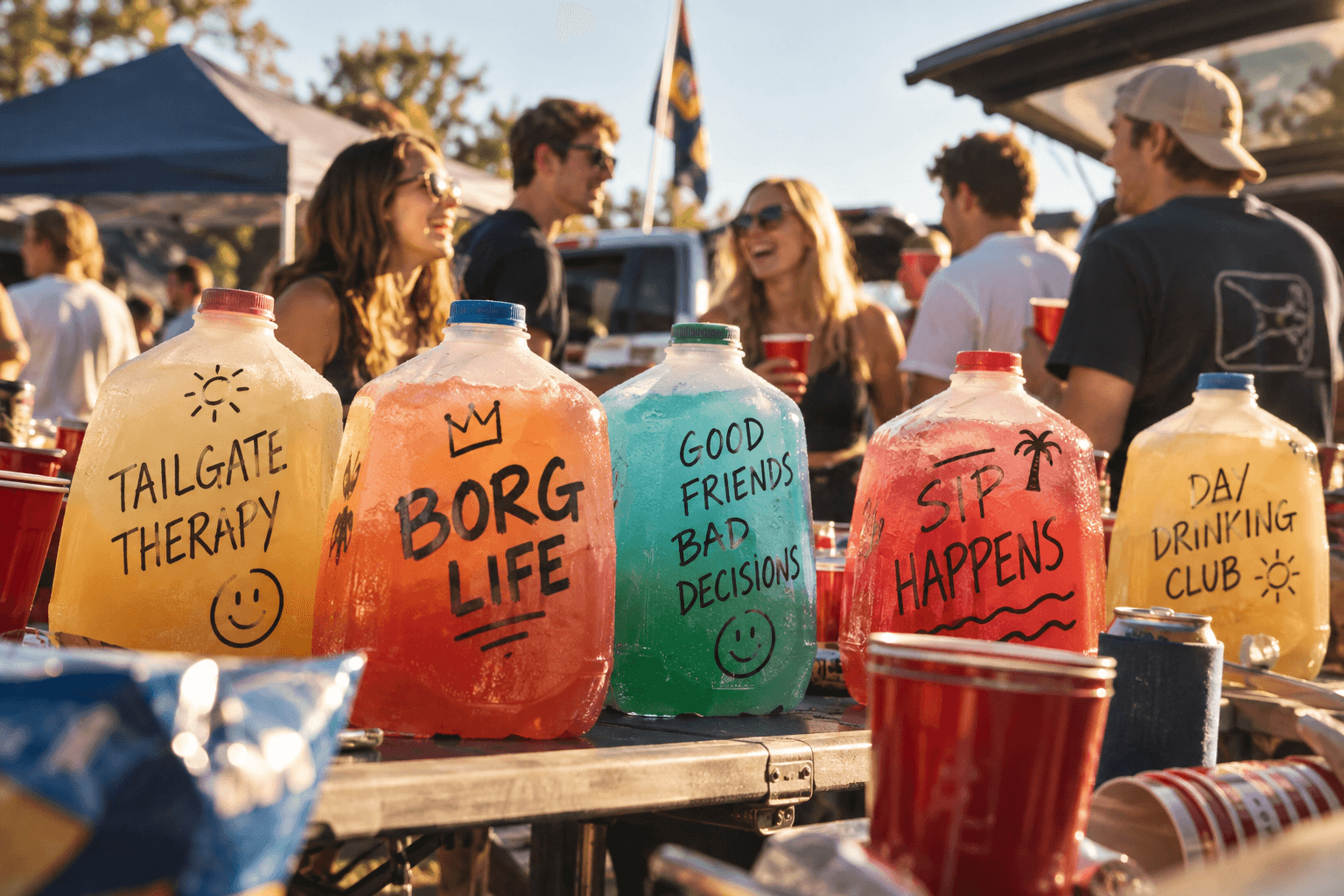
BORGs are gallon-size plastic jugs that have become part of drinking culture on some U.S. college campuses. They're typically filled with alcohol, water and flavoring. Some versions also include electrolytes or caffeine.
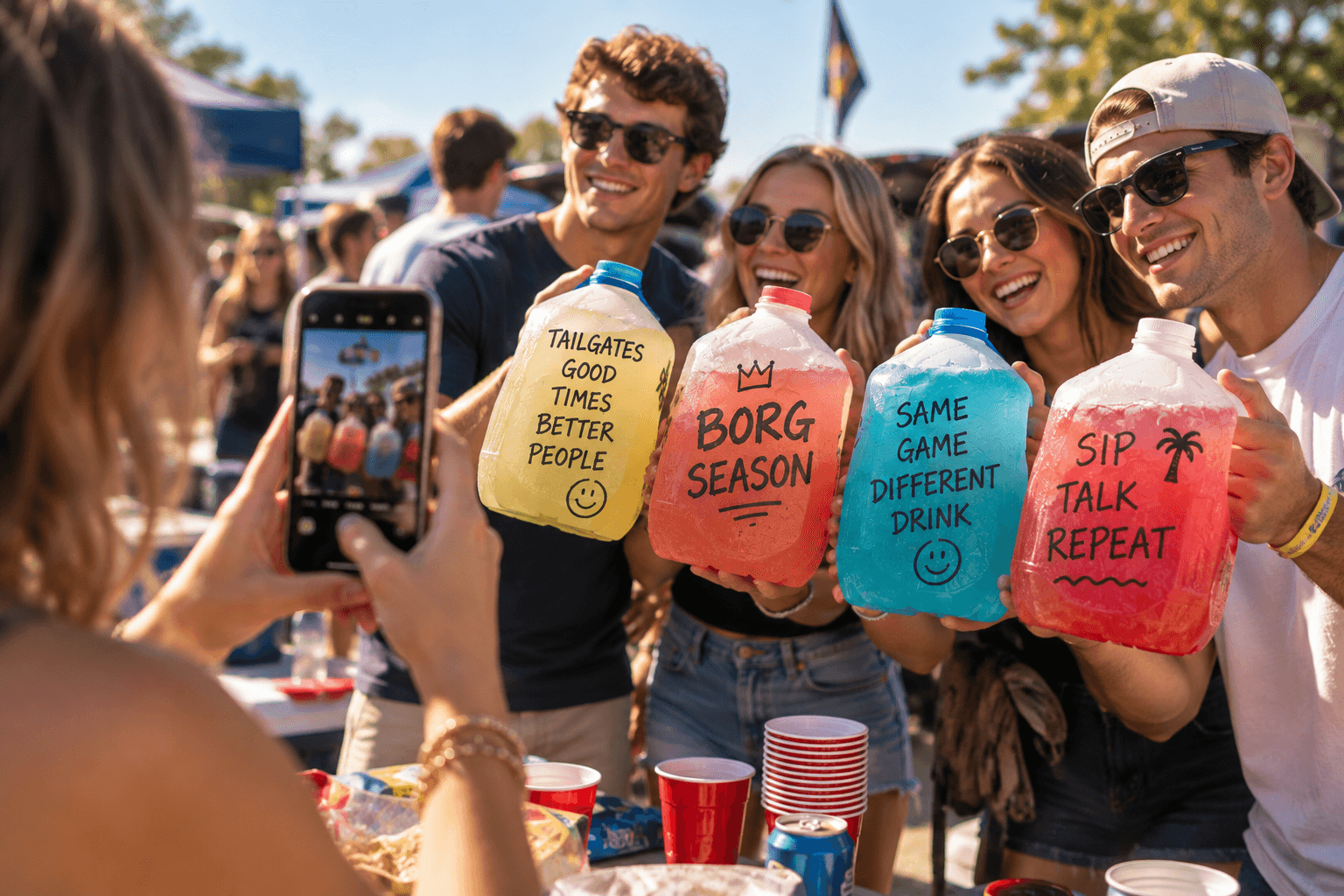
Students decorate the jugs. Name them. Carry them to day parties, festivals and football tailgates. Post them online.
And somewhere along the way, something literally called a blackout rage gallon also developed a reputation among some students as a potentially safer way to drink.
That's the part researchers wanted to understand.
In a pilot study of college students who reported weekly binge drinking, 29% of the BORG users surveyed reported blacking out during a BORG event.
The strangest thing about the BORG might not be what's in the gallon. It's how something called a blackout rage gallon became associated with safer drinking.
First: What Exactly Is a BORG?
There isn't one standardized BORG. It's not a canned drink with a fixed alcohol content.
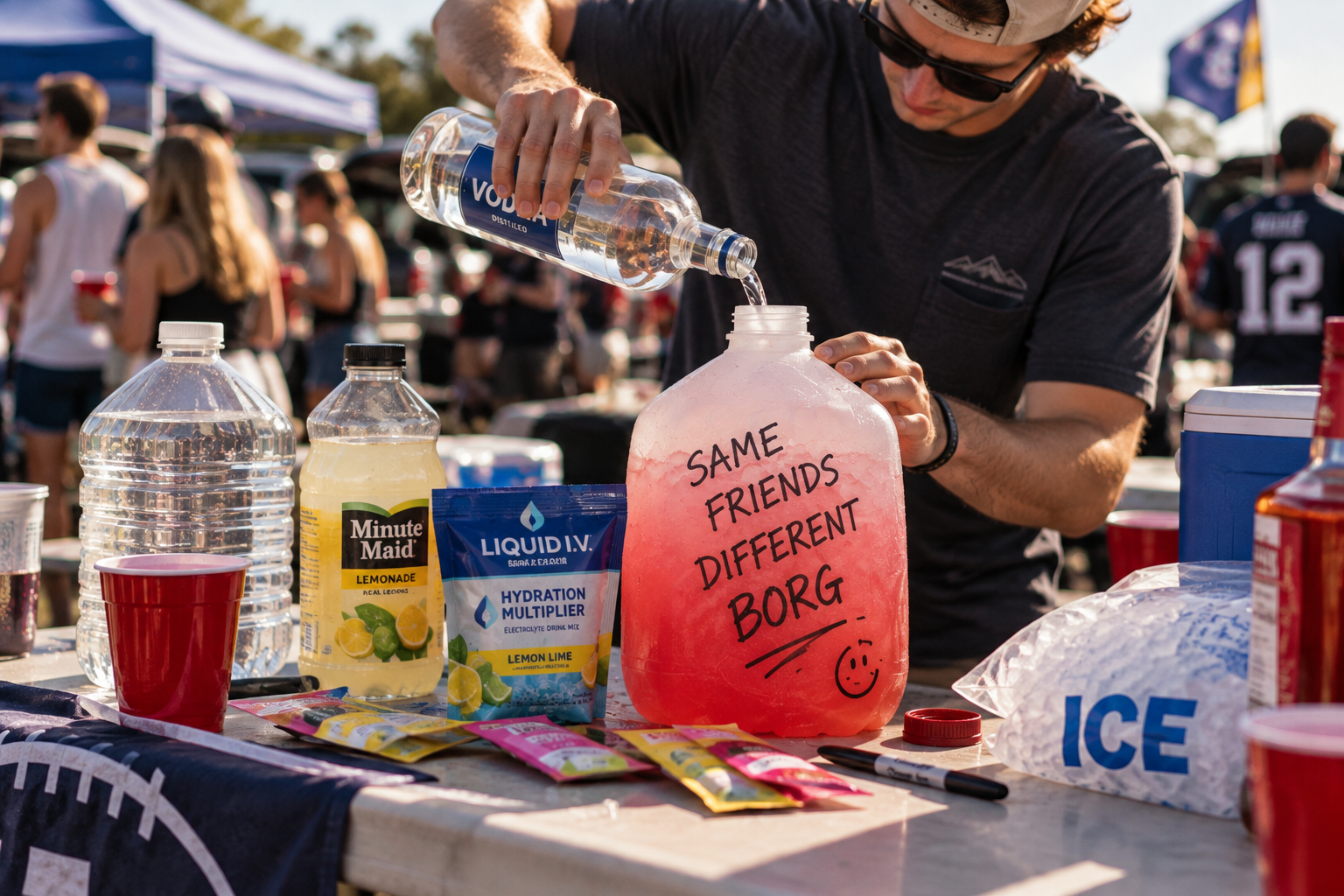
It's something the person drinking it typically mixes in a one-gallon container, commonly using liquor, water and flavoring, with other ingredients sometimes added.
Online versions have included electrolyte mixes and caffeine. Some recipes circulating online have suggested very large amounts of liquor.
Then you give it a name.
BORG puns and decorated gallon jugs turned what is essentially a very large mixed drink into something visually recognizable and social-media friendly.
The Case for BORGs Sounds Reasonable at First
Think about the pitch.
- You mix it yourself, so you know what went into it.
- It has a lid, so you're not leaving an open cup sitting around.
- You add water, so you're hydrating while you drink.
- You might add electrolytes, which sounds like it could help with the next morning.
- You carry your own container, which sounds like more control.
Put all of that together and you can see how the story became: we're going to drink anyway, maybe this is a smarter way to do it.
Several individual pieces of the idea sound sensible. The problem is what happens when those pieces surround a very large amount of alcohol.
Researchers Asked Students What Actually Happened
The pilot study included 103 college students between ages 18 and 25 from public and private U.S. institutions.
All participants reported weekly binge drinking.
Researchers intentionally recruited enough people with BORG experience to study the behavior in detail, so this was not a prevalence study telling us what percentage of all college students use BORGs.
Sixty-three participants reported BORG use during the previous year and 40 did not.
Nine to Ten Drinks in a Typical BORG Event
Students who used BORGs reported consuming roughly nine to ten standard alcoholic drinks during a typical BORG event.
The gallon can create a visual trick. You see water, ice, flavoring, electrolytes and a huge container. The alcohol is diluted across all that liquid.
But dilution changes concentration. It doesn't make the alcohol disappear.
If ten standard drinks went into the amount you consumed, adding more water doesn't turn those ten drinks into five.
The container can stay the same while the number of drinks inside it becomes surprisingly easy to lose track of.
Nearly One in Three Reported a Blackout
Among BORG users in the study, 98% reported getting buzzed or drunk, 29% reported a blackout, 17% reported vomiting, and 59% reported saying or doing something embarrassing.
An alcohol blackout is not simply falling asleep or passing out.
A person can remain awake and interact with other people while failing to properly form memories of what is happening.
Two-Thirds Said They'd Probably Do It Again
Despite the reported consequences, roughly two-thirds of BORG users said they intended to engage in BORG drinking again in the future.
Knowing something can go badly doesn't necessarily make it socially unattractive, especially when it is attached to friends, football, tailgates, festivals, day parties, humor and social media.
The consequences happen later. The social reward happens now.
What About the Water?
Water is good. Hydration matters. But water isn't an alcohol eraser.
Adding water makes a mixture less concentrated. It does not reduce the total amount of alcohol consumed if the same amount of alcohol is still swallowed.
A gallon of water doesn't make ten drinks stop being ten drinks.
Electrolytes Don't Negotiate With Ethanol Either
Electrolyte powders have become part of hangover-prevention culture, and dehydration can contribute to some unpleasant effects associated with drinking.
But a hangover isn't simply dehydration, and an electrolyte packet doesn't cancel the pharmacological effects of alcohol.
Hydration and alcohol exposure are two different things.
Social Media Gave the Drink an Identity
A gallon jug is visually ridiculous. That's useful online.
Write a pun on it and now it's personalized. Photograph it, compare it, bring it to an event full of other decorated jugs, and the drink becomes content.
Social media is very good at turning behavior into identity.
College Football Season Makes This Especially Relevant
We're in September. College football is underway. Tailgates are back.
A gallon jug can stay with someone through much of a long daytime event.
A better question than how strong is this drink may be: how much alcohol will I actually consume before this day is over?
This Study Does Not Tell Us How Common BORGs Are
The researchers intentionally recruited enough BORG users to study the behavior, so 63 of 103 participants using BORGs does not mean 61% of U.S. college students use them.
All participants also reported weekly binge drinking. This was not a representative sample of every American college student.
The study was designed to examine how BORG users drink, why they use them and what consequences they report, not to estimate national prevalence.
It's Also a Survey
The data came from students reporting their own behavior.
Self-reported alcohol intake can be imperfect, and the study cannot prove that the BORG container itself caused every consequence students reported.
The strongest conclusion is narrower: among this sample of weekly binge-drinking college students who reported BORG use, high-intensity alcohol consumption and substantial negative consequences were common.
Maybe the Gallon Isn't the Real Story
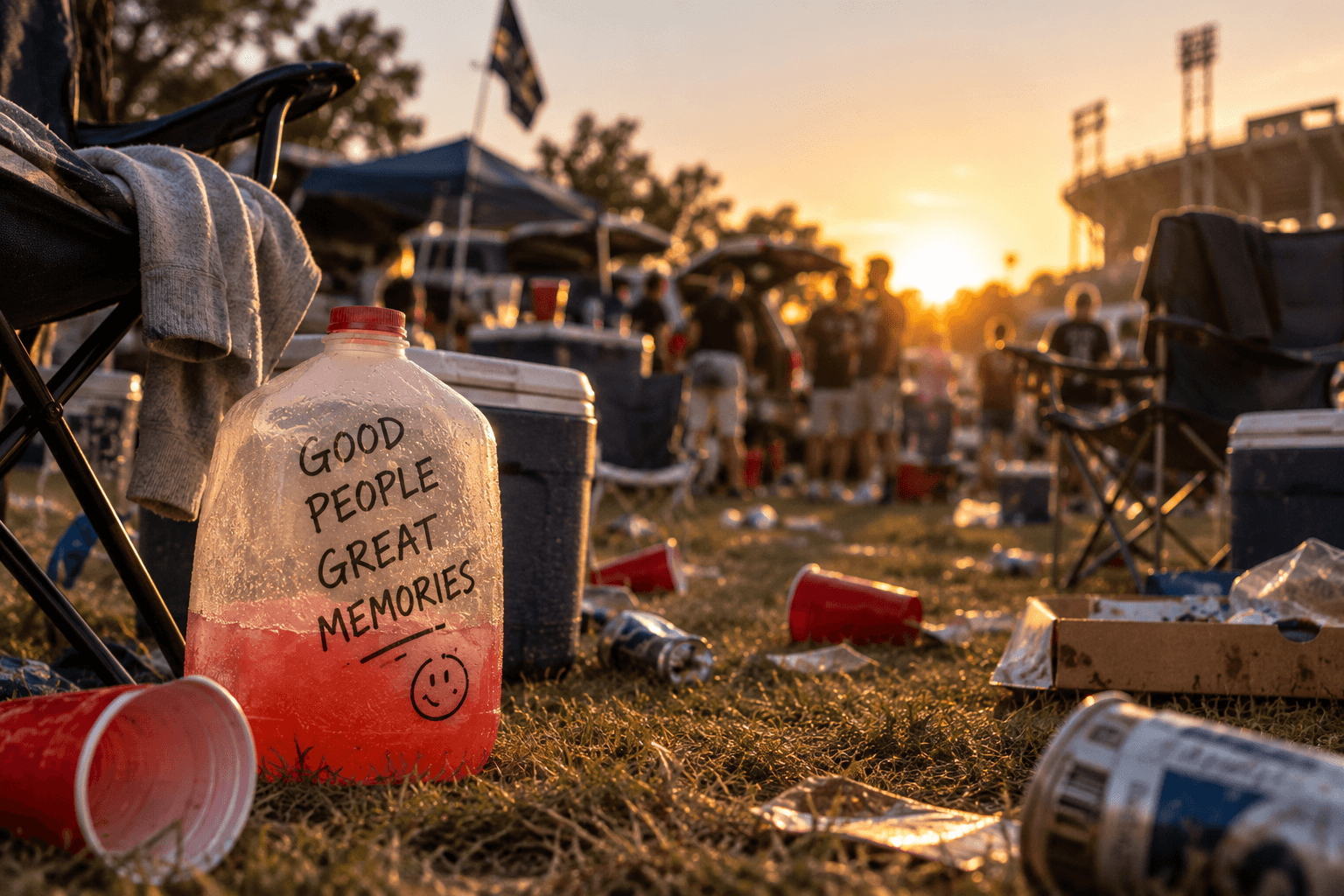
After reading the research, I don't think the most interesting part of BORG culture is the jug. It's the story surrounding the jug.
- I made it myself, so I'm in control.
- It has water, so I'm staying hydrated.
- It has electrolytes, so tomorrow won't be as bad.
- It has a lid, so it's safer at a party.
Each statement contains some intuitive logic. Together, they can make the whole thing feel safer than the amount of alcohol inside it actually is.
How much alcohol am I actually drinking?
Continue reading
BORG culture is one part of a much bigger generational drinking story. We recently looked at whether Gen Z is actually drinking less and what the data really show.
Maybe the Name Was the Warning Label
There is something almost absurd about needing a scientific study to investigate a drink whose name includes the words blackout and rage.
But internet culture can turn almost anything into a joke, and sometimes the joke makes risky behavior feel less serious.
Researchers eventually asked the boring but necessary question: what actually happens to the people drinking these things?
In this pilot study, BORG users reported roughly nine to ten standard drinks during a typical event, and nearly one in three reported a blackout.
Maybe the name wasn't ironic after all. Maybe it was the warning label.
Frequently Asked Questions
What is a BORG drink?
BORG stands for blackout rage gallon. It generally refers to a gallon-size jug that a person mixes themselves using alcohol, water and flavoring, sometimes with ingredients such as electrolytes or caffeine.
How much alcohol is in a BORG?
There is no standard recipe, so the amount varies. In the pilot study, BORG users reported consuming roughly nine to ten standard alcoholic drinks during a typical BORG event.
Are BORG drinks safer because they contain water?
Adding water lowers the concentration of a mixed drink but does not remove alcohol that is consumed. Water can support hydration, but it does not cancel intoxication or other effects of a high alcohol dose.
Do electrolytes prevent a hangover from a BORG?
Electrolytes may help address hydration needs, but a hangover is not simply dehydration. Electrolytes do not cancel alcohol exposure, intoxication or the risks associated with consuming a large amount of alcohol.
How common are BORGs among college students?
This pilot study cannot answer that. Researchers intentionally recruited enough BORG users to study the behavior, and all 103 participants reported weekly binge drinking, so the sample was not representative of all U.S. college students.
What did the BORG study find about blackouts?
Among the BORG users surveyed, 29% reported an alcohol blackout during a BORG event. The study was small and based on self-report, so that figure should not be treated as the blackout rate for every person who uses a BORG.