

Research & Wellness
What Happens Inside Your Body After Just One or Two Drinks?
One or two drinks may not feel dramatic. A new controlled human study shows why researchers are increasingly interested in the biological changes we cannot feel.

One glass of wine with dinner doesn't usually feel like a biological event.
You pour it.
You drink it.
Maybe you feel a little warmer or more relaxed.
Then dinner continues.
Inside the body, though, the experiment has already started.
Alcohol is being absorbed. Blood alcohol is rising. The liver is metabolizing ethanol. And biological signals researchers can measure may begin shifting even when nothing about the evening feels particularly dramatic.
A new randomized, placebo-controlled human study gives us an unusually close look at some of those changes.
And the most interesting part is not that one drink secretly destroys your body.
The study does not show that.
It shows something subtler.
Alcohol can produce measurable biological changes long before those changes become something you can feel.
Why This Study Is Different
A lot of what we know about alcohol and chronic disease comes from observational research.
Researchers ask people how much they drink, follow them over time, and compare health outcomes.
That work is important. It is also complicated.
People who drink lightly can differ from people who do not drink in dozens of ways. Diet, exercise, smoking, healthcare access, social connection and previous health problems can all muddy the picture.
The new study, published September 7 in Alcohol: Clinical and Experimental Research, approached a narrower question experimentally.
What happens to disease-relevant biomarkers when the same people receive placebo, a low dose of alcohol and a moderate dose of alcohol under controlled conditions?
Thirty-Two People, Three Different Conditions
The study included 32 healthy adults with an average age of 25. Fifteen were categorized as light drinkers and 17 as heavy drinkers.
Each participant attended laboratory sessions in which they received three beverage conditions in randomized order:
- Placebo: 0.00 grams of alcohol per kilogram of body weight.
- Low dose: 0.35 g/kg.
- Moderate dose: 0.60 g/kg.
Because the same participants experienced the different conditions, researchers could compare each person's biological response across doses rather than simply comparing unrelated groups.
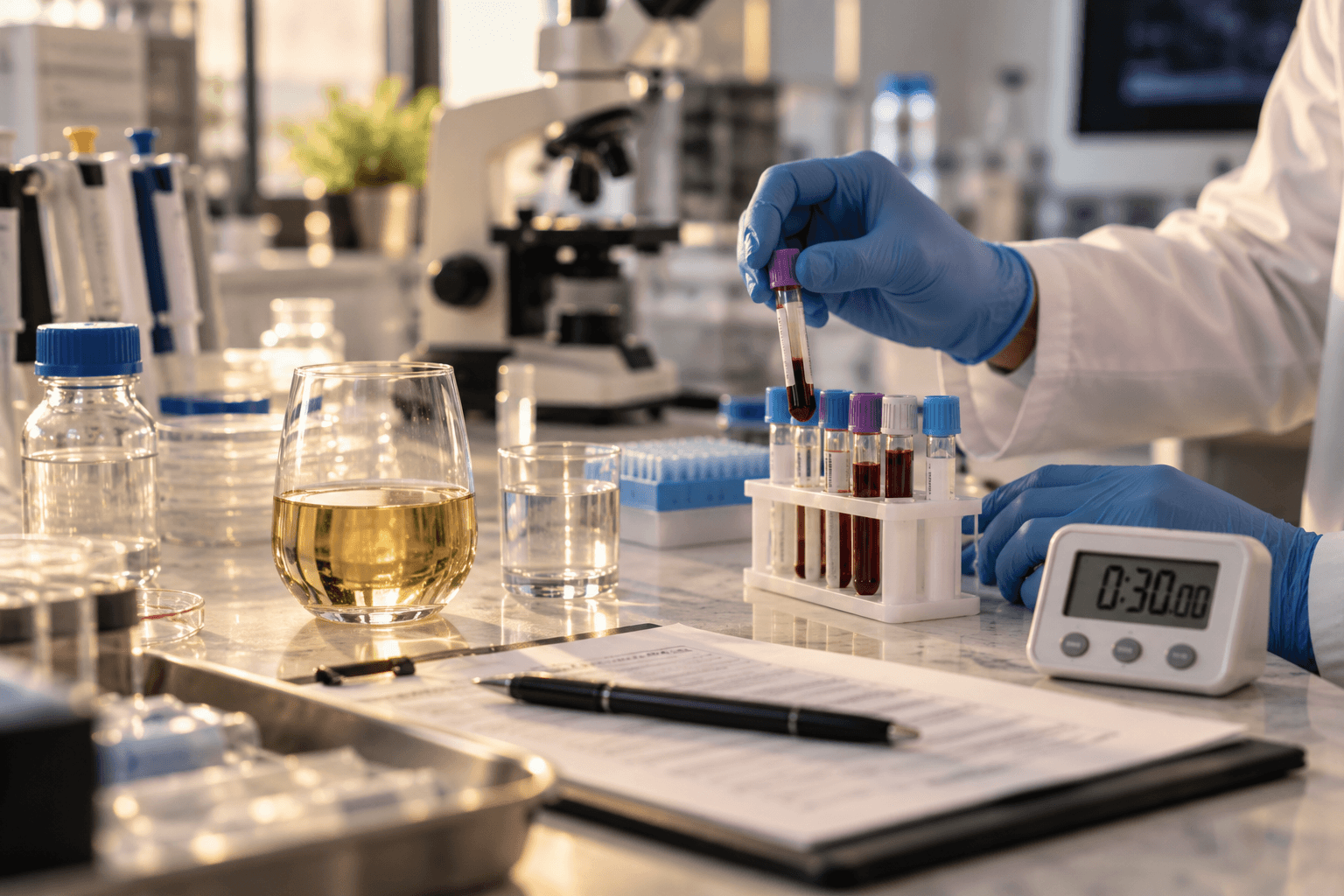
Blood plasma was collected before the beverage and then once an hour for four hours afterward.
Researchers measured 10 biomarkers connected to inflammation, vascular signaling, metabolic regulation, tissue remodeling and neuroimmune activity.
What Does 0.35 or 0.60 g/kg Actually Mean?
The doses were based on body weight, so there is no single universal number of drinks that maps perfectly onto each condition.
That is worth emphasizing before turning laboratory doses into a casual one-drink-versus-two-drink headline.
Breath alcohol concentration peaked around 0.034% after the low dose and around 0.063% after the moderate dose.
The low-dose peak occurred about 30 minutes after consumption. The moderate-dose peak occurred around 60 minutes.
Researchers were not studying an extreme binge. They were examining biological responses at relatively modest levels of acute alcohol exposure.
What Changed?
Acute alcohol administration was associated with changes in two measured biomarkers in particular: sRAGE and high-sensitivity C-reactive protein, or hsCRP.
Under the moderate-dose condition, sRAGE increased. The researchers describe the increase as potentially reflecting an acute compensatory response to inflammation and/or oxidative stress.
That word matters: potentially.
A biomarker changing does not automatically tell us whether the change is harmful, protective, adaptive or clinically important over the long term.
The low-dose condition also produced a lower hsCRP level compared with placebo.
That sounds, at first glance, like evidence that a little alcohol reduced inflammation. It is not that simple.
The CRP Result Is a Perfect Example of Why Headlines Can Go Wrong
C-reactive protein is widely used as a marker of systemic inflammation.
So seeing hsCRP fall after low-dose alcohol creates an obvious temptation: low-dose alcohol lowers inflammation.
Except the researchers explicitly caution against interpreting the result that way.
CRP biology is slower and more complicated than a simple hour-to-hour gauge of whether the body suddenly became healthier.
A short-term shift in concentration does not establish that alcohol produced an anti-inflammatory health benefit.
A biomarker moving in a favorable-looking direction is not the same thing as a health benefit.
Some Biomarkers Changed Even Without Alcohol
MMP-7, MMP-9 and LCN2 changed over time, but those fluctuations were not specific to the alcohol condition.
In other words, biology was moving anyway.
Eating, time of day and normal physiological rhythms can all influence biomarkers.
Without a placebo condition, researchers might see a marker change after somebody drinks and assume alcohol caused it.
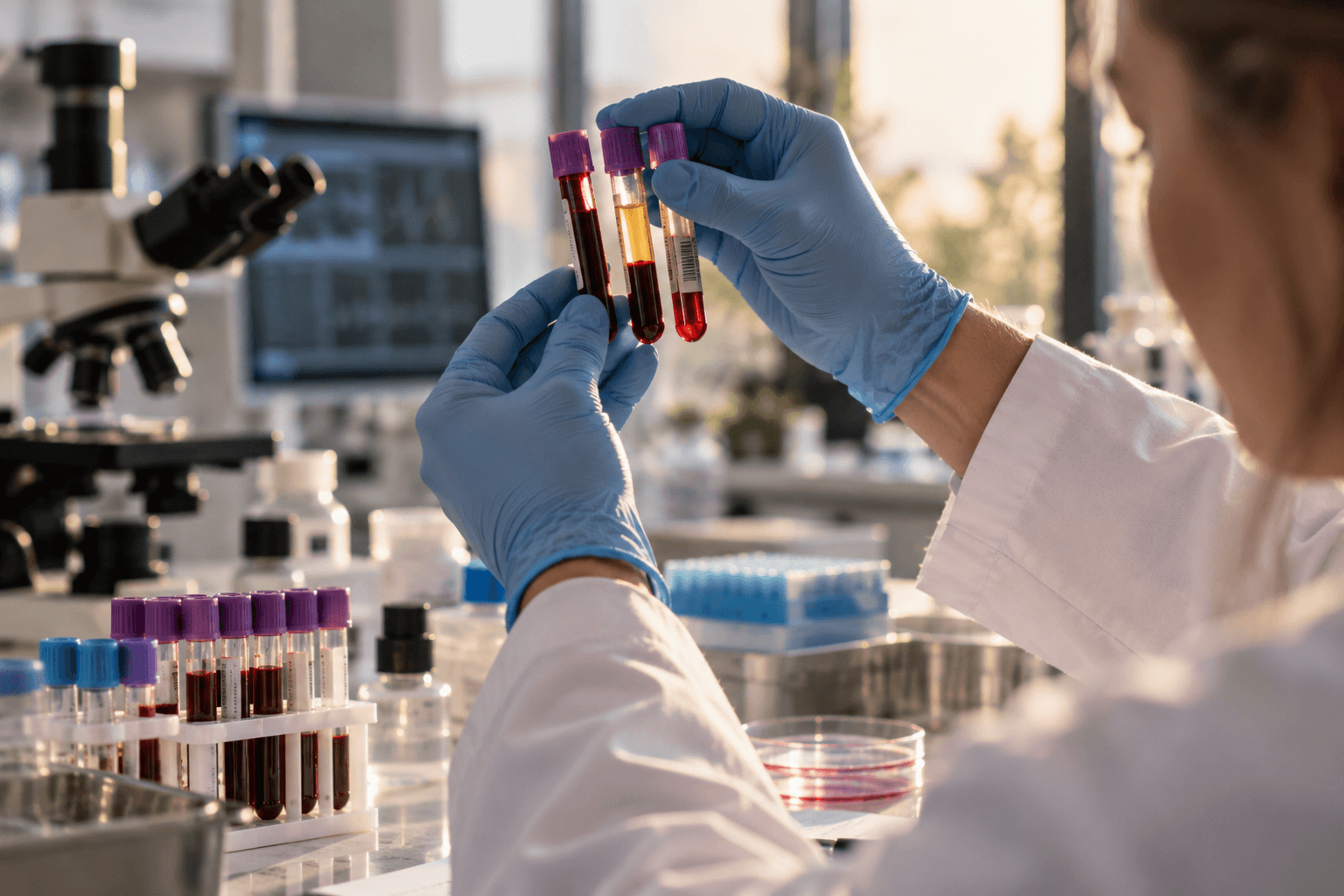
The placebo comparison helps separate what changed because time passed from what changed because alcohol was present.
Drinking History Showed Up Too
The researchers were not only interested in what happened after a single dose.
They also compared people classified as light drinkers with those classified as heavy drinkers.
Even in this young, otherwise healthy sample, heavy-drinking status was associated with higher levels of several biomarkers, including adiponectin, angiogenin, ICAM-1, LCN2 and sRAGE.
The authors describe that overall pattern as suggestive of altered vascular and metabolic activity.
That does not mean every higher biomarker value equals damage.
But it does reinforce something important about alcohol research.
The body's response to today's drink may not be completely separable from the drinking pattern that came before it.
Does This Mean One Drink Causes Chronic Disease?
No.
This study cannot tell us that.
Thirty-two participants is a small sample.
The participants were relatively young and healthy.
The experiment followed biomarkers for hours, not disease outcomes for years.
And biomarkers are not diseases.
Nobody developed cardiovascular disease because sRAGE changed during a laboratory session.
The value of the study is mechanistic.
Population studies can tell us that alcohol exposure is associated with certain long-term outcomes. Experiments like this can help researchers investigate what biological pathways might connect the exposure to those outcomes.
Measurable does not mean catastrophic. Temporary does not mean meaningless. And a biomarker is not a diagnosis.
So Why Should We Care About a Four-Hour Change?
Because chronic exposure is made of repeated acute exposures.
That does not mean every temporary change accumulates into disease. Human biology is far more complicated than that.
But if researchers repeatedly observe alcohol perturbing pathways related to vascular function, metabolism, inflammation or oxidative stress, those observations can help build a biological explanation for patterns seen over years in larger populations.
A single night's poor sleep does not create chronic sleep deprivation. But understanding one disrupted night still helps us understand what repeated disruption might mean.
The same logic applies here, cautiously.
Whatever Happened to the Healthy Glass of Wine?
For decades, moderate drinking was often described as potentially protective, especially for cardiovascular health.
That story has become much less comfortable as researchers have gotten better at separating alcohol itself from the characteristics of people who drink moderately.
The new experiment does not settle that debate.
It was not designed to determine whether a nightly glass of wine makes someone live longer or shorter.
What it does add is another layer of evidence.
Instead of asking only what happens to moderate drinkers decades later, researchers can ask what alcohol actually does inside a living human body today.
Continue reading
The body's response to alcohol does not stop with a four-hour blood test. We also looked at what research says happens to the brain after drinking stops and recovery begins.
What You Feel Is Only Part of the Story
We tend to judge alcohol by how it makes us feel.
Am I drunk?
Am I hungover?
Did I sleep badly?
Do I feel fine?
Those are reasonable observations. They are not complete biological measurements.
You can feel completely normal while signaling proteins, hormones and immune markers are doing things you cannot perceive.
The absence of a hangover does not prove nothing happened.
And the presence of a measurable change does not prove something terrible happened.
Both ideas can be true at once.

The Study Is Small. That Matters.
Thirty-two people is not enough to rewrite alcohol guidelines.
It is not enough to determine long-term disease risk.
It is not representative of every age, health status or drinking pattern.
And because the researchers examined multiple biomarkers across multiple time points and drinking histories, individual findings need replication.
That does not make the experiment unimportant.
It tells us what kind of evidence it is.
This is an early mechanistic piece of a much larger puzzle.
The More Interesting Question Comes Next
The next step is not to panic about one glass of wine.
It is to keep asking better questions.
- Which acute changes reliably appear after alcohol?
- Which are dose dependent?
- Which disappear quickly?
- Which differ according to a person's usual drinking pattern?
- Which help explain long-term disease risk when exposure is repeated?
That is how a study like this becomes useful.
Not as a verdict on one drink, but as a controlled glimpse into what alcohol asks the body to do after it enters the bloodstream.
The glass can look ordinary. The biology does not have to be dramatic to be worth understanding.
Frequently Asked Questions
What happens to your body after one or two drinks?
Alcohol is absorbed into the bloodstream and metabolized while multiple biological systems respond. In this controlled study, acute alcohol exposure was associated with changes in some disease-relevant blood biomarkers over the following four hours.
Does one drink cause inflammation?
This study does not support that simple conclusion. Moderate-dose alcohol increased sRAGE, while low-dose alcohol was associated with lower hsCRP than placebo. The researchers caution that short-term biomarker changes require careful interpretation and do not automatically indicate harm or benefit.
Does one or two drinks cause chronic disease?
This study cannot answer that. It measured short-term biomarker responses in 32 healthy adults over four hours. Chronic disease develops over much longer periods and is influenced by many factors.
How quickly does alcohol affect the body?
In this study, breath alcohol peaked about 30 minutes after the low dose and about 60 minutes after the moderate dose. Blood biomarkers were measured hourly for four hours after drinking.
Why did researchers use a placebo?
Some biomarkers naturally change with time of day, food intake and other physiological processes. A placebo condition helps researchers distinguish alcohol-specific changes from changes that would have happened anyway.
Can you feel these biological changes happening?
Usually not. Biomarkers can shift without producing an obvious sensation. Feeling normal after drinking does not prove nothing changed biologically, just as a measurable biomarker change does not mean a person experienced immediate harm.