
Sobriety & Life
When You Stop Drinking, Some Friendships Change Too
Nobody really warns you that changing your relationship with alcohol can change some of your relationships with people too.

When I stopped drinking, I expected certain things to change.
What I drank.
Where I went.
What Friday nights looked like.
How I felt in the morning.
I knew there would be situations I'd have to learn how to navigate differently.
What I didn't really expect was how some of my relationships would change.
Not through some dramatic falling-out.
There weren't arguments.
Nobody announced that we couldn't be friends anymore.
Some people just slowly disappeared.
And some invitations did too.
- Dinners.
- Parties.
- Industry events.
- Even some family gatherings.
At first, it's hard not to take that personally.
You start wondering whether people think you've changed.
Whether you're less fun now.
Whether they assume you don't want to be around alcohol.
Whether you somehow made everyone uncomfortable simply by ordering something different.
Four years later, I see those friendships a little differently.
Because when you remove drinking from your life, sometimes you find out what was underneath it.
And the answer isn't always as simple as real friends stay and fake friends leave.
People are more complicated than that.
Some Friends Don't Really Change at All
These are the easy ones.
You stop drinking.
They don't.
And somehow the friendship just keeps going.
Maybe there's an awkward moment in the beginning when they don't know whether they should offer you something.
Maybe they ask a few questions.
Maybe they're overly careful around you for a while.
Then eventually everyone realizes something surprisingly ordinary.
You're still you.
You can still go to dinner.
You can still laugh at the same stupid things.
You can still travel together.
You can still sit around for three hours talking about absolutely nothing important.
They might order a drink.
You don't.
Nobody needs to make it weird.
Those friendships teach you something reassuring.
Alcohol may have been present in the relationship. It wasn't holding the relationship together.
Then There Are the Friends Who Slowly Fade
I think these can be harder.
Because nothing actually happens.
Nobody does anything wrong.
There isn't even necessarily a moment you can point to.
The texts just become less frequent.
The invitations become less frequent.
You realize you haven't seen someone in three months.
Then six.
Then you notice that a friendship that used to be part of your everyday life has quietly become somebody you occasionally see online.
That doesn't necessarily mean the friendship was fake.
I don't think that's fair.
Maybe alcohol was simply doing more work in the relationship than either person realized.
You went to the same places.
Attended the same parties.
Had the same Friday-night routine.
You always had a reason to get together because drinking provided one.
Remove that routine and suddenly maintaining the friendship requires something neither of you had needed before.
A new reason to see each other.
Some friendships find one.
Some don't.

And Then There Are Drinking Friends
Most people who drank socially probably know exactly what I mean.
These weren't necessarily bad people.
And the friendship wasn't necessarily dishonest.
You genuinely had fun together.
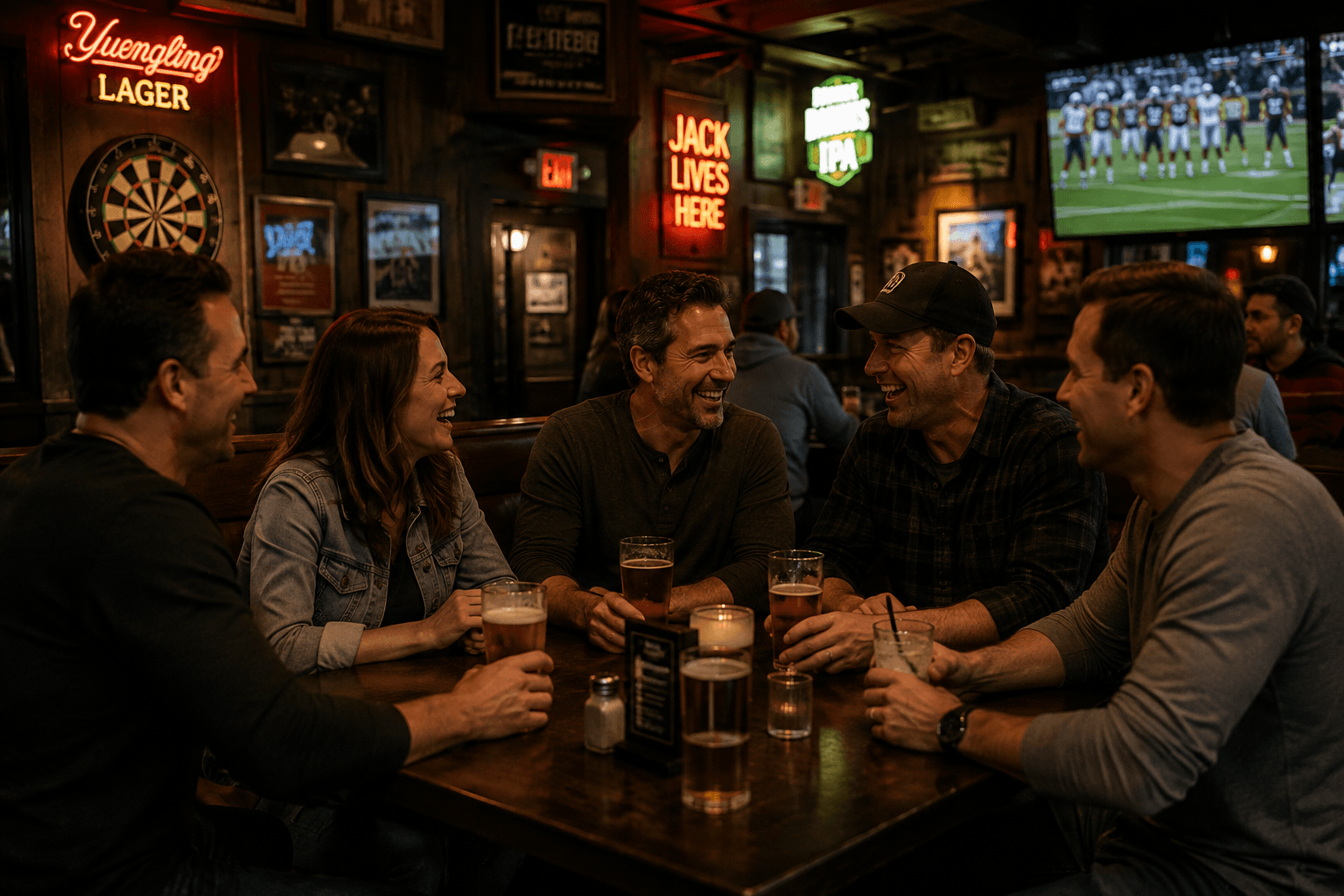
But almost every memory involved drinking.
- You met at bars.
- You went to parties.
- You watched games with drinks.
- You met for happy hour.
- You called each other when you wanted to go out.
Then you stopped drinking.
And suddenly there wasn't much left for the friendship to organize itself around.
That's a strange realization.
Because sometimes what felt like a close friendship was actually a close drinking friendship.
There's a difference.
And you often don't see it until the drinking is gone.
Research on recovery has observed this broader social-network change for years. People in recovery often decrease relationships centered around drinking while developing or strengthening relationships that better support the life they're trying to build.
More recent research continues to show that the people around us can meaningfully influence recovery outcomes.
That doesn't make the people who disappear villains.
Sometimes a chapter simply ends when the thing that kept bringing two people together disappears.
Your Sobriety Can Make Other People Uncomfortable
This one took me longer to understand.
When I stopped drinking, I never expected everyone around me to stop.
That was my decision.
Not theirs.
I didn't go to dinner secretly counting how many drinks somebody ordered.
I didn't think somebody having a few beers meant they had a problem.
I wasn't sitting there judging anyone.
But sometimes I wondered whether they thought I was.
Because when one person at a table stops drinking, something that used to be invisible can suddenly become noticeable.
Someone orders their fourth drink.
You're still on your first iced tea.
You haven't said a word about it.
But now they may notice the difference.
- Maybe they wonder whether you're judging them.
- Maybe they're worried drinking around you will make things difficult.
- Maybe they don't know whether inviting you somewhere centered around alcohol is considerate anymore.
- Or maybe none of those things are happening.
That last part matters.
I can't know what somebody else was thinking unless they told me.
But I do know what happened in my own life.
I stopped drinking, and some invitations stopped too.
And eventually I realized that my sobriety didn't always make me uncomfortable around people who drank.
Sometimes the discomfort seemed to travel in the other direction.
Sometimes People Don't Know Whether to Invite You
There is another possibility that deserves some grace.
Maybe they're actually trying to be considerate.
Imagine someone is throwing a party where they know everyone will be drinking.
They know you recently stopped.
They don't know whether you're struggling.
They don't know whether being around alcohol bothers you.
They don't want to put you in a bad situation.
So they decide maybe they shouldn't invite you.
Their intention might actually be kind.
The result can still hurt.
Because instead of being allowed to decide for yourself whether you're comfortable going, the decision gets made for you.
I would much rather someone say:
We're having people over Saturday. There will be drinking, but we'd love to have you. No pressure either way.
Then let me decide.
Sobriety doesn't automatically mean someone wants to disappear from every room where alcohol exists.
Sometimes we just want the choice.
Continue reading
When drinking disappears from your social life, the quiet that follows can be just as surprising as the changing friendships.
Not Every Friendship Needs to Survive Every Version of You
I used to think long friendships were automatically the most important ones.
You've known someone for fifteen years, so obviously that relationship must mean more than someone you've known for two.
I'm not sure I believe that anymore.
Time tells you how long you've known somebody.
It doesn't necessarily tell you how well you know each other now.
People change.
Careers change.
Families change.
Interests change.
Priorities change.
And sometimes sobriety accelerates that process because you're changing something that may have been woven through your social life for years.
Some relationships adapt with you.
Others belong more naturally to the person you used to be.
That doesn't erase what they meant.
You don't have to rewrite the entire friendship as a mistake just because it ended.
You can appreciate what somebody meant during one chapter of your life without requiring them to appear in every chapter that follows.
Losing Friends Can Still Hurt
Understanding all of this doesn't magically make it painless.
There's grief in realizing someone you expected to be around isn't anymore.
Especially early on.
You've already changed your routines.
Maybe you've stopped going to certain places.
Your weekends feel different.
Then people start disappearing too.
That can make sobriety feel like one long list of things you've lost.
- Alcohol.
- Friday nights.
- Certain places.
- Certain friends.
- A version of yourself you understood.
And when you're standing in the middle of that transition, nobody can promise you that what replaces those things will arrive immediately.
Sometimes there's a gap.
That's the uncomfortable part.
Don't Fill the Empty Space Just Because It's Empty
When your social life gets quieter, there's a temptation to panic.
Maybe you should go back to the same places.
Maybe you should start hanging around the same people.
Maybe you were more fun before.
Maybe sobriety is making your life smaller.
I think you have to give the empty space a little time.
Because if every part of your old life stays exactly where it was, there isn't much room for anything new.
That doesn't mean cutting everyone off.
It doesn't mean only having sober friends.
And it definitely doesn't mean deciding that anyone who drinks is somehow bad for you.
It means paying attention.
- Who makes your life feel better?
- Who makes it harder to be the person you're trying to become?
- Who calls when there isn't a party?
- Who still wants dinner when you're not splitting a bottle?
- Who wants to know what's actually happening in your life?
And maybe most importantly:
Who do you want to be around now?
A 2026 longitudinal study followed 501 adults making a significant recovery attempt over one year and found that characteristics of their social networks were associated with abstinence and reductions in drinking.
More frequent interaction with people in the network predicted better outcomes, while heavier drinking within someone's social network could work against reductions in drinking.
The point isn't that you need to build a social circle where nobody ever drinks.
The point is that your environment matters.
Some New People Will Surprise You
There's another side of this that doesn't get talked about enough.
You don't only lose relationships when your life changes.
You make room for different ones.
Sometimes people who were acquaintances become real friends.
Sometimes you connect with someone because you finally have something in common besides where you used to go on Saturday night.
Sometimes you discover you actually enjoy spending time with people you barely noticed before.
And sometimes an old friendship comes back in a completely different form.
Research into alcohol recovery has repeatedly found that social support is not just background scenery. Relationships that support abstinence and general well-being can matter, while relationships that reinforce drinking can make recovery more difficult.
Your social world doesn't necessarily get smaller forever.
It can rebuild differently.
The Friends Who Stay Might Know You Better
There's something interesting about the friendships that make it through a major life change.
They've known more than one version of you.
Maybe they knew the person who drank.
They knew the person trying to figure out how not to.
And eventually they know the person who doesn't think about it nearly as much anymore.
Those friendships become less about what you do together and more about who you're doing life with.
That's a different kind of friendship.
And I've come to value it a lot more.

If Your Invitations Stopped Too
Maybe you're reading this because you've noticed it happening.
Your phone is quieter.
People stopped asking you to come out.
A group you thought you'd always be part of seems to be moving on without you.
It's easy to turn that into a verdict about yourself.
Don't.
You don't actually know yet what all of these relationships will become.
Some people may need time to adjust.
Some friendships may find a new rhythm.
Some may fade.
Some probably should.
And some people you haven't even met yet may eventually occupy spaces in your life that you can't imagine being empty right now.
You don't have to decide today which category everyone belongs in.
Just pay attention to who keeps showing up.
And keep showing up for the people who matter to you too.
Sobriety isn't a friendship test. It's a life change. And life changes relationships.
Sometimes painfully.
Sometimes quietly.
And sometimes for the better.
Frequently Asked Questions
Is it normal to lose friends when you stop drinking?
Friendships can change when someone's drinking habits change, especially when much of the relationship previously revolved around alcohol or drinking environments. That does not necessarily mean the friendship was fake or that either person did something wrong. Research also shows that social networks can change during recovery and that supportive relationships can influence recovery outcomes.
Why did my friends stop inviting me out after I got sober?
There can be many reasons. Some friendships may have been heavily centered around drinking. Other friends may assume you no longer want to attend events where alcohol is present, or they may be unsure whether inviting you is appropriate. Unless someone tells you why, it is best not to assume their motivation.
Can I still be friends with people who drink if I'm sober?
Yes. Being sober does not require every person in your life to stop drinking. What matters is whether the relationship supports your well-being and whether being around that person's drinking makes it harder for you to maintain the changes you want.
Why do people act differently around someone who stopped drinking?
Sometimes people simply do not know what is appropriate. They may worry about offering alcohol, drinking in front of you, asking personal questions, or inviting you somewhere alcohol will be present. A straightforward conversation can remove some of that uncertainty.
How do you deal with losing drinking friends after getting sober?
Give yourself permission to acknowledge that the loss can hurt without deciding the entire friendship was meaningless. Pay attention to which relationships can adapt to your current life, stay connected with people who support you, and give yourself time to build new routines and relationships that are not dependent on drinking.
How do you make new friends after getting sober?
Start with activities and places that already reflect the life you want to have. Hobbies, fitness, volunteering, classes, community events, coffee shops, sports, recovery communities, and existing acquaintances can create opportunities for relationships that are not organized around drinking.