
Sobriety & Life
I Thought Being Sober Would Make Me Less Confident. It Did the Opposite.
I thought being the sober person in the room would make me feel awkward. Four years later, it has become one of the places I feel most confident.

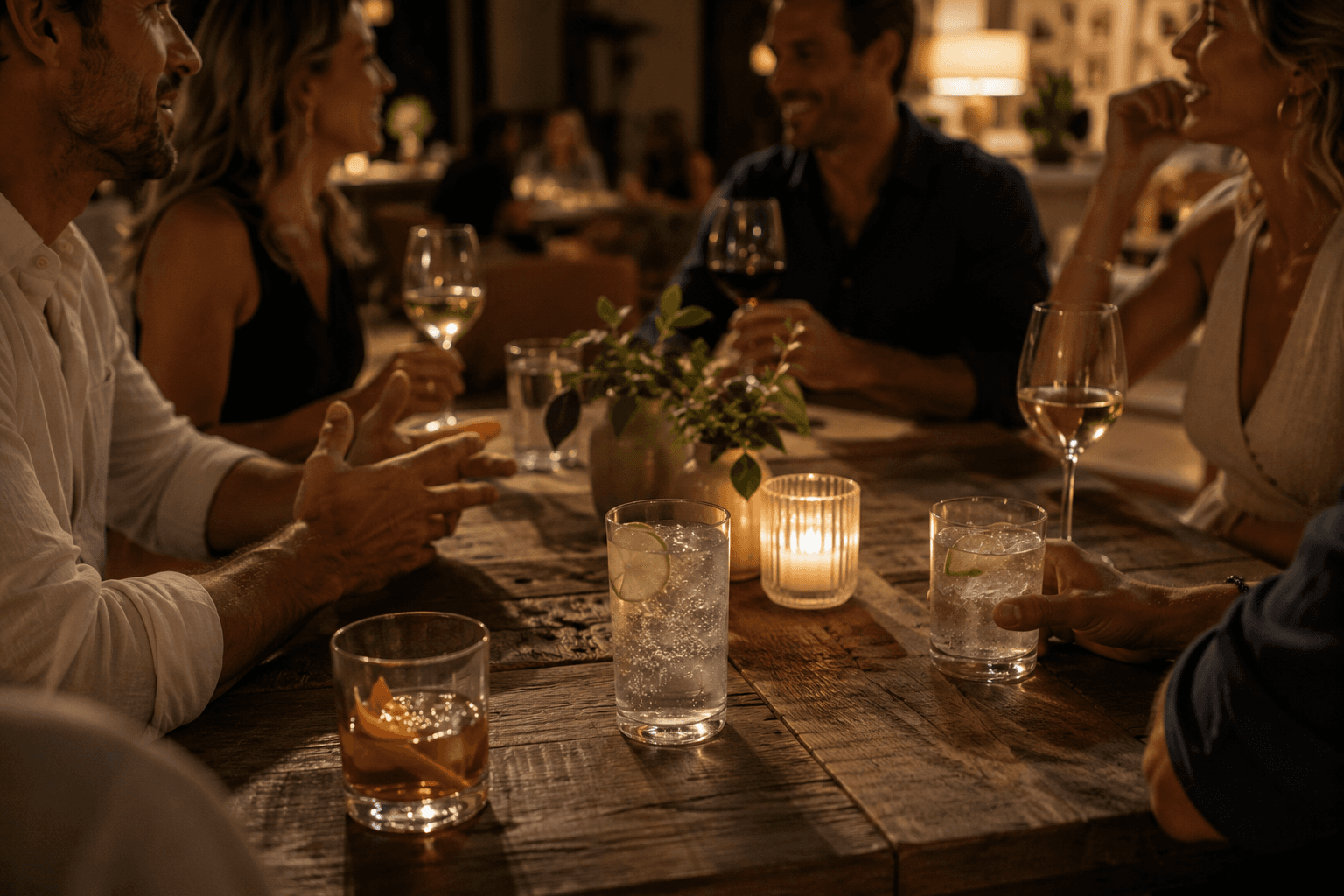
There was a time when walking into a room full of people drinking without a drink in my hand would have made me feel like the odd one out.
Now, four years sober, I feel almost the exact opposite.
I feel more confident.
Sometimes I even feel more powerful.
I hesitate to use that word because I don't mean powerful in the sense that I'm somehow better than the people around me. I'm not.
It's more like a quiet confidence in myself that I didn't have before.
When I walk into a room now, I know I'm in control.
I know exactly how I'm getting home tonight. I know I'm not going to say something I'll regret tomorrow. I'm going to remember the conversations I had. I'm going to sleep well. And when I wake up in the morning, I'm going to feel like myself.
I never expected sobriety to give me that kind of confidence.
But four years later, it's one of the things I appreciate most.
I Used to Think Everyone Would Be Looking at Me
One of the things I worried about when I stopped drinking was how other people would react.
- What do I order?
- What happens when someone offers me a drink?
- Are people going to ask why I'm not drinking?
- Am I going to be the boring one now?
You can spend an incredible amount of energy worrying about being the sober person in the room.
Then you actually become the sober person in the room long enough and realize something.
Most people really don't care.
But I've noticed something else over the years that I find much more interesting.
Sometimes when people realize I'm not drinking, they'll start explaining their drinking to me.
I really don't drink that much. This is only my second one. I've actually been thinking about cutting back.
And the funny thing is, I wasn't thinking anything about their drinking.
I'm not judging them.
If anything, I understand them.
I've been on the other side of that conversation.
It makes me wonder if sometimes the judgment people think they're getting from the sober person isn't coming from the sober person at all.
Maybe they're having their own conversation with themselves.
Maybe seeing someone who isn't drinking just brings that conversation a little closer to the surface.
I can't know what's going on in someone else's head. But I've experienced it enough times that I've started to notice it.
And when it happens, I don't want that person to feel uncomfortable around me.
I want them to know I'm probably one of the last people in the room who's going to judge them.

I Think I Had Confidence Wrong
Alcohol used to feel like confidence to me.
A couple drinks made a room easier. Conversation flowed. I loosened up. I stopped thinking so much.
At the time, I thought that was confidence.
Now I can walk into that same room without needing anything to make me comfortable there.
And I've realized that's a very different kind of confidence.
I don't need a drink to make myself more social.
I don't need one to relax.
And I don't spend the night negotiating with myself anymore.
- Should I have another one?
- How many have I had?
- Am I okay to drive?
- Do I seem drunk?
- Did anyone notice?
That entire conversation is gone.
I didn't realize how much space it took up in my head until I didn't have to do it anymore.
There is actually a term researchers use for part of this: abstinence self-efficacy. Basically, it's confidence in your ability to stay abstinent.
Research on people treated for substance use disorders has found that stronger abstinence self-efficacy can predict better outcomes later on.
I didn't know any of that when I stopped drinking. I just knew that every time I got through another situation sober, the next one felt a little less intimidating.
Four years of dinners, weddings, vacations, holidays, celebrations, bad days and random Saturday nights eventually taught me something.
At first, you wonder if you can do these things without drinking.
Then you do one.
And another.
And another.
Eventually you have all this evidence behind you.
You realize you can.
For anyone who's at the beginning of this and doesn't feel that confidence yet, I think that's important to know.
You don't have to have it on day one.
Mine came from doing this over and over again.
Somehow Brad Pitt Made Me Realize This
This whole article actually started because of something that made me laugh.
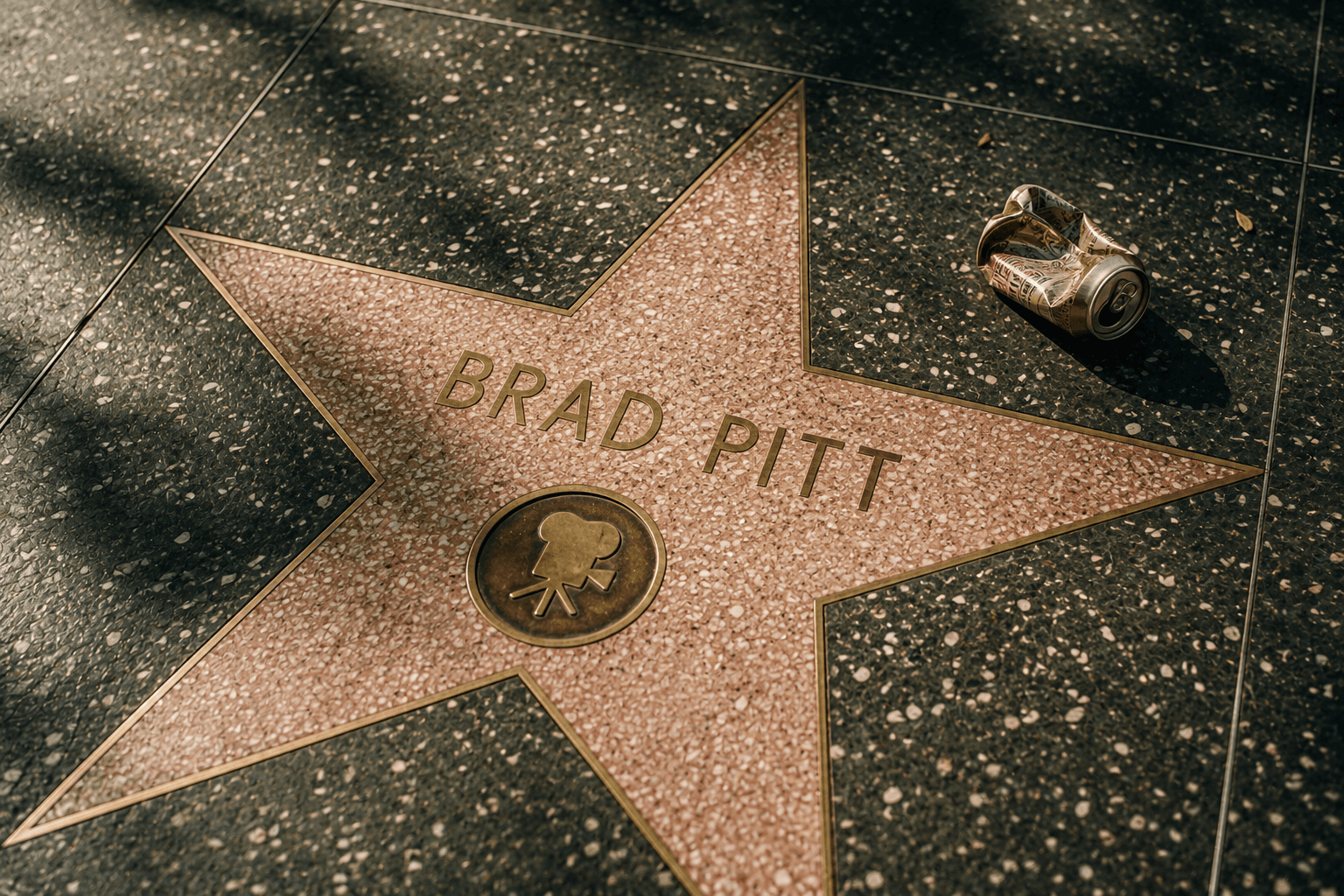
We recently wrote about Brad Pitt revealing that he's drinking again after seven years of sobriety. After reading about it, I noticed something completely unexpected.
It made me appreciate my own four years a little more.
It's Brad Pitt.
He's one of the most successful and recognizable people in the world. I'm a guy from a small town in New York building a sobriety app.
Yet I found myself having this funny little thought:
Wait a minute. I'm four years sober and I'm still going.
And then another thought crossed my mind.
Is this one thing I might actually be stronger at than Brad Pitt?
That made me laugh.
But the more I thought about it, the more I realized it wasn't really about Brad Pitt.
I'm not rooting against him. I don't know him, and his relationship with alcohol is his own. I genuinely hope whatever he's doing works for him.
His story just made me stop for a second and recognize something in myself.
Four years ago, I probably would have looked at someone with that level of success and assumed they had life figured out in ways I didn't.
Now I understand that everybody is figuring something out.
This happens to be something I've worked really hard at.
I'm proud of that.
And if you've made it four years, four months, four weeks or four days, I hope you're proud of yourself too.
Is Being Sober Actually Becoming Cool?
I keep seeing versions of this question lately.
Maybe it is.
Alcohol-free drinks are everywhere. People are talking about being sober curious. Younger adults seem increasingly willing to question whether alcohol needs to be part of every social situation.
And this isn't just something I'm noticing. Researchers have started paying attention to the shift too. The National Institute on Alcohol Abuse and Alcoholism has highlighted research into sober curiosity among young adults and the possibility that it is changing the broader conversation around alcohol.
I think all of that is great.
But I've never been particularly interested in doing something just because everyone else is doing it.
If anything, I've usually been the person wondering why everyone is doing it in the first place.
And that's the part of this cultural shift that interests me.
Maybe sobriety becoming cool isn't really the story. Maybe questioning drinking becoming normal is.
Why does every celebration need alcohol?
Why does a bad day need a drink?
Why is having a beer with dinner completely ordinary, but sometimes ordering sparkling water comes with a question?
Why did so many of us grow up assuming drinking was simply part of being an adult?
I'm not saying there's anything wrong with having a drink.
I'm saying there's nothing wrong with questioning it either.
I think more people are starting to do that.
And I like it.
Not because everyone should become sober.
Because I think deciding what actually works for you is a lot more interesting than doing something because that's what everyone else is doing.
Maybe That's What Confidence Really Is
For a long time, drinking and confidence were connected in my head.
Have a couple drinks. Loosen up. Talk more. Stop worrying about what everybody thinks.
Now I look at confidence differently.
Maybe confidence is simpler than I thought.
Walk into the room exactly as you are. Order what you actually want. Talk to someone new. Leave when you're ready.
And maybe the biggest part is being comfortable enough with your own choices that somebody else's choices don't bother you.
That's become a big one for me.
I'm Really Not Judging You
I don't think I'm better than someone because they drink.
Not even a little bit.
Some people can have two drinks and go home.
Some people are questioning their relationship with alcohol.
Some people know they probably need to stop.
Some people aren't thinking about any of this at all.
Everyone is somewhere different.
I remember being on the other side of this, and the last thing I would have wanted was some sober guy standing there acting like he had life figured out.
I don't.
I'm still figuring plenty of things out.
Sobriety is simply one area of my life where I've learned a lot over the last four years.
So if I'm standing at a party holding sparkling water while you're drinking a beer, I'm probably not thinking about your beer.
I'm thinking about whatever we're talking about.
And if you're feeling a little self-conscious because you're drinking and I'm not, you don't need to.
I understand more than you probably realize.
The Best Part Happens Tomorrow

Eventually the night ends.
I'll say goodbye.
I'll get into my car knowing I'm completely safe to drive.
I'll remember the entire night.
I'll go home, get into bed and sleep.
Then tomorrow morning I'll wake up and just...wake up.
- No headache.
- No wondering what I said.
- No checking my phone nervously.
- No trying to piece together the end of the night.
- No losing half of Sunday because Saturday went a little too far.
Just another morning.

Four years ago, I might have walked through that room and looked at everyone drinking like they had something I couldn't have anymore.
That's probably the biggest thing that's changed.
Now I can walk through the same room and genuinely not want what they're having.
I don't feel left out.
I don't feel like the boring sober guy.
I just feel comfortable being myself.
And maybe that's what I was mistaking alcohol for all those years.
Confidence.
Today I know what confidence actually feels like for me.
It's quieter than I expected.
It's making my own decision even when the room around me is making a different one.
It's not needing anyone else to make the same choice I did in order to feel good about mine.
It's knowing I'll be okay tonight.
And tomorrow.
And if you're still at the point where walking into that room without a drink feels impossible, I hope you'll remember something.
I didn't start here either.
It took time.
But somewhere along the way, being the sober person in the room stopped feeling like something I had to explain.
It started feeling like something I was proud of.
Continue reading
Wondering what happens when drinking stops being the thing that fills your nights? I wrote about that strange early-sobriety quiet too.
Frequently Asked Questions
Does quitting alcohol make you more confident?
It can. Confidence after quitting alcohol may grow as you become more comfortable handling social situations, celebrations, stress, and other experiences without relying on a drink. For me, that confidence developed gradually as I accumulated more experiences being sober and realizing I could handle them.
How do you socialize without drinking alcohol?
Start by giving yourself permission to keep things simple. Order something you actually enjoy, focus on the people rather than what's in everyone's glass, leave when you're ready, and remember that you don't owe anyone a detailed explanation for not drinking. Socializing without alcohol often becomes easier with repetition.
Why do I feel awkward being the sober person in the room?
Being sober can initially make you feel different when drinking has always been part of your social routine. You may also overestimate how much other people are paying attention to your choice. With time and repeated sober experiences, many people become more comfortable making their own decision without needing everyone around them to make the same one.
What is alcohol abstinence self-efficacy?
Alcohol abstinence self-efficacy refers to a person's confidence in their ability to avoid drinking across situations that might otherwise make alcohol tempting. Research has examined self-efficacy as an important factor in alcohol recovery and longer-term abstinence.
Is being sober becoming more popular?
Interest in sobriety, moderation, and sober-curious lifestyles has become more visible. Researchers and organizations including the National Institute on Alcohol Abuse and Alcoholism have studied sober curiosity among younger adults and how changing attitudes may be encouraging more people to reconsider their relationship with alcohol.