
Sobriety & Wellness
What Happens to Your Body After 30 Days Without Alcohol?
Thirty days without alcohol won't magically transform your body. But it can be long enough for some surprisingly meaningful changes to begin.

Thirty days without alcohol won't magically transform your body.
But it can be long enough for some surprisingly meaningful changes to begin.
Maybe you're doing a sober month.
Maybe you've been wondering what life would feel like without drinking.
Or maybe you're simply curious what actually happens when the glass of wine with dinner, the drinks on Friday night, and the Sunday brunch mimosa disappear for a while.
Thirty days has become a popular benchmark for taking a break from alcohol, and there is a reason it feels significant.
A month is long enough to move beyond a single alcohol-free weekend and begin noticing what your body, your routines, and your everyday life feel like without alcohol regularly in the picture.
Researchers have actually studied it.
The results are more interesting than a dramatic before-and-after photo.
Studies of month-long alcohol abstinence have found changes in measures including blood pressure, insulin resistance, body weight, and liver-related markers in some participants. People taking part in alcohol-free month programs have also reported changes in sleep, energy, concentration, and physical well-being.
That doesn't mean everybody experiences the same changes, or that Day 30 is some kind of biological finish line.
But it is enough time for something useful to happen.
You get to find out how you feel without alcohol.
First, An Important Note About Alcohol Withdrawal
Before we talk about the potential benefits of an alcohol-free month, there is an important safety distinction.
For someone who has been drinking heavily for a prolonged period and has become physically dependent on alcohol, suddenly stopping can cause withdrawal.
The National Institute on Alcohol Abuse and Alcoholism warns that alcohol withdrawal can be painful and potentially life-threatening. Symptoms can include nausea, rapid heart rate, seizures, and other serious problems.
If you drink heavily or regularly, have experienced withdrawal before, or are unsure whether stopping suddenly is safe for you, talk with a healthcare professional before quitting abruptly.
An alcohol-free month can be a useful experiment. It shouldn't become a reason to ignore a real medical risk.
The First Few Days Can Feel a Little Strange
The beginning isn't always the part people put on Instagram.
You may expect to stop drinking Monday and wake up Tuesday feeling incredible.
Instead, your usual evening arrives and something feels missing.
Maybe you want something to pour.
Maybe you're restless.
Maybe you're thinking about alcohol more than you expected.
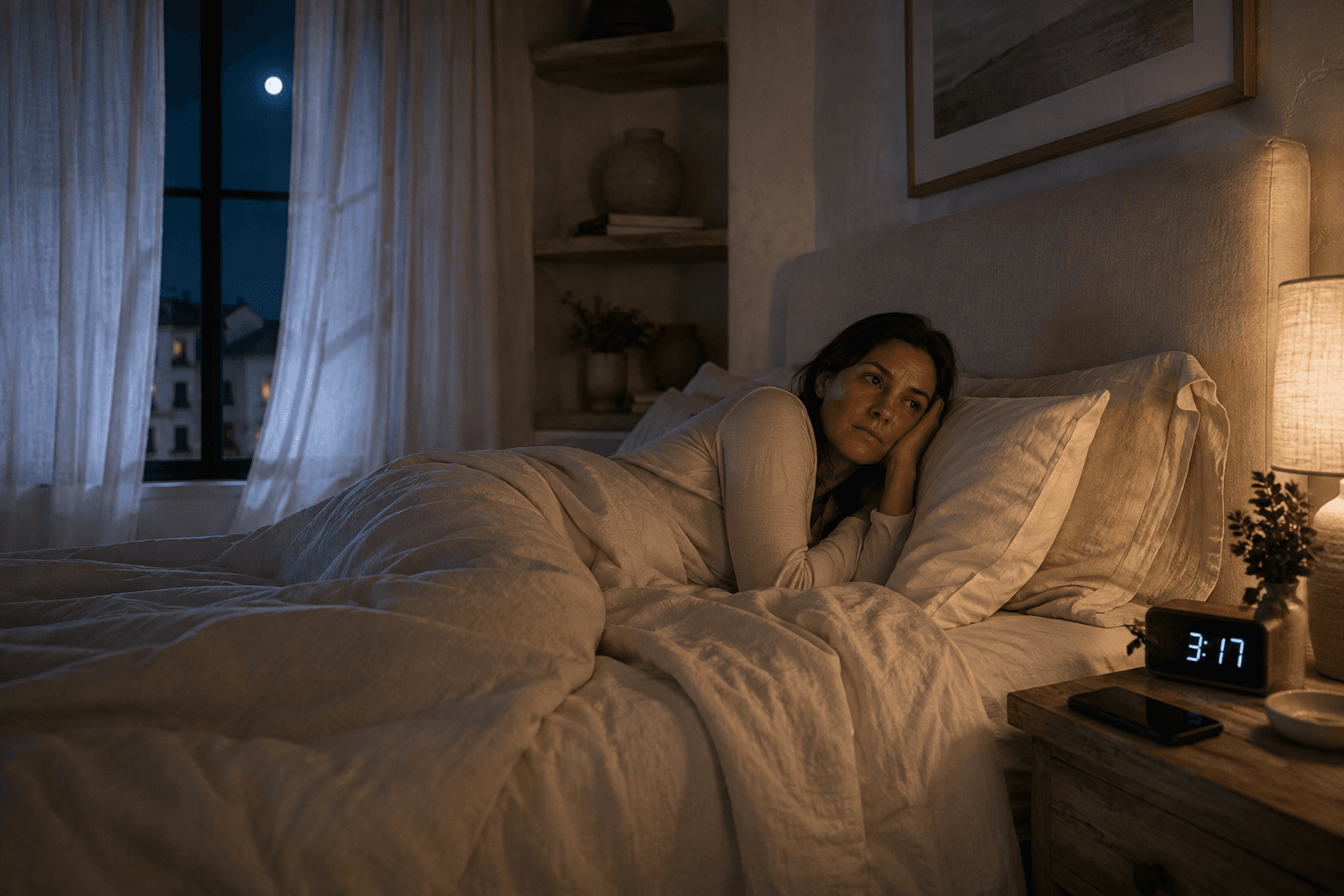
And your sleep may not immediately become amazing either.
For many people, removing alcohol isn't only a physical change. It also interrupts a routine.
- Wine while cooking.
- A drink after work.
- Cocktails on Friday.
- Beer while watching the game.
- Mimosas at brunch.
If you've repeated those patterns for a long time, doing the same activities without alcohol can simply feel unfamiliar at first.
That doesn't necessarily mean something is going wrong.
Sometimes different just feels different.
Your Sleep May Start Changing
Alcohol has an interesting relationship with sleep.
It can make you sleepy.
That's not the same thing as helping you sleep well.
Alcohol can disrupt normal sleep physiology, which helps explain why someone can fall asleep quickly after drinking and still wake up feeling anything but rested.
Once alcohol is removed, sleep doesn't necessarily become perfect overnight.
For some people, particularly those with heavier drinking histories, sleep can actually be disrupted during early abstinence.
But research on month-long abstinence programs has found that improved sleep is among the benefits many participants report.
And better sleep has a way of touching everything else.
- Your morning.
- Your patience.
- Your concentration.
- Your workout.
- Your motivation.
- Your desire to spend half of Saturday on the couch.
If sleep becomes strange after you stop drinking, that doesn't automatically mean removing alcohol was a mistake.
Continue reading
If your sleep got worse before it got better, there may be a reason.
Your Liver Gets Time Without Alcohol to Process
Your liver performs an enormous number of jobs, including metabolizing alcohol.
When alcohol stops arriving regularly, one thing becomes very simple:
There is less alcohol for your liver to process.
Researchers studying one month of abstinence in moderate-to-heavy drinkers measured significant improvements in several liver-related blood markers.
Research examining recovery after chronic alcohol exposure also shows that some alcohol-related changes in the liver can improve during abstinence.
But this is where internet headlines can get ahead of reality.
Thirty days is not a liver reset button.
It doesn't guarantee that liver disease has disappeared, and it cannot erase years of heavy alcohol use on a predetermined schedule.
How much recovery occurs depends on factors including how much someone drank, how long they drank that way, their overall health, and whether liver damage is already present.
What the research does show is more grounded and, honestly, more useful.
Meaningful changes in liver-related measures can begin within a month.
Your Blood Pressure May Improve
This is one of the more measurable changes researchers have observed.
In a prospective study of people drinking above recommended levels, participants who abstained from alcohol for one month experienced reductions in both systolic and diastolic blood pressure.
The comparison group that continued drinking did not show the same pattern of improvement.
Other research in heavy drinkers has also found reductions in blood pressure during alcohol abstinence.
Does that mean everyone's blood pressure drops after exactly 30 days?
No.
Your starting blood pressure, drinking pattern, medications, genetics, diet, activity, and overall health all matter.
But it is another reminder that some of the changes happening during an alcohol-free month may be measurable even if you can't see them in the mirror.
Your Metabolic Health May Start Responding Too
One of the less obvious findings from the month-long abstinence research involved insulin resistance.
Insulin helps regulate glucose in your bloodstream. Insulin resistance means the body's cells are not responding to insulin as effectively as they should.
In the one-month abstinence study, researchers measured an improvement in insulin resistance among the group that stopped drinking.
That doesn't mean 30 days without alcohol cures diabetes or metabolic disease.
It means changes can begin beneath the surface even when the person looking back at you in the mirror doesn't appear dramatically different.
You Might Lose Some Weight, But Don't Make That the Point
This is probably one of the first things people wonder about.
Will I lose weight if I stop drinking for a month?
Maybe.
Alcohol contains calories, and many alcoholic drinks bring additional calories from mixers, sugars, or other ingredients.
In the prospective one-month abstinence study, participants in the alcohol-free group experienced a modest reduction in body weight on average.
But individual results can look completely different.
Some people lose weight.
Some don't.
Some discover a previously unknown devotion to dessert when they stop drinking.
Life happens.
Instead of making the scale the scoreboard for your alcohol-free month, pay attention to what your body is telling you.
- How is your energy?
- How is your appetite?
- How does your body feel in the morning?
- Are your workouts different?
- Do you feel more interested in being active?
- How much of your weekend feels usable?

Your Energy May Feel Different
This is where laboratory measurements meet everyday life.
Studies and reviews of month-long abstinence programs have found that participants commonly report improvements in areas such as energy, concentration, sleep, and physical well-being.
That doesn't mean you'll spend Day 30 running ten miles before sunrise.
It might be much less dramatic.
You wake up and realize you don't need an hour to become a person.
You make plans for Saturday morning because Friday night no longer determines whether Saturday morning exists.
You go for a walk.
You finally do something you've been putting off.
You meet someone for coffee.
You notice that your weekends suddenly feel longer.
Removing alcohol doesn't create more hours in the day.
But for some people, it makes more of those hours feel usable.
Your Mind May Feel Different Too
Not every change fits neatly into a blood test.
Thirty days gives you something else:
Distance.
For an entire month, you get to experience dinners, stress, boredom, Friday nights, celebrations, mornings, and ordinary Tuesdays without automatically adding alcohol.
That can teach you things.
Maybe you discover you genuinely miss having a drink with friends.
Maybe you discover you don't miss alcohol nearly as much as you expected.
Maybe you realize certain people, places, or situations make you want a drink.
Maybe you notice that what felt like an alcohol craving was sometimes really the desire for the workday to feel over.
Or maybe you simply start liking your mornings enough that drinking begins to feel less appealing.
That information matters.
A sober month doesn't have to be an audition for lifelong sobriety.
It can simply be an experiment in understanding yourself.
What You Probably Won't Get in 30 Days
This part matters because the internet loves transformation stories.
30 days without alcohol changed everything.
Real bodies are more complicated.
Thirty days cannot guarantee:
- Perfect sleep.
- Dramatic weight loss.
- Flawless skin.
- Complete liver recovery.
- Zero anxiety.
- Endless energy.
- Freedom from cravings.
- A completely repaired relationship with alcohol.
Some changes take longer.
Some depend heavily on how much and how often you drank beforehand.
Some people notice enormous differences in a month.
Others notice surprisingly little.
And if you have an underlying health condition caused or affected by alcohol, stopping drinking doesn't replace appropriate medical care.
The useful question isn't:
Did my body transform enough?
It's:
What am I noticing?
What Happens After Day 30?
This might be the most interesting part of the entire experiment.
You reach Day 30.
Now what?
You could drink again.
You could keep going.
You could decide you want alcohol occasionally rather than automatically.
You could realize you don't miss it.
You could decide you want more support.
There's no rule saying an alcohol-free month has to end with a declaration about the rest of your life.
But before you return to exactly what you were doing before, ask yourself a few questions.
- Do I sleep differently?
- Are my mornings different?
- Has my energy changed?
- How has my mood been?
- What was harder than I expected?
- What was easier?
- When did I miss alcohol?
- When was I surprised that I didn't?
- Do I actually want to go back to drinking the way I was before?
That last question is worth sitting with.
Sometimes 30 days without alcohol doesn't convince someone that they need to quit forever.
It simply shows them that drinking doesn't have to be the default anymore.
Thirty Days Is Long Enough to Learn Something
Your body doesn't know that Day 30 is special.
There's no biological confetti cannon waiting at midnight.
Recovery and adaptation happen gradually, differently, and on different timelines for different people.
But a month is long enough to interrupt a pattern.
It's long enough for measurable physical changes to occur in some people.
It's long enough to experience several weekends without alcohol.
It's long enough to begin learning which parts of drinking you miss and which parts of not drinking you might want to keep.
And maybe that's the real value of 30 days.
You're not proving that you have a drinking problem.
You're not promising to be sober forever.
You're giving yourself enough time to ask a surprisingly simple question:
How do I feel without alcohol?
You might be surprised by the answer.
Frequently Asked Questions
What happens when you stop drinking alcohol for 30 days?
Changes vary by person, but research on month-long alcohol abstinence has found improvements in measures including blood pressure, insulin resistance, body weight, and liver-related markers among some moderate-to-heavy drinkers. Participants in alcohol-free month programs have also reported improvements in areas including sleep, energy, concentration, and physical well-being.
Can your liver improve after 30 days without alcohol?
It can. Research has found improvements in liver-related blood markers after approximately one month of alcohol abstinence. How much recovery occurs depends on previous alcohol use, overall health, and whether liver damage is already present, so 30 days should not be considered a guarantee of complete liver recovery.
Will I lose weight if I stop drinking for a month?
Some people may. A prospective study found a modest average reduction in body weight among participants who abstained from alcohol for one month. Individual results vary depending on previous alcohol intake, diet, activity, metabolism, and other factors.
Will I sleep better after 30 days without alcohol?
Many people participating in month-long abstinence programs report better sleep, but sleep can initially become disrupted for some people after stopping alcohol. Previous drinking patterns, stress, health conditions, medications, and other factors can all affect sleep recovery.
Can blood pressure improve after a month without alcohol?
Research suggests it can, particularly among people whose previous alcohol consumption was relatively high. One prospective study found reductions in both systolic and diastolic blood pressure after one month of abstinence. Individual responses vary, and alcohol-free time does not replace medical treatment for high blood pressure.
Is 30 days without alcohol enough to make a difference?
It can be. Research on one-month abstinence has found measurable changes in several cardiovascular, metabolic, and liver-related markers, while participants have also reported changes in sleep and energy. Thirty days isn't a complete health reset, but it can be enough time for meaningful changes to begin and for you to learn how life feels without regular alcohol use.
Is it safe to suddenly stop drinking alcohol?
Not for everyone. People who are physically dependent on alcohol can experience dangerous withdrawal after abruptly stopping. If you drink heavily or regularly, have experienced withdrawal before, or are unsure whether stopping suddenly is safe, talk with a healthcare professional before doing so.