Culture & Trends
Why Does Every Alcohol-Free Drink Have to Pretend to Be Alcohol?
For years, alcohol-free drinks tried to recreate beer, wine and cocktails. A new generation is asking a more interesting question: what if we invent something entirely new?

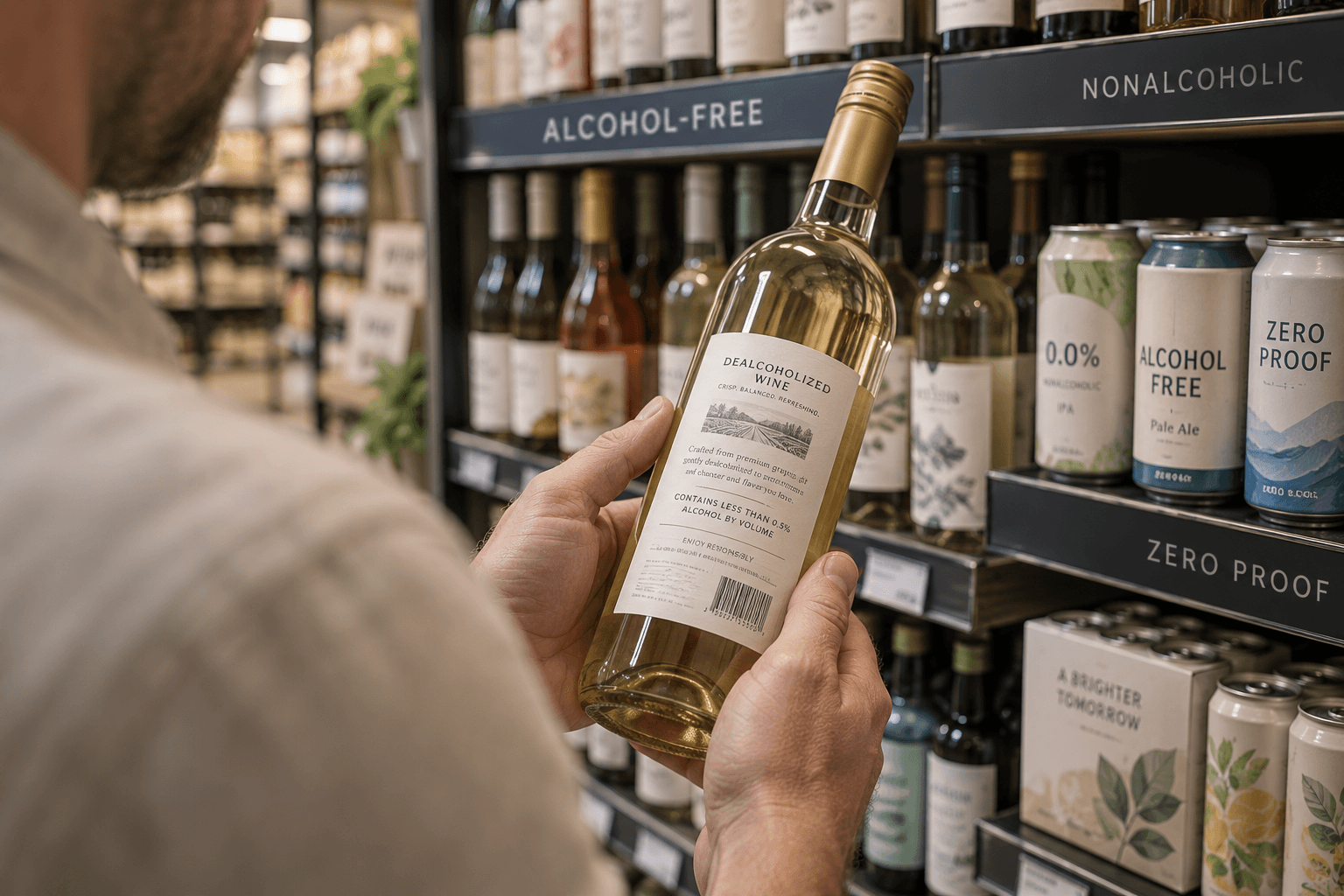
For a long time, the alcohol-free drinks aisle seemed to be trying to solve one problem: how do we make this taste like alcohol without the alcohol?
Beer without alcohol. Wine without alcohol. Gin without alcohol. Tequila without alcohol. The original drink remains the reference point.
That makes sense. If you love beer but don't want alcohol, a beer that tastes remarkably like beer is useful.
But something interesting is happening in the alcohol-free world.
What if an adult drink doesn't have to imitate alcohol at all?
Welcome to the Grown-Up Soft Drink
The Guardian recently described the rise of the grown-up soft drink: beverages aimed unmistakably at adults but not necessarily designed to impersonate an alcoholic drink.
They're often less sweet, more bitter, more acidic and more botanical. Sometimes spicy. Sometimes savory. Sometimes genuinely difficult to describe.
These drinks aren't necessarily trying to taste exactly like Sauvignon Blanc. They're trying to make you think: that's interesting. Pour me another glass.
The category can use verjus, herbs, unusual fruits, botanicals, teas and bitter flavors. The boundaries are getting blurry, which might be exactly what alcohol-free drinking needed.
Maybe Mocktail Was Always the Wrong Goal
There's something slightly strange about the word mocktail. A cocktail is the real thing. A mocktail is the imitation.
Alcohol-free beer has improved. Dealcoholized wines continue to evolve. Zero-proof spirits have become their own category.
But the assumption often remains that the ideal alcohol-free drink is the one that most successfully recreates an alcoholic one.
I'm not sure that's necessarily true.
What If the Goal Is Simply a Great Drink?
Coffee doesn't apologize for not being wine. Neither does tea.
Nobody drinks an espresso after dinner and thinks: pretty convincing whiskey substitute.
Coffee has ritual, aroma, bitterness and complexity. Tea has entire cultures built around it.
So why can't an evening alcohol-free drink develop the same independence?
The most interesting alcohol-free drink might be the one that stops reminding you what isn't in the glass.
Adults Don't Necessarily Want Everything Sweet
Traditional soft drinks are frequently sweet. Those are perfectly good drinks if that's what you want.
But adult drinks can bring bitterness, acidity, tannin-like sensations, herbal notes, heat, dryness, texture and long finishes.
Beverage-industry reporting points toward demand for more layered sensory experiences, including combinations of sweet, sour, spicy, savory, bitter and botanical flavors.
Enter Verjus
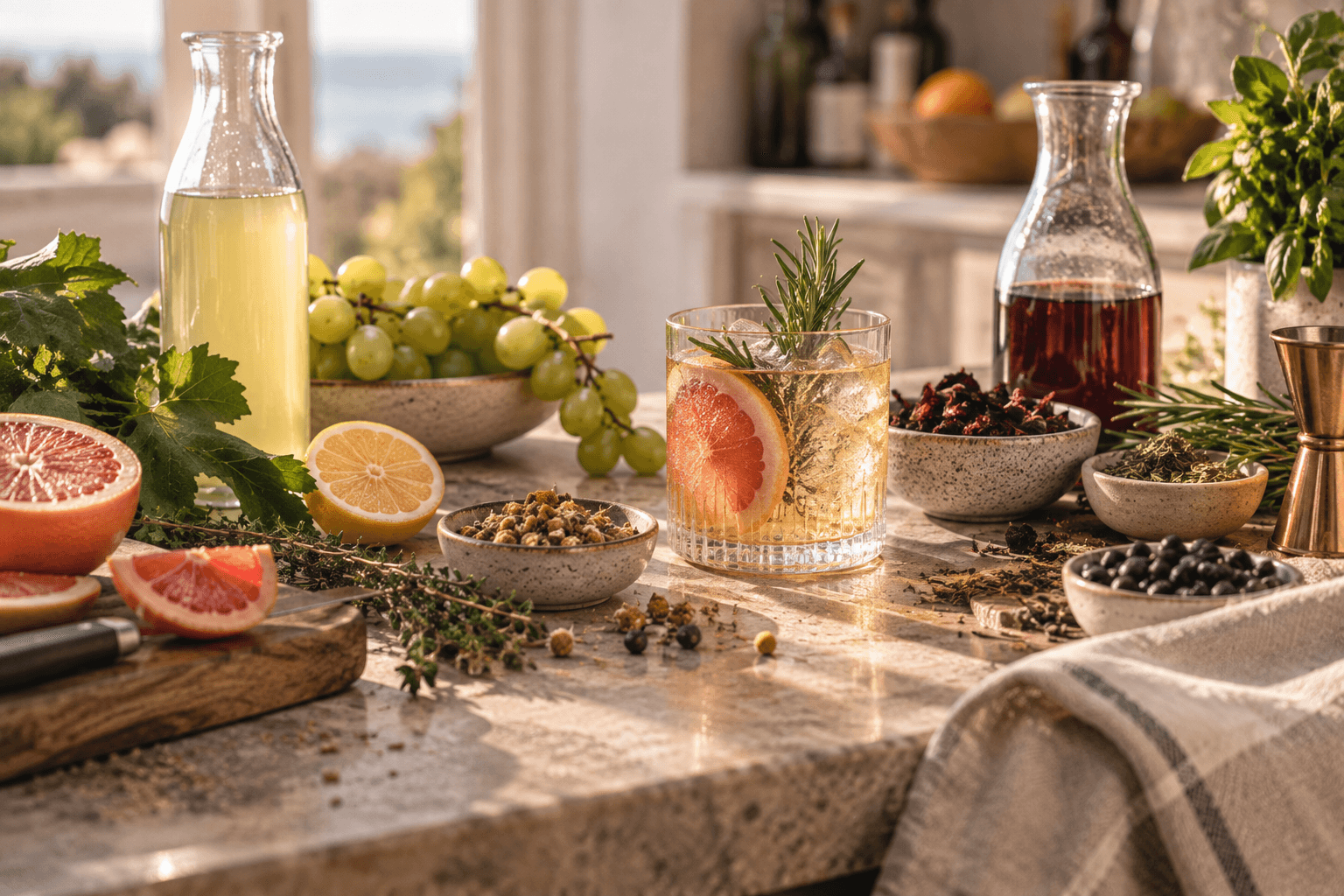
One ingredient appearing in this new world is verjus, juice pressed from unripe grapes.
Its bright acidity can give drinks structure without requiring alcohol. It can feel wine-adjacent without actually being wine.
Instead of making wine and removing the alcohol, a producer can start with verjus, grape juice, fruit, tea and botanicals and build something new from scratch.
That's closer to composing something than copying something.
There Are Two Different Problems to Solve
Alcohol-free drinks increasingly seem to be solving two different problems.
Replication: I love beer. Give me something that tastes like beer without alcohol.
Reinterpretation: I want something complex enough for dinner, with bitterness, acidity, aroma and texture, but I don't particularly care whether it tastes like something alcoholic.
Neither philosophy has to win. The category is becoming large enough to support both.
The Glass Still Matters
We don't only drink alcohol because of ethanol. We drink rituals.
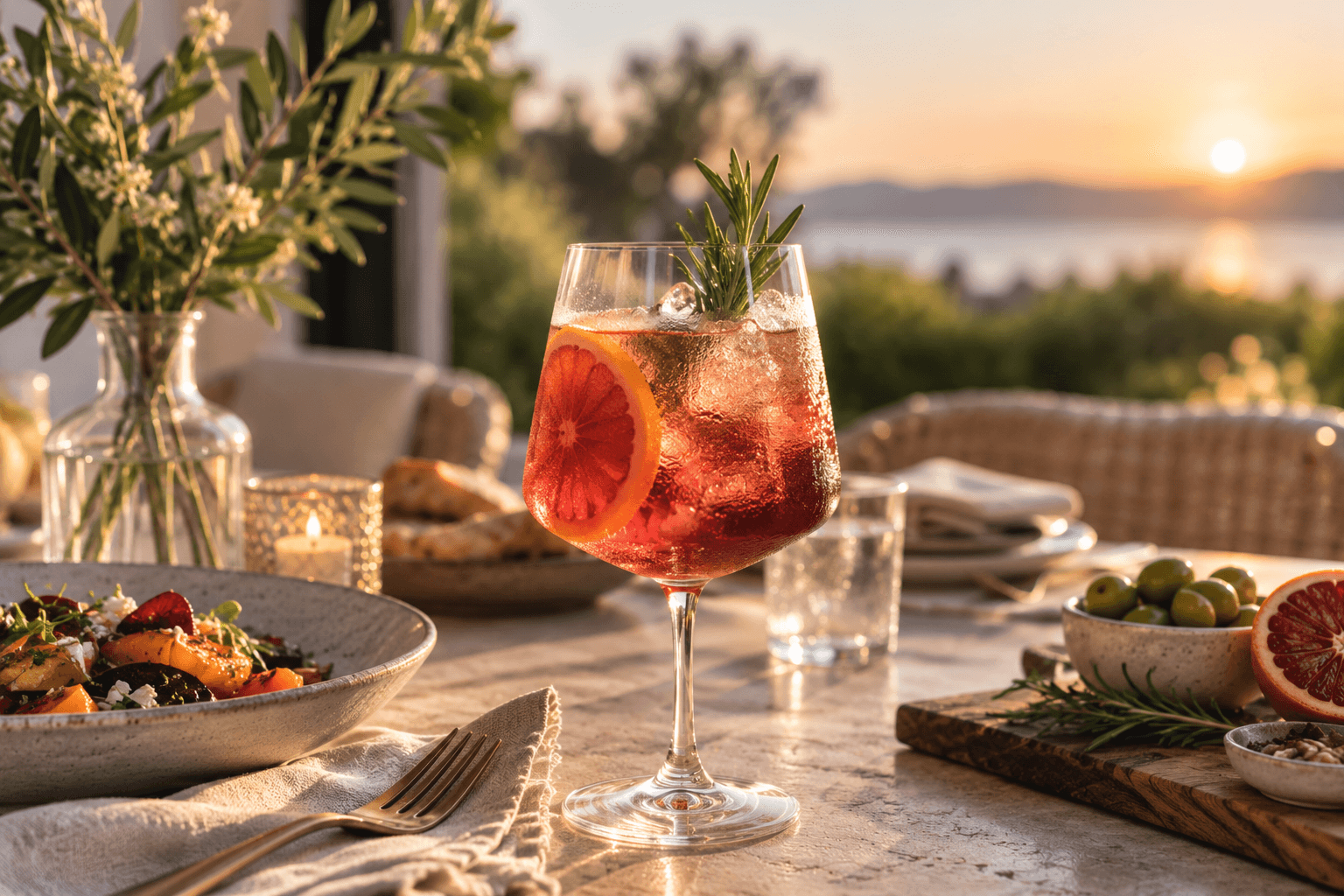
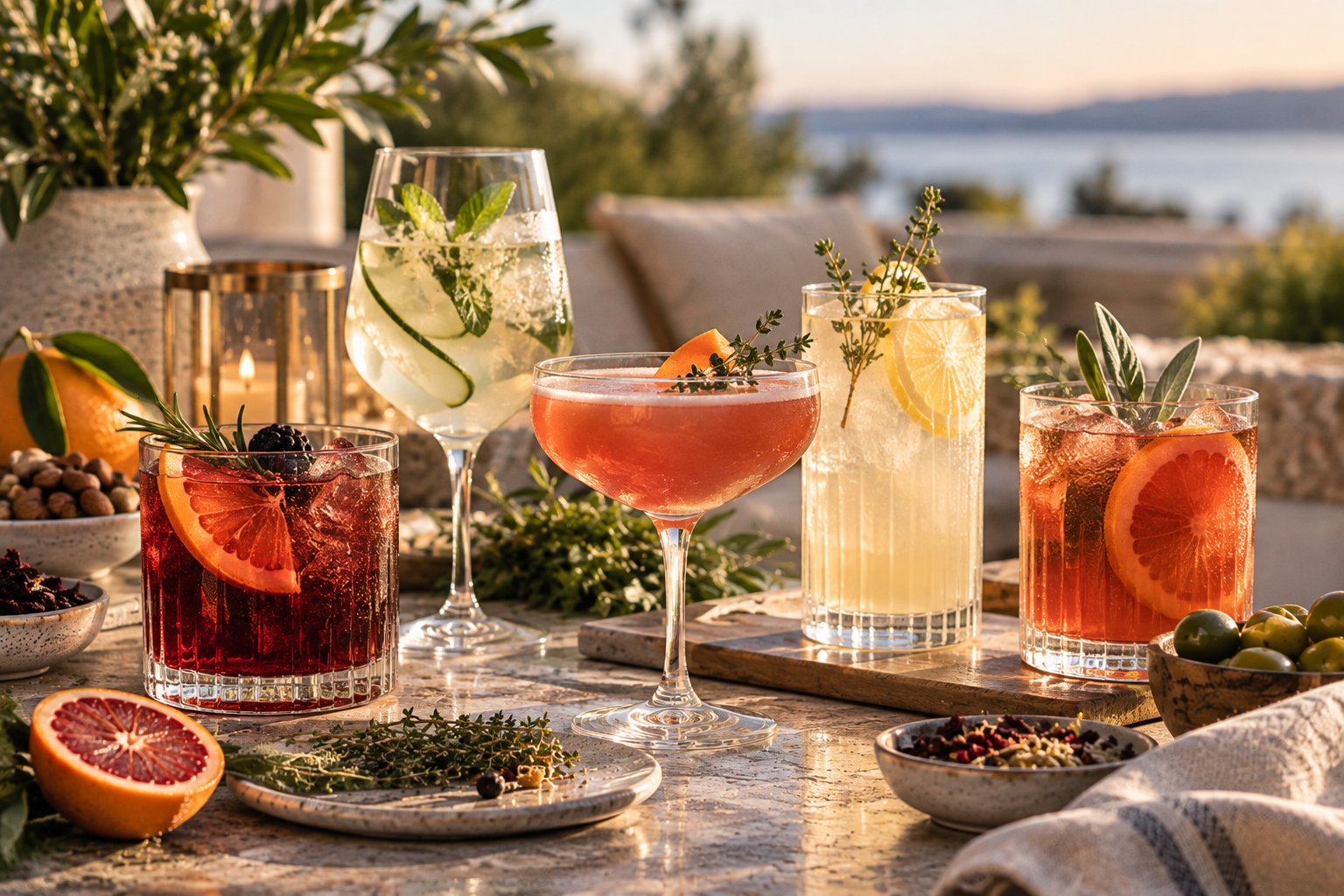
The bottle opening. The ice. The garnish. The stemmed glass. Something cold waiting while dinner cooks.
Take alcohol away and the ritual doesn't necessarily disappear. Sometimes people still want something intentional to pour.
This Is Why Just Have Water Misses the Point
Water solves thirst. Sometimes that's all you need.
But imagine telling someone who loves coffee to just drink hot water in the morning. Technically, hydration accomplished. Emotionally? Not quite.
Drinks can mark moments. Coffee means morning. Tea can mean slowing down. Wine can mean dinner. Beer can mean the game.
When someone stops drinking or cuts back, they may not only miss alcohol. They may miss the signal.
A genuinely good alcohol-free drink can preserve the moment while changing what's inside it.
And It Doesn't Need to Be a Wellness Product
The alcohol-free aisle increasingly overlaps with the functional-beverage aisle, with products marketed around hydration, calm, focus, energy or other benefits.
Some people love that. But does every drink need a job?
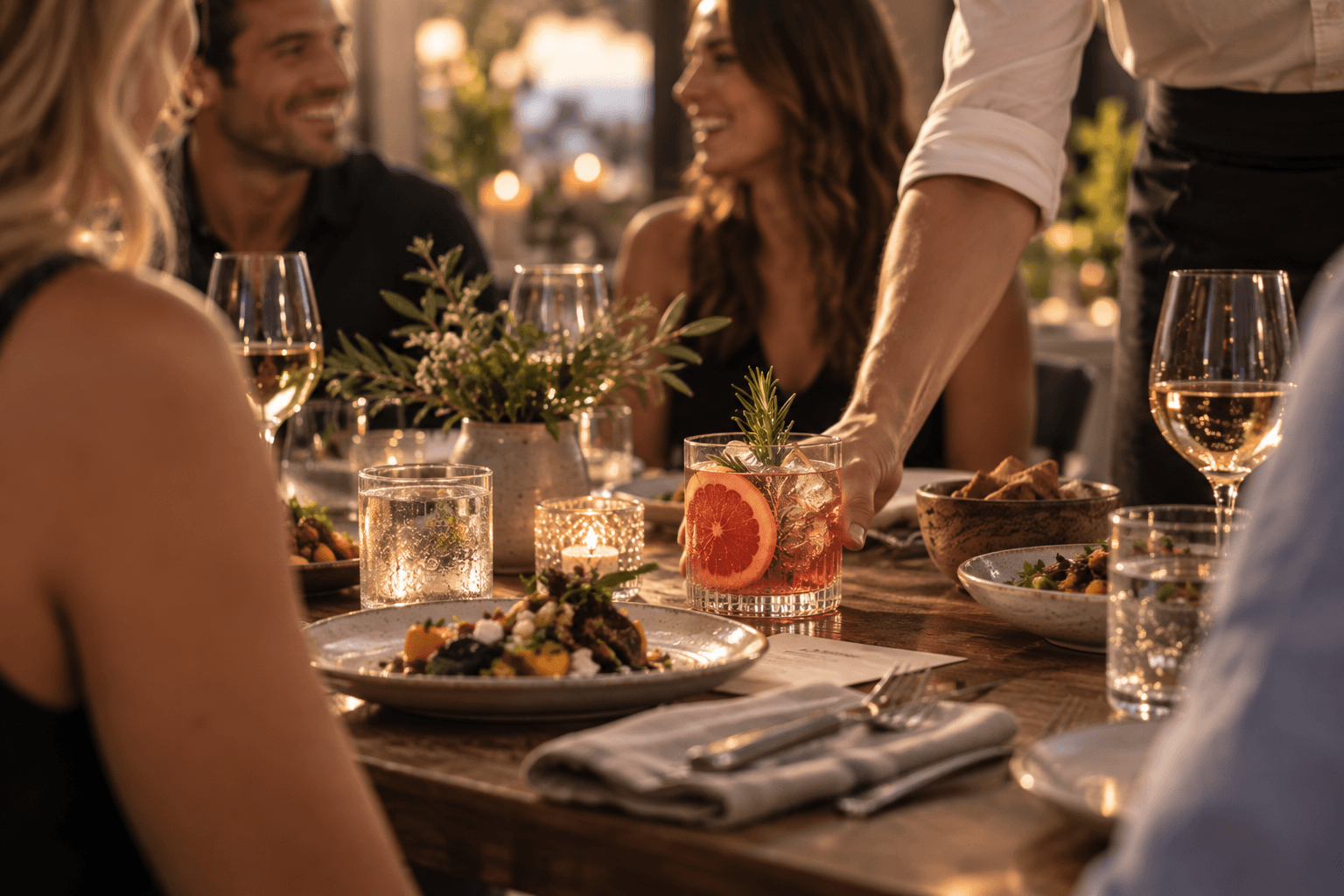
Maybe sometimes you just want something delicious with dinner.
Pleasure is allowed to be the feature.
This Might Be the Next Stage of Drinking Less
The first wave of modern alcohol-free culture had an obvious job: give people substitutes.
Want beer? Here's NA beer. Want wine? Here's alcohol-free wine. Want a gin and tonic? Here's zero-proof gin.
That helped normalize choosing not to drink.
But once that choice becomes normal, innovation no longer has to be limited by imitation.
Instead of asking how close can we get to the original, we can ask: what hasn't been invented yet?
The Wine Problem Is Especially Interesting
Wine may be where this becomes most obvious. Alcohol contributes body, aroma and texture, so removing it can be difficult.
That has pushed another idea forward: don't necessarily make alcohol-free wine. Make something that belongs where wine belongs.
- Dry.
- Acidic.
- Complex.
- Food-friendly.
- Slow enough to sip.
- Beautiful enough to put on the table.
But it doesn't have to pretend to be Cabernet.
Your Palate Can Change Too
Something that tastes strange the first time can become interesting later. Think about coffee, olives, blue cheese, tonic water or dark chocolate.
Adult palates often learn to appreciate bitterness, acidity and complexity. Alcohol doesn't own those flavors.
Eventually the question can stop being does this taste like wine?
Do I like this?
This Is Basically Why We Created Nova Pour Zero
When we started playing with Nova Pour Zero recipes, I never wanted every drink to be a virgin version of something you'd normally drink with alcohol.
Sometimes that's fun. But the bigger idea is creating something that feels intentional in the glass.
Something you'd make because it's good, not because it's pretending convincingly enough.
Continue reading
The places serving alcohol-free drinks are changing too. We recently looked at whether a bar built around zero-proof drinking can actually survive as a business.
Maybe We Need a New Vocabulary
Mocktail. Zero-proof cocktail. Alcohol-free wine alternative. Botanical aperitivo. Adult soft drink. Wine proxy. Premium soda.
We're clearly still figuring out what to call all of this, and maybe that's a sign of something healthy. The category isn't settled yet.
What I'd Like to See on More Menus
Imagine opening a restaurant menu and seeing Wine, Beer, Cocktails and Alcohol-Free.
And the last category isn't an apology.
Actual choices. Dry. Bitter. Bright. Herbal. Sparkling. Still. Food-friendly.
The expectation should be simple: an adult is paying money for this because they want something good.
The Best Alcohol-Free Drink Might Not Be a Substitute
Maybe that's where this whole category eventually ends up.
Not: this is surprisingly good for something without alcohol.
Just: this is good.
Beer can still taste like beer. Alcohol-free wine can keep getting better. Zero-proof spirits can keep trying strange things.
And alongside all of them, we can build an entirely new category of drinks that don't owe alcohol an explanation.
Maybe the future of alcohol-free drinking isn't getting better at copying alcohol. Maybe it's finally becoming confident enough to stop trying.
Frequently Asked Questions
What is a grown-up soft drink?
It is an informal term for a sophisticated alcohol-free beverage designed for adult tastes rather than as a conventional sweet soda. It may use bitter, acidic, herbal, botanical or other complex flavor profiles.
What is verjus?
Verjus is juice pressed from unripe grapes. Its acidity makes it useful in cooking and drinks, including alcohol-free beverages that want structure and brightness without relying on alcohol.
Do alcohol-free drinks have to taste like wine or cocktails?
No. Some deliberately replicate beer, wine or spirits, while others are designed as entirely new beverages using ingredients such as tea, verjus, fruit, herbs and botanicals.
Why are some alcohol-free drinks bitter instead of sweet?
Bitterness, acidity, herbs and other complex flavors can create a more layered drinking experience and distinguish an adult beverage from conventional sweet soda or juice.
Are alcohol-free drinks always healthier?
No. Alcohol-free describes alcohol content, not overall nutritional quality. Sugar, calories, caffeine and other ingredients vary widely, so the label alone does not establish that a drink is healthy.
Why are restaurants adding more sophisticated alcohol-free drinks?
Demand for drinking less or not drinking has created room for beverages that still offer ritual, complexity and a sense of occasion. Some restaurants now treat alcohol-free drinks as a serious menu category rather than an afterthought.